SIEM vs SOAR: What’s The Difference?
Learn Laiba SiddiquiKey Takeaways
- SIEM focuses on threat detection, while SOAR emphasizes automation: SIEM (Security Information and Event Management) collects and analyzes security data to identify threats, while SOAR (Security Orchestration, Automation, and Response) automates responses and streamlines workflows to improve incident resolution.
- SIEM provides visibility, SOAR enhances efficiency: SIEM solutions centralize log data and generate alerts for potential risks, whereas SOAR integrates with multiple tools, automates repetitive tasks, and enables faster, more coordinated responses to incidents.
- Use SIEM and SOAR solutions together: As an industry leader, Splunk combines powerful threat detection and analytics with automation capabilities, helping organizations enhance security visibility, streamline workflows, and reduce response times.
The threat landscape today is complex and constantly changing. Organizations require robust cybersecurity solutions to protect their networks and systems. SIEM and SOAR are two technologies that are pivotal in strengthening security operations.
- SIEMs provide valuable insight into cyber threats by aggregating and analyzing security data from various sources.
- SOARs prioritize and respond to security incidents effectively by leveraging machine learning-driven automation and orchestration capabilities.
In this article, I’ll look at both technologies, SIEM and SOAR, to help you understand the importance of strengthening your organization’s SecOps. Importantly, for many organizations, the question is not whether to use SIEM or SOAR — it’s actually about using them together, as we’ll see later.
Let's get started!
What is SIEM?
Let’s start with the formal definition. Short for “security information and event management”, Gartner defines SIEM as:
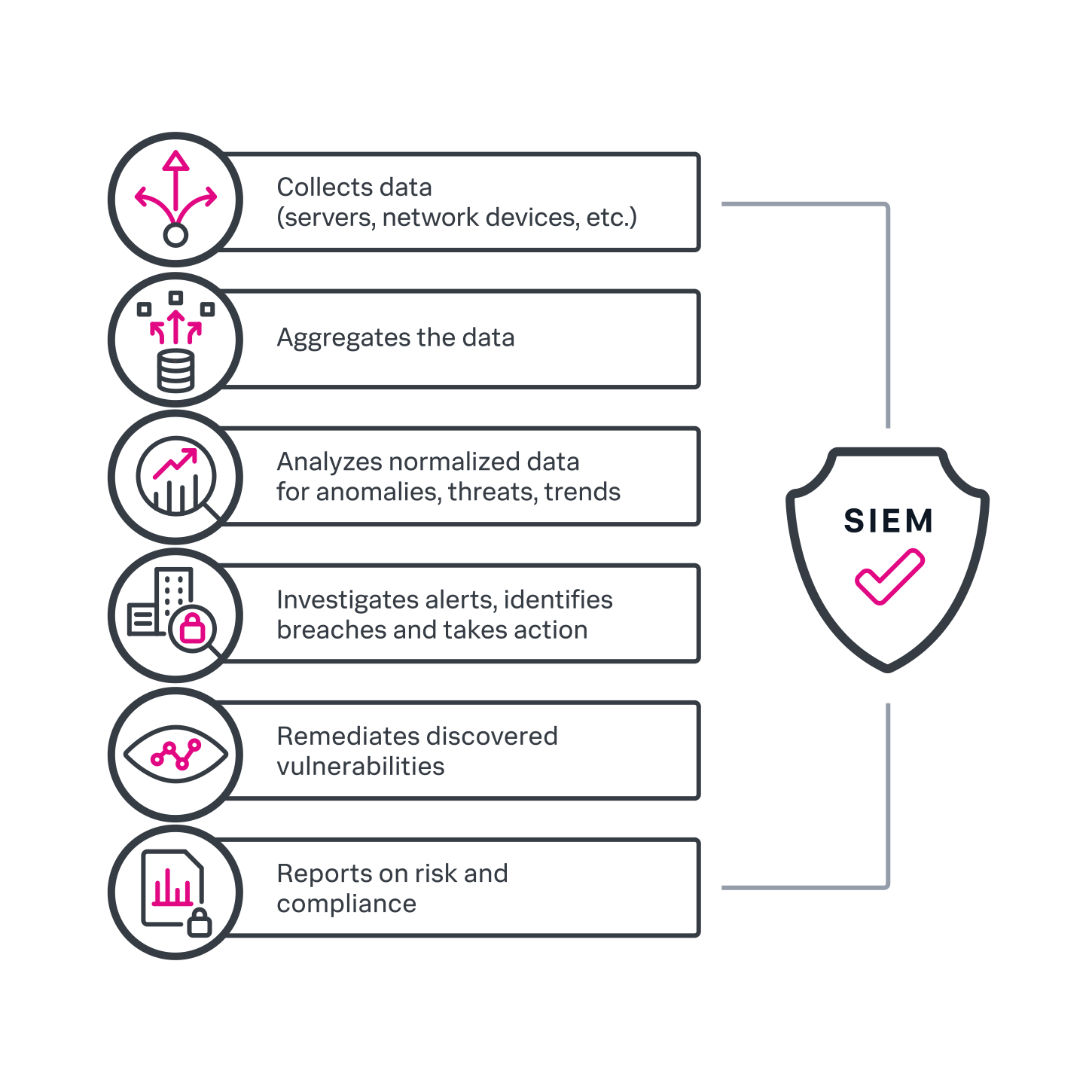
A formal SIEM solution collects data from various sources, such as servers and applications, to identify malicious activity. Security professionals use this data to:
- Detect intrusions
- Monitor data loss
- Generate alerts
- Validate applicable compliance
SIEM also provides threat intelligence by correlating data from different sources and creating dashboards for easy reference. This kind of incident response helps identify emerging threats and any infrastructure that may have gone unnoticed.
(Learn about Splunk Enterprise Security, our SIEM solution.)
SIEM function and use cases
By combining data from various systems, networks and applications with built-in monitoring and analysis capabilities, SIEM provides a comprehensive view of your current security posture. You can also get access to detailed reports and visualizations that help identify patterns in security incidents to facilitate rapid threat identification and mitigation.
Today’s SIEMs are cloud-based and highly scalable. Organizations of all sizes use SIEM to simplify security management across large, dispersed networks.
SIEM technology helps keep a strict log of user activities. By running audit reports on user and server access, SIEM provides insight into who accessed what resources and when, helping to detect and prevent unauthorized activities.
This helps organizations meet compliance requirements by capturing, storing and analyzing log data related to user activities. You can then use this data for incident investigations and forensic analysis.
Want a deeper dive into SIEM Use Cases? Check out this explainer.
What is SOAR?
Now let’s move onto SOAR. Security Orchestration, Automation and Response is a technology that improves cybersecurity by safeguarding networks and devices against cyber threats, attacks and unauthorized access. Gartner explains SOAR as:
SOAR uses machine learning AI to prioritize incident alerts and response actions. AI helps SOAR analyze and correlate vast amounts of data, enabling SecOps teams to identify and focus on the most critical threats first. This ensures that limited resources are allocated efficiently, optimizing incident response time.
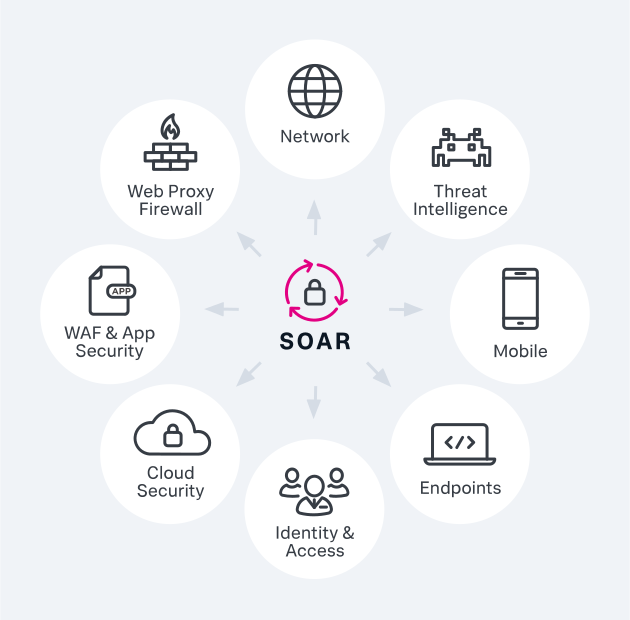
A SOAR platform can help to automatically identify compromised devices using automation features like workflows and playbooks, which can run a series of automated actions to resolve potential threats without the need for human intervention. This not only speeds up response time but also reduces the risk of human error and frees security professionals to focus on more complex tasks.
SOAR use cases
By leveraging its predictive capabilities, SOAR helps Security Operations Center (SOC) teams distinguish between false positives and actual threats. It analyzes historical data and identifies repeatable patterns of known good and known bad behaviors. This pattern recognition aids in reducing false alarms and enables security analysts to focus their efforts on genuine threats.
SOAR triggers predefined response procedures to mitigate the impact of a security incident. These procedures can include:
- Isolating and quarantining affected systems.
- Identifying the source of the threat.
- Determining the severity of the threat and initiating a series of automated response actions based on that severity.
This process enables swift containment and reduces the potential damage caused by threats within an organization's network.
SOAR's approach to case management is another valuable feature. It allows users to conduct research, assess the situation and perform additional investigations within a single case.
Rather than switching between multiple tools and interfaces, security analysts can access relevant information and carry out further analysis within the SOAR platform. These case management functions let team members collaborate easily, facilitate knowledge sharing and make faster, more informed decisions.
SOAR vs. SIEM: Key differences
Now with the basics out of the way, we can zoom in on the differences in these technologies. There are three main differences between SIEM and SOAR.
Data sources
Data sources utilized by each system varies:
- SIEM primarily relies on log data from various sources.
- SOAR integrates with a wider range of tools and technologies, including SIEM itself.
This broader integration allows SOAR to gather information from different security devices, threat intelligence feeds and incident management systems for more effective incident response.
Raising alerts vs. automated alert investigations
SIEM focuses on raising alerts based on predefined rules or correlation techniques. These alerts are then manually investigated by security analysts. Fortunately, SOAR automates the investigation process by executing playbooks or response workflows when an alert is triggered.
This automation reduces response time, which improves incident triage and remediation. By automating the investigation of alerts, SOAR frees up valuable time for security analysts, allowing them to focus on:
- Mission critical tasks
- More complex threats
- Practices that require a human touch, like threat hunting
No need to tune the analysis engine
SIEM platforms require effort and expertise to fine-tune the analysis engine, like setting up rules, filters and correlation algorithms.
SOAR can leverage the existing analysis capabilities of integrated technologies, bypassing the need for separate tuning. This saves time and resources, making SOAR a more efficient option for organizations that want to implement a robust incident response solution.
(Curious about other security solutions? Read about XDR and MDR.)
Unified security: How SOAR & SIEM work together
SOAR and SIEM form a powerful combination that strengthens SecOps — with both in place, you’ll maximize your security operations. By integrating SIEM with a SOAR platform, organizations can leverage SIEM's real-time event monitoring and correlation capabilities while automating and orchestrating incident response through SOAR.
SOAR prompts response actions on SIEM alerts for speedy investigation of security incidents. This synergy between SOAR and SIEM empowers security teams to respond swiftly to evolving threats, improving overall SecOps effectiveness.
How to choose the right SOAR & SIEM platform
Here’s what you need to consider when choosing a SOAR platform to pair with SIEM:
Cloud to on-premises security orchestration
You should evaluate the compatibility of the SOAR platform with your organization's security infrastructure if you have a mix of cloud-based and on-premises systems.
Choose a platform that can orchestrate security processes across both cloud and on-premises environments to implement a cohesive and unified security orchestration strategy.
Real-time data synchronization
Real-time data synchronization enables a timely and efficient incident response process. A good SOAR platform seamlessly integrates with your SIEM solution and synchronizes data in real time. This ensures that any security events, alerts or incidents detected by the SIEM are immediately available within the SOAR platform for further investigation, analysis and response.
Centralized detection, analysis and response
A centralized detection, analysis and response approach is essential for effective SecOps. Choose a platform with a centralized console or dashboard so it can monitor and manage security events, alerts and incidents from the SIEM and other integrated security tools.
This centralized view enhances visibility and collaboration, which lets the security ecosystem coordinate and respond efficiently.
Low-code security automation
Platforms with a user-friendly and intuitive interface allow security analysts to create and customize automation playbooks and response workflows without extensive coding knowledge.
Choosing this kind of SOAR platform empowers security teams to quickly adapt and automate their incident response processes to address emerging threats and changing security requirements.
(Check out our Splunk SOAR playbooks.)
Pre-built integrations
Pre-built integrations with a wide range of security tools and technologies are beneficial when selecting a SOAR platform. The platform should have pre-built connectors and integrations with popular security solutions, such as:
- Endpoint protection systems
- Threat intelligence feeds
- Ticketing systems
These pre-built integrations smoothen the implementation and deployment process. It gives faster time-to-value and reduces the effort required to establish connections with existing security tools.
Vendor-agnostic SOAR
Opting for a vendor-agnostic SOAR platform ensures compatibility and flexibility by allowing seamless integration with multiple SIEM vendors and other security tools. A vendor-agnostic SOAR platform lets organizations choose the best-in-class solutions for their specific security needs, avoiding vendor lock-in and promoting interoperability and portability across the security ecosystem.
Bidirectional integrations
Bidirectional integrations between the SOAR platform and SIEM help with collaboration and information sharing. So, choose a platform that offers bidirectional communication capabilities.
Such a platform allows security events detected in the SIEM to trigger actions within the SOAR platform and vice versa. This bidirectional integration will build a flow of information and actions, enhancing the overall incident response process.
Threat intelligence correlation and aggregation
Threat intelligence correlation and aggregation capabilities are also important in a SOAR platform. A SOAR platform that integrates and correlates threat intelligence feeds from various sources can provide enriching, valuable context for security events and incidents.
Summing up SIEM & SOAR
Integrating SIEM and SOAR strengthens SecOps. This way, you'll combine real-time event monitoring and correlation capabilities with automated and orchestrated incident response actions. This combo empowers security teams to swiftly respond to evolving threats, improving overall effectiveness.
Optimize your incident response processes, tackle emerging threats, and adapt to changing security requirements by selecting a suitable, unified SIEM and SOAR platform that aligns with your specific security needs.
Related Articles

Splunk Data Stream Processor

From Downtime to Uptime: Monitoring Tools and Techniques for Systems, Websites, APIs, and More