Splunk Data Management
Reduce costs and prepare data for trusted AI
Collect, process, govern, and route operational data to reduce cost, improve quality, and prepare trusted data for AI.


Control operational data at every step
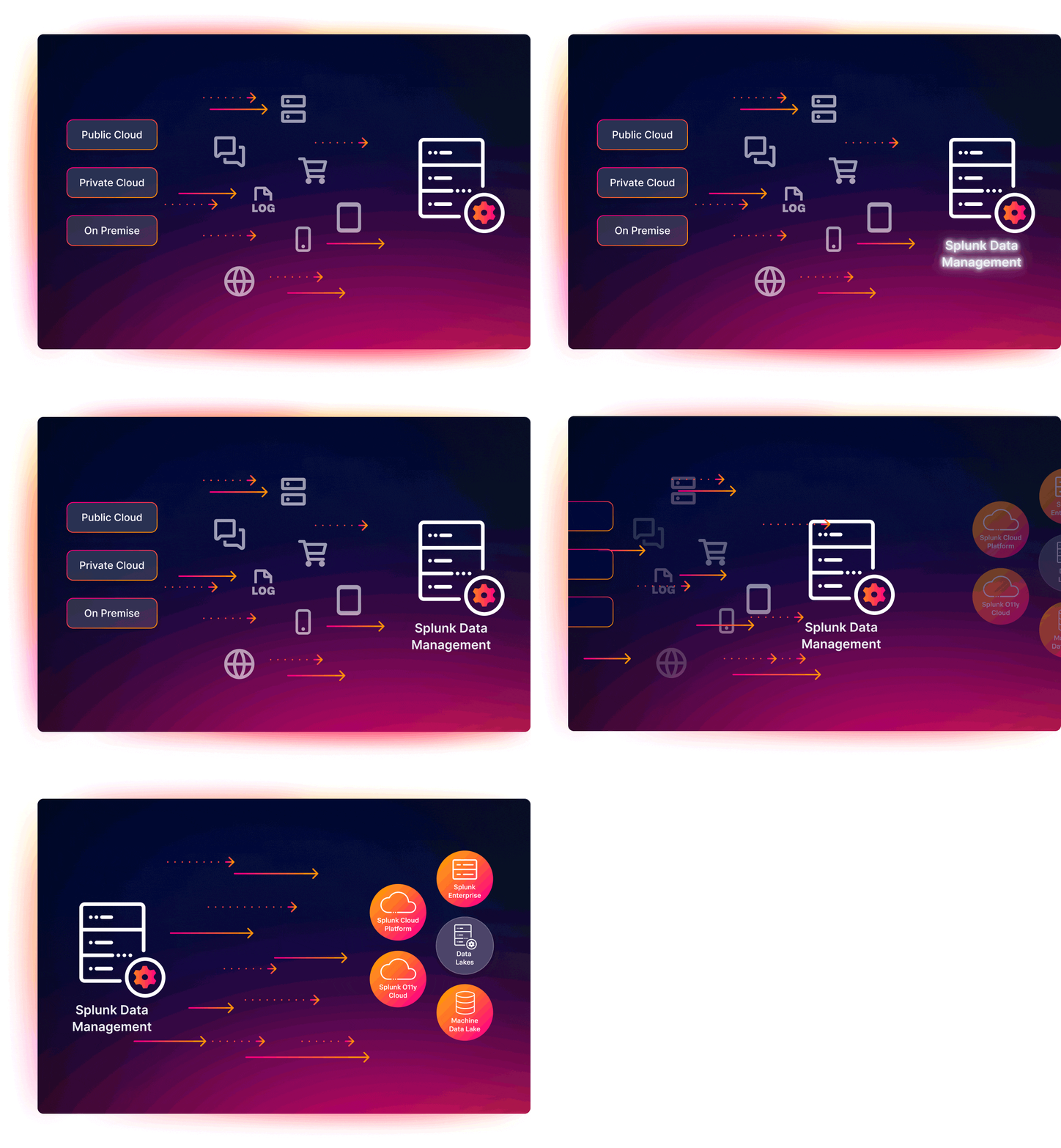
Splunk Data Management helps teams collect, process, govern, and route data in motion so high-value, trusted data reaches every destination.
Control cost and complexity before data lands
Filter, mask, transform, and route data close to the source or before ingest. Reduce noisy, duplicative, or unnecessary data before it creates downstream cost, storage burden, and pipeline sprawl.
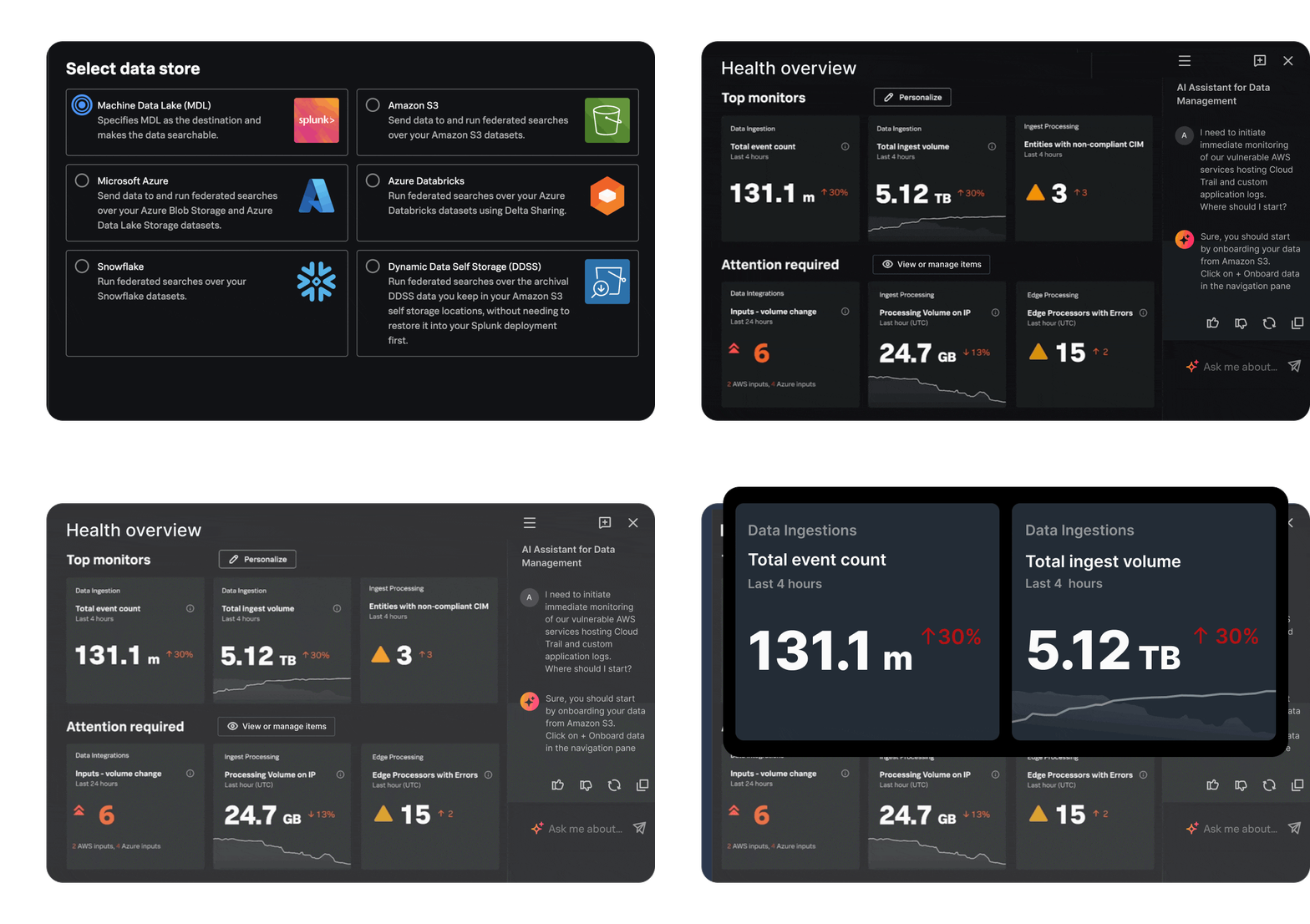
Improve data quality and governance
Standardize telemetry, enrich metadata, and protect sensitive fields as data moves through the pipeline. Give security, observability, IT, and networking teams cleaner data they can trust for faster action.
Improve telemetry quality in motion
Standardize how metrics, traces, and logs are collected, processed, and exported with OpenTelemetry Collector support. Manage telemetry pipelines with more consistency across distributed environments.

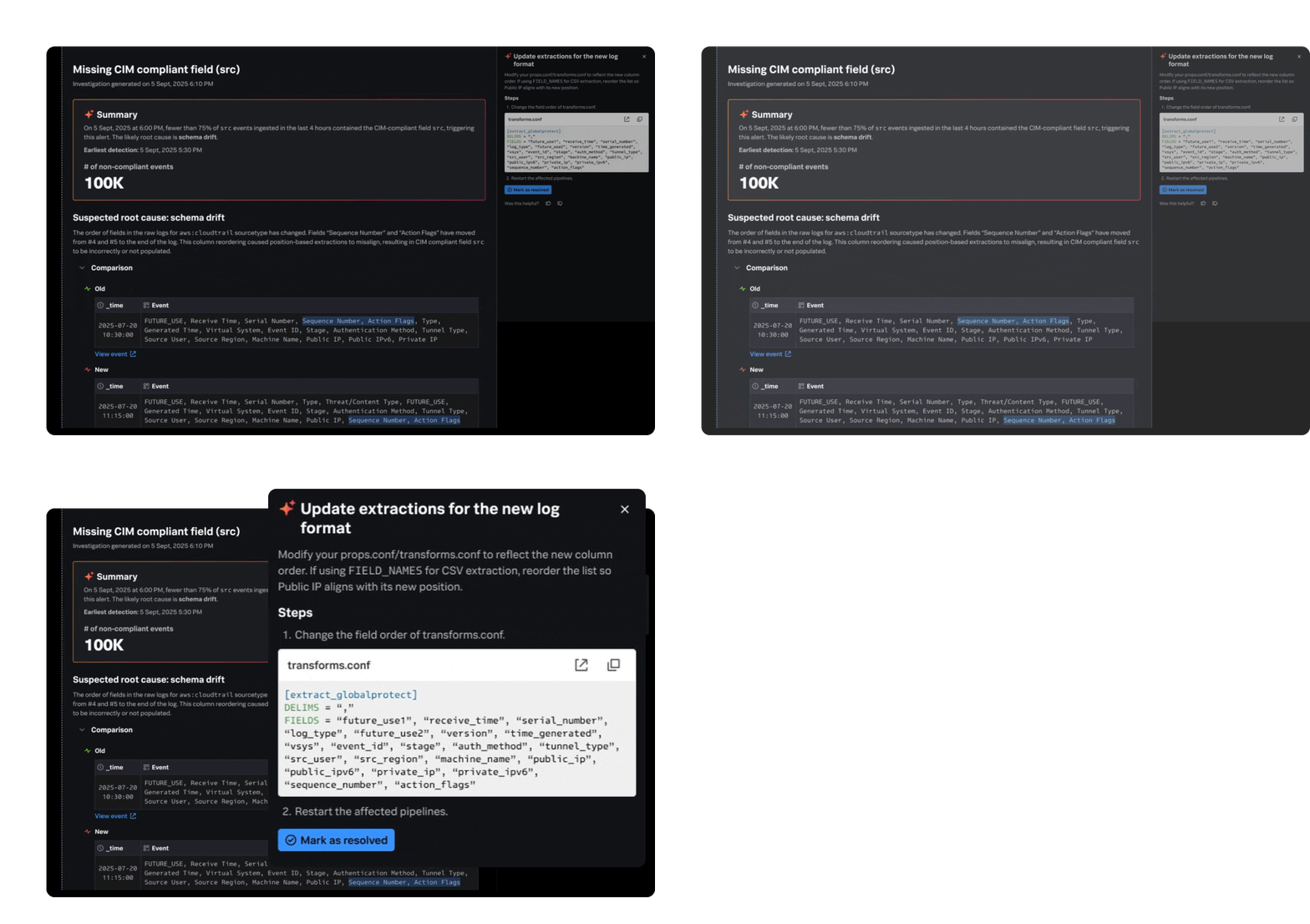
Prepare AI-ready operational data
Automate onboarding and pipeline upkeep with AI-powered guidance, field extraction, schematization, and health checks. Help models, assistants, and teams work from governed operational context.



Splunk Data Management FAQs
Splunk Data Management is an intelligent control layer that helps organizations collect, process, govern, and route operational data across hybrid environments. It ensures the right data gets to the right destination for the right purpose, reducing costs and complexity while powering security, observability, and AI initiatives.
By utilizing advanced processing at the edge and at ingest, Splunk allows you to filter out noisy, low-value, or duplicative data before it is indexed or stored. Tools like Splunk Edge Processor can routinely reduce ingest volumes by 30% to 50% without losing analytical value, ensuring you only pay to store and analyze data that matters.
AI models are only as good as the data feeding them. Splunk Data Management improves data quality by standardizing, enriching, and structuring telemetry before downstream use. This creates a trusted, governed, and consistent data foundation that powers accurate real-time insights and agentic AI assistants.
Yes. Splunk natively supports open standards like OpenTelemetry (OTel) and the Open Cybersecurity Schema Framework (OCSF). This allows you to standardize machine data across hybrid environments, improve cross-domain correlation, and avoid vendor lock-in, all while applying Splunk’s advanced routing and governance controls.
Splunk Data Management provides strong governance controls that allow you to mask, redact, and secure sensitive data (like PII) at the edge or during ingest. This protects privacy and ensures compliance before the data ever lands in downstream analytics, security tools, or storage systems.
Splunk replaces brittle, manual routing scripts with AI-powered automation. Capabilities like Guided Onboarding, Auto Schematization, Automated Field Extraction, and Self-Healing Pipelines proactively detect issues, map fields automatically, and streamline pipeline maintenance, significantly reducing the operational burden on your architecture teams.
Instead of maintaining fragmented, vendor-native tooling for different departments, Splunk unifies operational data flows. It standardizes and routes telemetry based on use case, value, or sensitivity, ensuring that Security, IT, Networking, and Observability teams all work from the same trusted, contextualized data foundation to detect and resolve issues faster.
