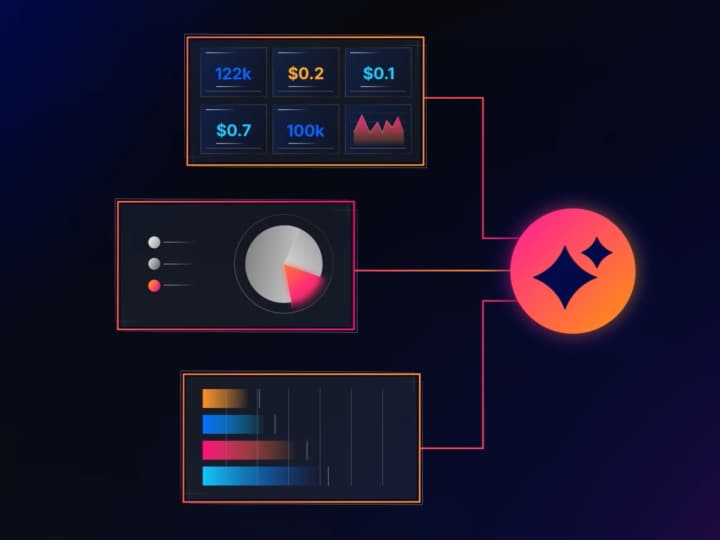
Up to 98% cheaper changes the economics
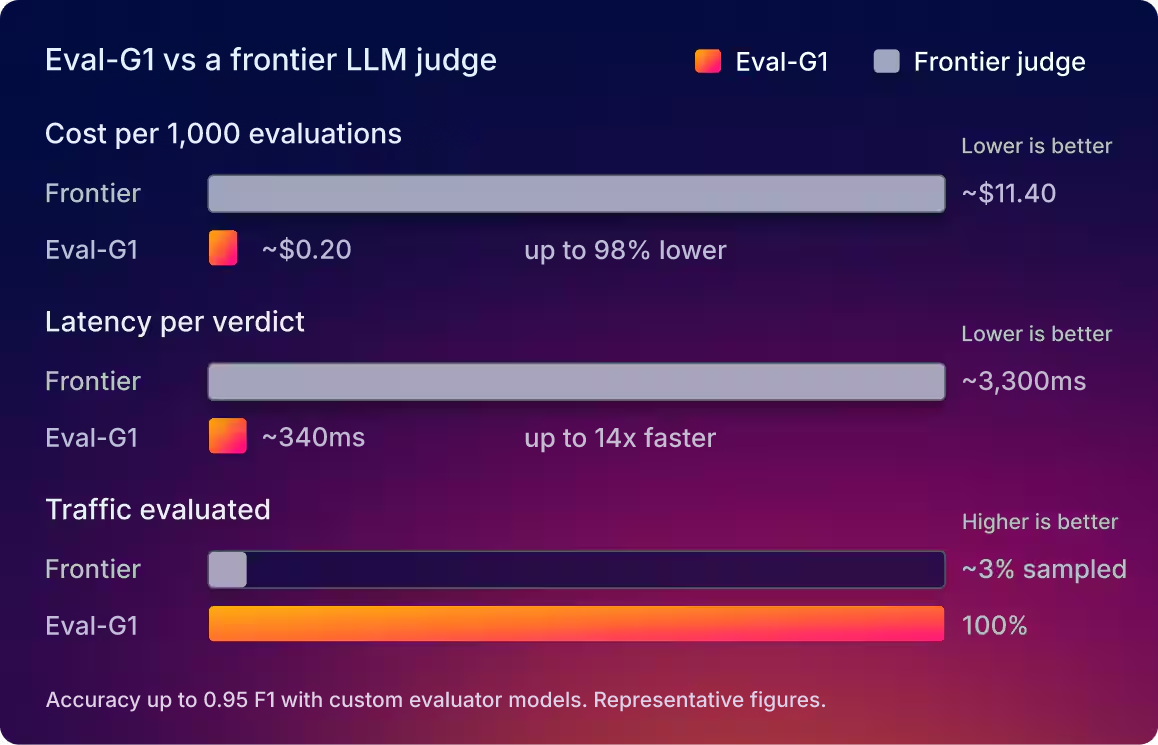
Each evaluation predicts a single token, so verdicts cost up to 98% less than a frontier LLM judge and return in about a third of a second. Grade and guard every interaction, not a sample.
Purpose-built small language models, tuned to your rules, that evaluate and guardrail 100% of agent traffic in about a third of a second.
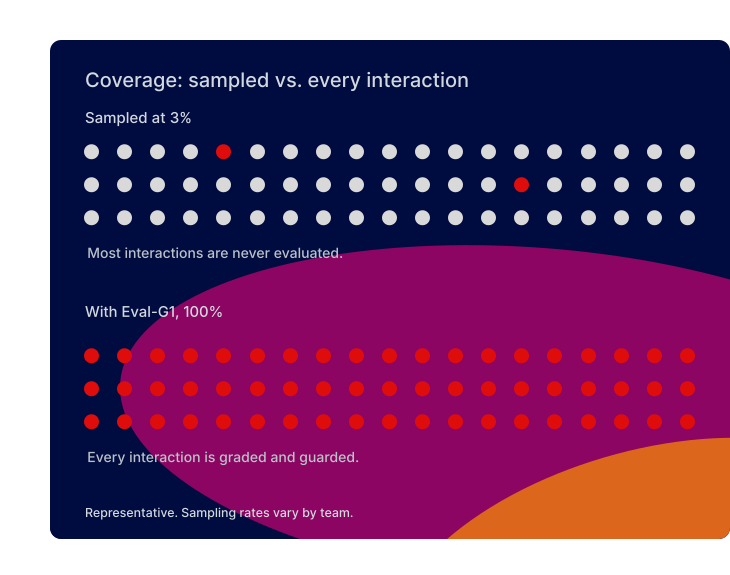
A frontier LLM judge writes out its reasoning before it gives a verdict, often hundreds of tokens per evaluation. At production volume that is too expensive to run on everything, so teams review a sample and hope the rest look the same. The ones you miss are the ones that hurt: the leaked account number, the toxic reply, the broken policy.
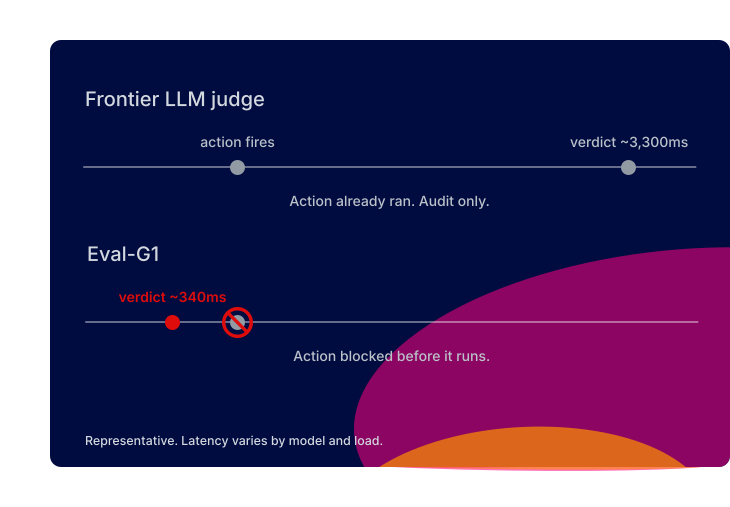
A frontier LLM judge takes about 2 to 5 seconds to return a verdict. By then the answer has reached the customer, so the verdict can only describe what happened. Eval-G1 returns a verdict in about a third of a second, up to 14x faster, so a runtime guardrail can stop a policy violation before it lands.
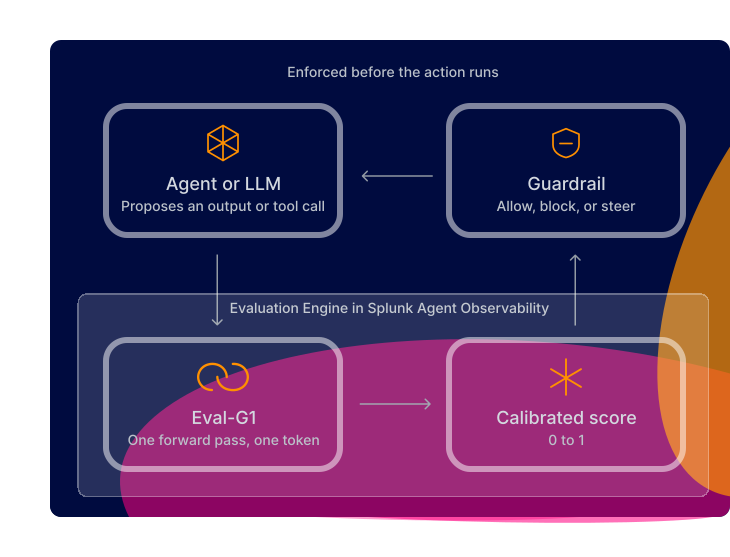
Eval-G1 returns a verdict as a single token with a calibrated probability, so scores are fast and repeatable. Run the same input twice and you get the same answer, which is what makes a model trustworthy as an evaluator.
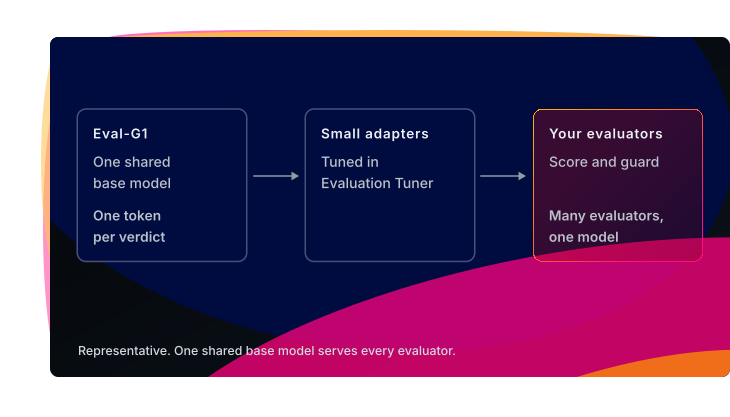
Every Eval-G1 evaluator is a small adapter on one shared base model, so adding an evaluator doesn’t add a model, a server, or an MLOps team. Splunk runs each one in production for you, ready to score and guard in real time.

features

Signals in Splunk Agent Observability flags failure patterns across your agent traffic and traces each one to the conversations behind it, such as an assistant that keeps misapplying a policy, so you know which evaluator to build next.

Your experts mark real conversations pass or fail and write the rule down as a short rubric. Their labels set the standard every verdict follows, which makes this the step that matters most.

The evaluation tuner grows a few dozen expert labels into thousands of training examples, covering rephrasing, edge cases, and near misses, so the evaluator learns the hard calls too.

The evaluation tuner tunes a custom evaluator model on those examples while your team gets on with its day. No data science team, labeling pipeline, or model training expertise required.

The evaluation tuner compares the new evaluator with your LLM judge on conversations neither has seen. Review each disagreement, then register the evaluator when it meets your standard.

Your custom evaluator appears in Splunk Agent Observability alongside your other evaluators. Score production traffic with it, or run it as a runtime guardrail, with each verdict in about a third of a second.
Eval-G1 is a purpose-built small language model for evaluation and the base for every custom evaluator model you tune. It grades and guards agent interactions quickly and cheaply, which is what makes it affordable to watch 100% of traffic instead of a sample.
A frontier judge is expensive and slow, so teams sample 1 to 5% of traffic and can only review actions after they run. Eval-G1 is built for one job, judging agent interactions, so it is cheap enough to grade everything and fast enough to guard in real time.
Eval-G1 runs evaluations and guardrails at up to 98% lower cost than a frontier LLM judge, which changes the economics from rationing to running on every interaction.
Yes. Eval-G1 returns a verdict as a single token, so scores are deterministic: run the same input twice and you get the same answer, which is what makes a model trustworthy as a judge.
Yes. In evaluation tuner, your experts label real conversations and write the rule down. evaluation tuner turns those labels into a custom evaluator model, reaching up to 0.95 F1, with no data science team or model-training expertise.
Unified threat detection, investigation, and response for the agentic SOC.
Predict and prevent IT issues with AI-driven service monitoring.
© 2026 Cisco Systems, Inc. and its affiliates. All rights reserved.