machine data lake
Keep more machine data ready for action
Retain full-fidelity machine data economically at petabyte scale. Search it in place, then promote what matters to Splunk indexes when speed is essential.
Built for action, not just storage
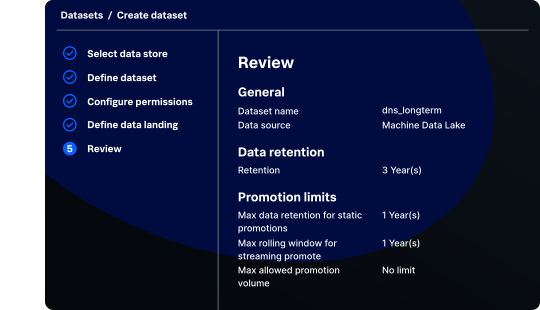
Retain full-fidelity machine data economically, keep it searchable, and promote it when high-performance action demands it.
Retain more without losing fidelity
Land machine data at petabyte scale in an economical retention environment while preserving the raw detail, governance, and context needed for future investigations, analytics, and AI.
Discover and search data where it lives
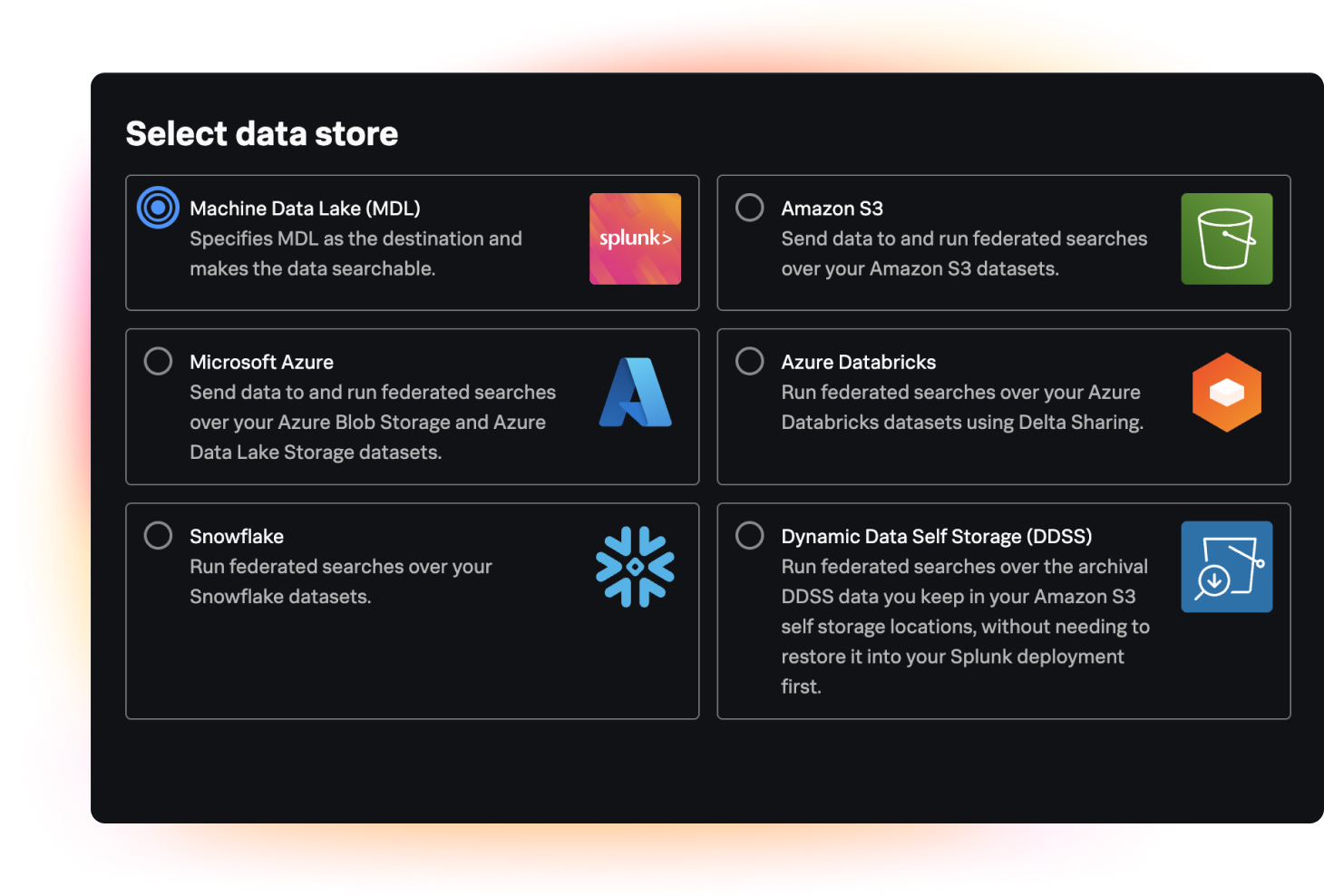
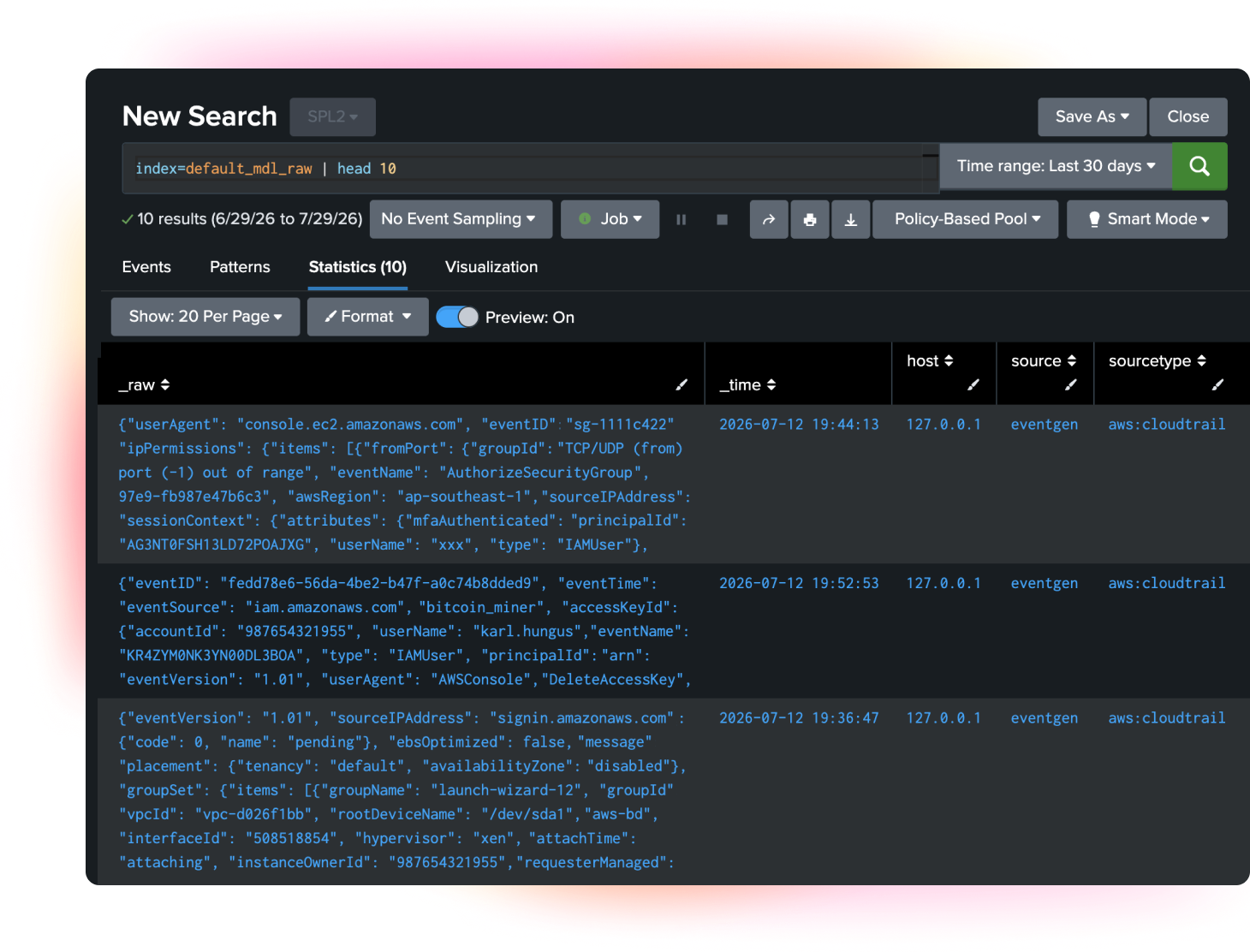
Use Catalog to discover, understand, and govern retained machine data. Then query it in place with Federated Search — without first promoting or duplicating it in a Splunk index.
Promote data when speed matters
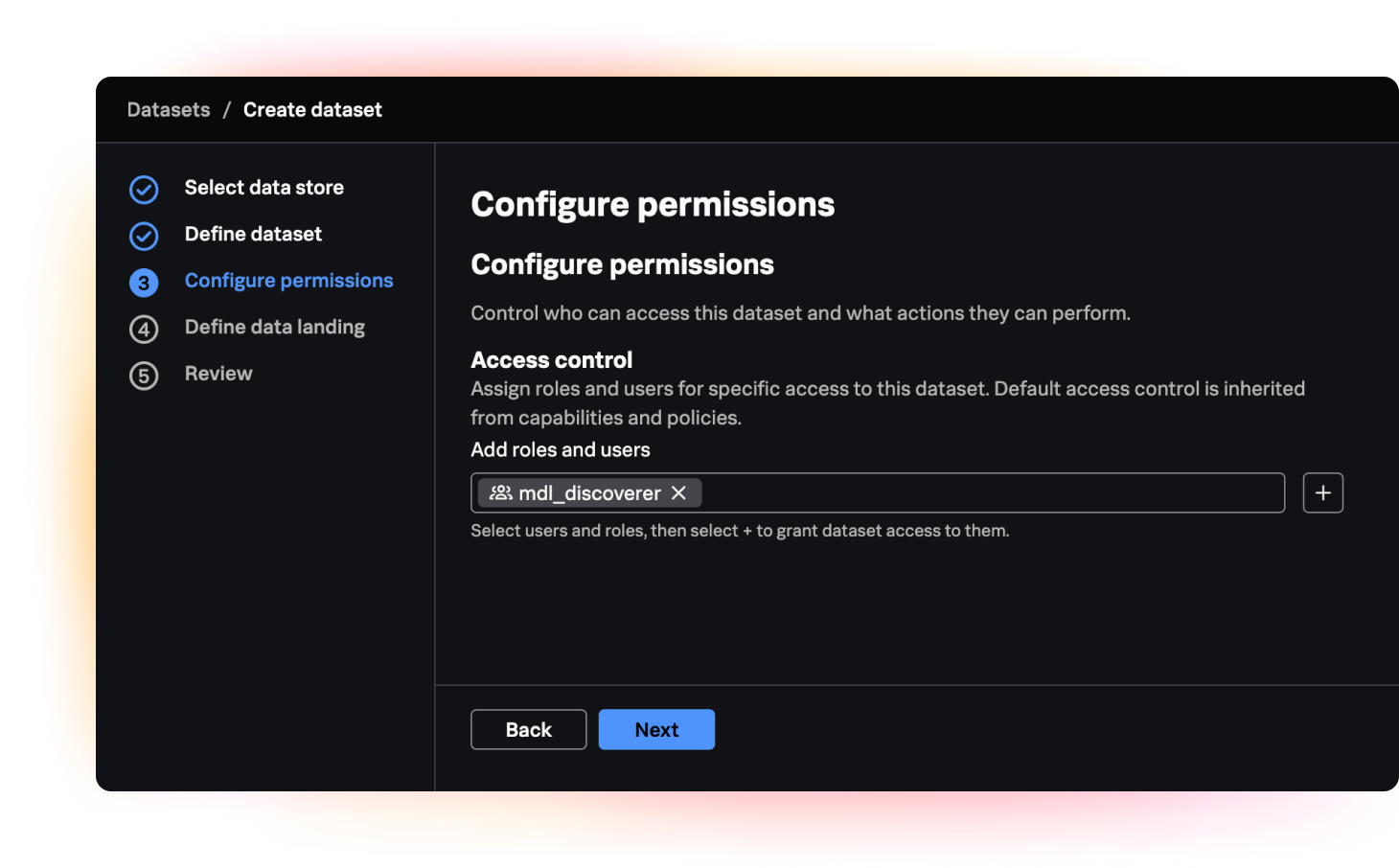
Move selected data into Splunk indexes for high-performance analytics, real-time detections, dashboards, and active workflows while keeping the original full-fidelity data retained.



Machine Data Lake FAQs
Machine Data Lake is a Splunk environment designed to retain full-fidelity machine data economically at petabyte scale. It keeps retained data discoverable, searchable in place, and ready to promote to Splunk indexes when higher-performance workflows require it.
Yes. Use SPL2 and Federated Search to query retained data in place. Splunk Catalog helps teams discover, understand, and govern the available data before using it in searches, investigations, analytics, and AI workflows.
Machine Data Lake gives organizations greater control over where machine data is retained and when it is promoted for higher-performance use. High-volume, lower-touch telemetry can remain in an economical retention environment instead of requiring every dataset to be continuously indexed.
Machine Data Lake and Splunk indexes serve complementary purposes. Use Machine Data Lake for economical, full-fidelity retention and in-place search. Promote selected data to Splunk indexes when it is needed for real-time detections, dashboards, high-performance analytics, or active workflows.
Machine Data Lake preserves full-fidelity historical machine data that can provide valuable context for AI. Splunk Catalog helps teams discover, understand, and govern that data, while in-place search and data promotion make the right information available to analytics, investigations, and AI-driven workflows.