Watch .conf26 keynotes on demand
Don't miss insights from top Splunk minds and industry leaders on building resilience in the agentic era.
Featured Articles
displayMode
carousel
filter
paths
paths
From Root Cause To Pull Request: AI SRE in Splunk Observability Cloud Can Now Remediate Incidents With Claude Managed Agents
Splunk is extending AI SRE in Splunk Observability Cloud from incident diagnosis to code-level remediation.
Splunk Blogs
.conf26
displayMode
carousel
filter
paths
paths
/en_us/blog/security/evolving-to-autonomous-defense-new-agentic-soc-capabilities
/en_us/blog/observability/cisco-empowers-organizations-to-govern-ai-at-scale-with-full-stack-observability
/en_us/blog/conf-splunklive/defending-at-machine-speed-in-the-ai-era
/en_us/blog/partners/2026-splunk-regional-partner-award-winners
/en_us/blog/observability/network-intelligence-app-new-network-visibility-in-splunk-synthetic-monitoring
/en_us/blog/conf-splunklive/move-beyond-golden-signals-to-curated-business-journeys
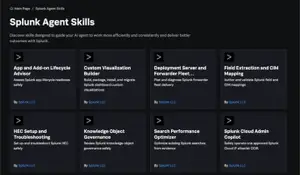
/en_us/blog/artificial-intelligence/splunk-cli-and-agent-skills

Evolving to Autonomous Defense: New Agentic SOC Capabilities
Splunk is expanding its Agentic SOC Workforce with a set of new purpose-built skills, across detection, investigation, response, and governance.




Cisco Data Fabric
displayMode
carousel
filter
paths
paths
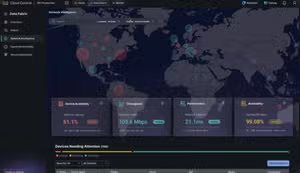
/en_us/blog/platform/splunk-platform-innovations-cisco-data-fabric-generally-available
/en_us/blog/platform/escaping-the-cloud-walled-garden
/en_us/blog/platform/machine-data-lake-and-catalog
/en_us/blog/platform/making-machine-data-easier-to-onboard
/en_us/blog/platform/a-general-purpose-lakehouse-is-not-enough-for-machine-data
/en_us/blog/platform/escaping-the-cloud-walled-garden
/en_us/blog/platform/machine-data-lake-and-catalog
/en_us/blog/platform/making-machine-data-easier-to-onboard
/en_us/blog/platform/a-general-purpose-lakehouse-is-not-enough-for-machine-data

Escaping the Cloud Walled Garden
Three Critical Gaps in Multicloud Machine Data—and How Cisco Data Fabric Closes Them



Artificial Intelligence
displayMode
carousel
filter
paths
paths
Introducing Splunk Agent Launchpad: Turn Operational Signals Into Agent-Powered Action
Announcing the general availability of Splunk Agent Launchpad, a no-code way of building agents within your Splunk environment with your RBAC.