Splunk Security Content for Threat Detection & Response: January Recap
Security Splunk Threat Research TeamIn January, the Splunk Threat Research Team had 1 release of new security content via the Enterprise Security Content Update (ESCU) app (v5.20). With this release, there are 5 new analytic stories and 25 new analytics now available in Splunk Enterprise Security via the ESCU application update process.
Content Highlights Include:
- Browser Hijacking: Introduced a new set of detections focused on browser hijacking techniques that manipulate Chrome configurations, registry settings, and command-line behaviors to persist malicious control, disable updates, and load unauthorized extensions. These detections surface suspicious actions such as disabling Chrome auto-updates, allowlisting or force-loading extensions, and abusing command-line flags to bypass browser security controls.
- Cisco Isovalent Suspicious Activity: Expanded detection coverage leveraging Cisco Isovalent’s kernel-level eBPF telemetry to identify advanced threats targeting Kubernetes and cloud-native environments. New detections focus on high-risk behaviors such as access to cloud metadata services, suspicious process execution, container escape techniques, offensive tooling in pods, anomalous kprobe activity, and unexpected shell or network behavior.
- Suspicious User Agents: Introduced enhanced detection coverage to identify suspicious and default user agent strings commonly used by malware, command-and-control frameworks, remote monitoring and management (RMM) tools, and other potentially unwanted applications. These detections focus on uncovering overlooked or hard-coded user agents frequently left unchanged by adversaries, providing network-level visibility into malicious tooling that blends into normal HTTP traffic.
- SesameOp & PromptFlux: Expanded analytic coverage for emerging malware families that abuse legitimate AI service APIs as command-and-control channels, allowing adversaries to hide malicious activity within trusted cloud traffic. This update tags relevant existing detections and introduces a new detection for Windows Potential AppDomainManager Hijack Artifacts Creation, addressing key persistence and injection techniques leveraged by SesameOp and PromptFlux.
- Cisco IOS & Secure Firewall Privileged Activity: Added new detections and risk-based correlation searches to identify high-risk administrative activity targeting Cisco IOS and Cisco Secure Firewall devices. The new detections focus on privileged command execution over HTTP and anomalous SSH behavior, including connections to non-standard ports and suspicious SSH services.
Watch a Demo: Defending Against npm Supply Chain Attacks: A Practical Guide to Detection, Emulation, and Analysis
For all our tools and security content, please visit research.splunk.com.
Title
Related Articles
Filter
Category
Blog Limit
3
Category
security
Sort Category Shuffle Order
true
Related Articles

Innovations in Splunk Security Expands Unified TDIR Experience to On-Premises and FedRamp Moderate Environments
Announcing the general availability of Splunk Enterprise Security 8.1, bringing unified TDIR workflows fueled by automation to both customer managed deployments and FedRAMP Moderate environments

Splunk SOAR 6.2 Introduces New Automation Features, Workload Migration, and Firewall Integrations
Announcing the release of Splunk SOAR 6.2 with features like logic loops for playbooks, integrations with CyberArk, two new firewall apps, and a new conversion option for classic playbooks.
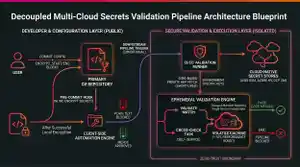
Stop Configuration Outages Before They Start
Learn how a decoupled, multi-cloud validation pipeline eliminates manual gatekeepers, secures cloud-native credentials, and drops configuration downtime to zero.