How can Europe’s Public Sector become more digitally resilient?
Leadership Petra JennerT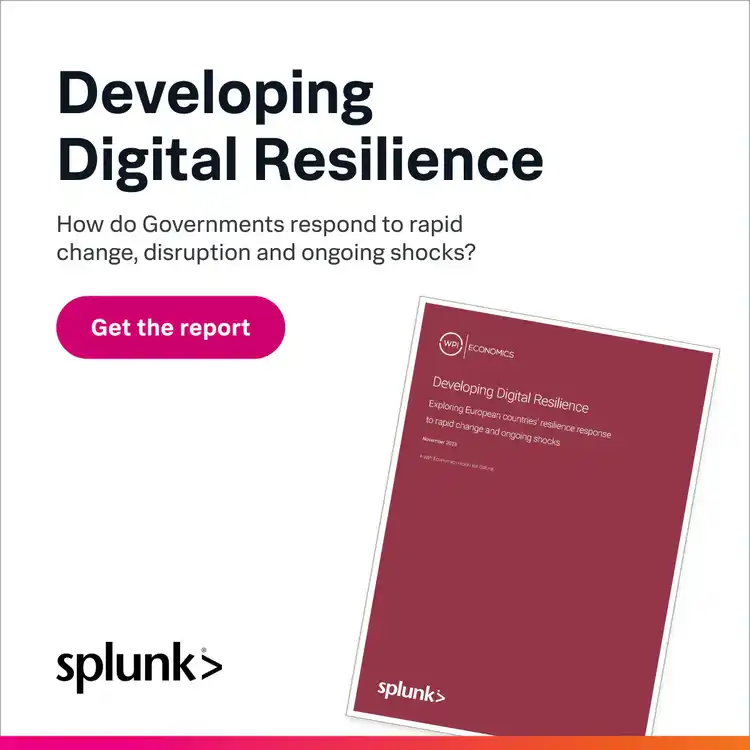
But a similar pace of change now feels like a constant within society more generally. Over the last few years the challenges of a pandemic, conflict and various economic shocks have forced us all to adapt very quickly.
When significant socio-economic changes happen, we often look to our governments, both local and national to take the lead and guide us. As a result, it seems like we now demand far more from our public sector and the services they provide than ever before. This dynamic has contributed to driving change in areas ranging from how we access prescriptions to the way tax administration is delivered.
But along with this innovation comes significant pressure to continue to deliver. The race to meet citizen expectations also brings with it growing complexity and the likelihood that silos will emerge. This presents the risk that the overall understanding of what digital resilience is, why it is important and how it is achieved is lost.
Updating our understanding of what digital resilience actually is, is a critical priority to also ensure that the security, reliability and certainty of service delivery is also to be preserved. Cybersecurity has typically been the major focus of resilience within government, but with so many services now digital and more likely to develop in future, that is not enough to keep systems online and to avoid damaging outages. What is needed is a more holistic approach to technology that looks at prevention of issues, observability of systems as a whole and the ability to collaborate across government. By taking such an approach governments will be better placed to prevent major issues, absorb shocks and drive innovation and transformation.
To explore this topic at a European level we commissioned WPI Economics to explore where pockets of digital resilience have already emerged. As governments move towards considering digital resilience overall, we have identified what is working – with case studies from the UK, Germany and France – and what is not, to help shine a light on how to create a solid foundation of digital resilience.
The report advocates for each country to adopt a Digital Resilience Strategy. Only in this scenario will governments be fully able to seize the potential of new technologies while at the same time being able to manage the shifting nature of digital threats. You can access the reports here.
If achieved, greater digital resilience means that the public sector will be better able to keep up with the changing world around us and adapt to any unforeseen disruptions. Evolving from a security-only focus on resilience to a broader one that emphasizes the importance of service continuation, the minimisation of downtime and the limitation of reputational risk. It means taking the silos out, so that problems can be tackled quickly, smoothly and efficiently. Splunk is focused on helping organisations make these changes and we hope by commissioning work like this and by sharing our experience we can help governments embrace digital transformation throughout this rapid period of change.
Related Articles

Cisco and Splunk Strengthen Enterprise Digital Resilience in the AI Era

.conf25: Reinventing Digital Resilience for the Agentic Era