Ewald Munz's Blog Posts
Ewald Munz is a senior manufacturing and industrial leader with 25+ years of global experience driving tech-enabled business transformation and sustainability across large-scale, asset-intensive environments. He has a proven multi-million-dollar track record of building, scaling, and commercializing high-growth digital solutions and industry-specific business models for industrial customers.
At Splunk, now part of Cisco, Ewald leads the Manufacturing and Automotive vertical in EMEA, owning industry strategy and go-to-market execution and orchestrating global cross-functional teams. He advises global customers on leveraging enterprise security and observability solutions to strengthen their digital resilience, improve operational efficiency, and deliver real-time visibility at scale across complex IT and OT environments.
Ewald is also a recognized leader in industrial sustainability and energy management. He spearheaded Splunk’s sustainability offering, developed the Sustainability Toolkit, and launched cross-industry energy management solutions for buildings, data centers, and factories. These solutions empower organizations to tackle measurable operational and financial KPIs such as energy costs, energy efficiency and carbon footprint through data-driven insights.
Ewald combines strategic leadership with hands-on execution, translating emerging technologies into innovative solutions that deliver real business impact. As a Quantum Ambassador, he is currently driving the convergence of AI and quantum computing, with a focus on optimization and networking use cases relevant to AI factories and next-generation infrastructure.

Sustainability in a World of Data: Key Developments, Use Cases and Roundtables
Building Resilience in Manufacturing with the Power of Data

Cloud Migration of On-Premise Data Centers with Splunk and Accenture
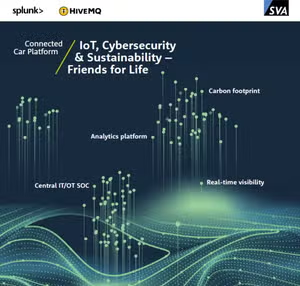
IoT, Cybersecurity and Sustainability - Friends for Life

Smart, Secure and Sustainable Manufacturing - How Splunk and Google Cloud Are Helping Manufacturers to Skate Where the Puck is Going