Kushagra Sharma's Blog Posts
Kushagra Sharma is a Product Manager at Cisco working on AIOps products that help teams operate complex systems with intelligence and scale. He focuses on translating customer problems into practical, data-driven solutions at the intersection of AI, reliability, and software platforms. Passionate about clear thinking and strong product craft, Kushagra writes to share insights on technology, product strategy, and building systems that actually work in the real world.
Display Mode
Paginated
Filter
Author
Author URL
Limit
6
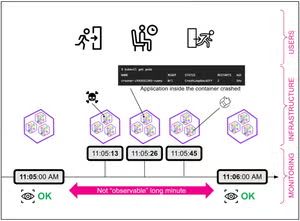
Why Does Observability Need OTel?
In this blog, we will take a look into why modern digital platforms drove this need for OTel and how combining this with Splunk’s o11y platform solves the key challenges of managing these platforms today.

Splunk Celebrates Global CX Day: Building Resilience Drives Customer Experience Outcomes
In honor of Global Customer Experience (CX) Day, Splunk is proud to celebrate the organizations, partners, CX professionals and customers that are at the heart of creating stellar customer experiences and driving meaningful business outcomes.

Predictive vs. Prescriptive Analytics: What’s The Difference?
Data analytics is often broken into four categories — of which predictive and prescriptive are two! Learn what these 2 types of analytics can help your business accomplish.

Announcing Splunk Federated Search for Amazon S3 Now Generally Available in Splunk Cloud Platform
Announcing the general availability of Federated Search for Amazon S3, a new capability that allows customers to search data from their Amazon S3 buckets directly from Splunk Cloud Platform without the need to ingest it.

Putting Customers at the Center of Everything is Key in Driving Business Resilience
In celebration of Customer Experience Day 2023, we share a closer look at how Splunk puts customers at the center of everything.

The Show Must Go On: How Tech Leaders Are Achieving Resilience in Travel and Events
By 2025, the U.S. is projected to reach an all-time low of college attendees. Add attrition from the Great Resignation and fewer overall degreed people to add up to a bona fide ta