Regulatory Compliance 101: What You Need To Know
Learn Leanne MittonTo operate legally and ethically, every company, no matter the size or type of organization, must be aware of the laws, regulations, and industry standards that govern them.
Though many businesses may view regulatory compliance as a burden, it does not have to be this way. The benefits of following these rules greatly outweigh the consequences. Organizations can ensure the safety and well-being of their employees, customers, and the general public by following these regulations.
Achieving and maintaining regulatory compliance can be a daunting task for many businesses. One major contributor here are the laws and regulations that evolve constantly, making it challenging to keep up. Additionally, different industries may have their own set of regulations, which can further complicate what compliance means for your organization.
On the flip side, non-compliance comes with the risk of costly fines and penalties. Worse, certain non-compliance could you leave vulnerable not only to regulatory bodies, but to threat actors looking to maximize on any sort of vulnerability in a business.
To ensure that your business complies with all the relevant laws and standards, let's dive deeper into what regulatory compliance means.
What is Regulatory Compliance?
Regulatory compliance is the catch-all term for organizations adhering to appropriate laws and international standards, depending on the type of business and industry.
By implementing regulatory compliance practices, organizations can more effectively manage risks — avoiding legal penalties, financial losses, and reputational damage. It also supports ongoing governance. This combination of governance, compliance, and risk is known as GRC.
Industry standards also play a significant role in regulatory compliance, as they provide additional guidelines that businesses need to follow to avoid any legal issues.
For instance, Splunk is a technology company with cybersecurity solutions, among many others, which means that we comply with SOC2, FedRamp and ISO 27001, among many others. And practically any company started legally in the U.S. must align with guidelines from the Equal Employment Opportunity Commission (EEOC) to ensure discrimination-free hiring practices.
Financial companies operate in a heavily regulated environment, with numerous local laws (anywhere they practice) as well as industry standards to follow that include rules for transparency, accountability, and the promotion of financial stability. Financial companies that engage in international transactions — that’s a lot of organizations! — also have to comply with the Foreign Corrupt Practices Act (FCPA), which prohibits the bribing of foreign officials to assist in obtaining or retaining business.
By adhering to regulatory compliance, businesses can protect themselves and maintain the trust of their clients and customers.
Types & examples of regulatory compliance
There are numerous types of regulatory compliance that businesses need to be aware of, each with its own set of rules and regulations that can overlap significantly with each other. These rules can depend on various aspects such as the industry that the business operates in, the size of the organization, and the geographical locations they function in.
If you’re a company in North America or Europe, and even if you're not, you've very likely heard of these laws or guidelines by name, or you’re familiar with local versions of them:
- Health Insurance Portability and Accountability Act (HIPAA)
- Payment Card Industry Data Security Standard (PCI-DSS)
- California Consumer Privacy Act of 2018 (CCPA)
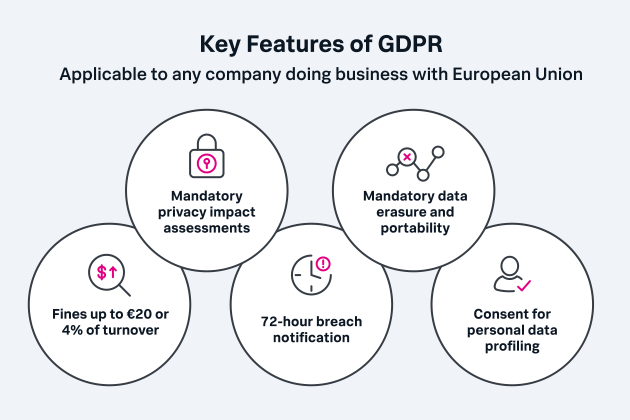
- General Data Protection Regulation (GDPR)
- Sarbanes-Oxley Act (SOX)
- Occupational Safety and Health (OSHA)
Each of these regulations carries its own complexities to understand and follow. GDPR made particularly global headlines when it went into effect a few years ago: it was the first government response to personal data and data privacy, a problem that really escalated with the advent of the internet.
The Payment Card Industry Data Security Standard (PCI-DSS) presents unique challenges for businesses handling credit card payments. You might assume it’s limited only to financial purposes, but these requirements also touch on organizational IT operations and cybersecurity efforts. For instance, PCI-DSS entails a broad set of requirements, including:
- Maintaining a secure network.
- Safeguarding cardholder data.
- Implementing robust access control measures.
- Regularly monitoring and testing networks.
- Maintaining information security policies.
Each of these requirements is complex. Take just one activities above and imagine all the multiple sub-requirements it takes — no wonder compliance is so meticulous.
For instance, to safeguard cardholder data, businesses must not only protect stored data but also encrypt the transmission of cardholder data across open, public networks. This requires a deep understanding of both data protection practices and the technical aspects of encryption. It's this level of detail that can make PCI-DSS compliance a complex undertaking.
Familiarizing yourself with these regulations and applying them appropriately will protect your organization from unnecessary risk and potential legal repercussions.
Failure to comply
Failing to comply with regulatory requirements can have severe consequences for businesses. The penalties for non-compliance can range from fines and penalties all the way to criminal charges, depending on the severity of the violation.
In addition to fines and penalties, you'll likely also suffer from other threats: reputational damage, customer loss, and even lawsuits. Repercussions like these not only impact your financial stability — the fallout can jeopardize the very existence of your organization.
An example of this is Enron, an American industry-leading energy corporation in the 1980s and 1990s. However, years of financial mismanagement and fraudulent activity were concealed through a complex web of unethical accounting practices. When these were finally brought to light, the consequences were tangible:
- Enron's stock plummeted and the company was forced to shut down.
- Thousands of employees lost their jobs and pensions.
- Confidence in corporate America was severely shaken.
The Sarbanes-Oxley Act (SOX) was enacted in 2002. The law was specifically designed to improve transparency in corporate disclosures and prevent the kind of fraudulent activity that led to Enron's collapse.
It's not worth risking your business by neglecting regulatory compliance; it's always better to invest the time and resources to ensure you are compliant.
(Read up on financial crime risk management & third-party risk management.)
Benefits of regulatory compliance
The primary purpose of regulations is to ensure that companies do not engage in unethical or illegal practices — whether on purpose or accidentally. Defining regulatory compliance is a way of ensuring companies follow these rules and regulations thus operating within the confines of ethical, legal, and social standards.
Importantly, organizations also benefit from the requirements of compliance. Ensuring compliance can benefit a business by:
- Promoting ethical and responsible business practices.
- Enhancing the reputation and credibility of the organization.
- Improving risk management.
- Giving a competitive edge over non-compliant companies.
- Assisting with financial stability by avoiding costly penalties and fines.
- Protecting employees, customers, and the general public from harm.
These sorts of benefits stream across your business operations. Yes, you might need security monitoring to comply with regulations, but that security monitoring has significant knock-on effects that could very well help your business in the long-run. Without compliance, however, you may have opted against it.
Regulatory compliance best practices
Now that we understand the importance of regulatory compliance, let's look at some steps businesses can take to ensure they remain compliant. The key here is turning these activities into continuous practices: not approaching them as one-off activities.
- Stay up to date. Keep yourself informed on any changes or updates to regulations and standards relevant to your business.
- Conduct regular audits. Regularly review and evaluate your business practices, systems, processes, and procedures to identify any areas of non-compliance. This can be difficult to achieve manually, but several products and services are available within your industry to help with necessary auditing.
- Provide training. All employees should be well informed about the relevant regulations and their responsibilities in maintaining compliance. Typically, the business itself
- Document everything. Keep thorough records of all your business processes and procedures to demonstrate compliance if needed.
- Consult with professionals. Consult with legal and regulatory experts to ensure you are following all necessary rules and guidelines. Depending on the size of your organization, you might do this internally, with the right staff and resources, or you may opt for compliance as a service.
More than ticking boxes on a checklist, regulatory compliance is about instilling a culture of responsibility within your organization. It safeguards your business, enhancing credibility, and fostering ethical and transparent practices.
Comply with regulations for business longevity & success
The regulatory landscape for businesses is vast and varied, and navigating it can often seem like a complex maze. However, understanding and adhering to these regulations is not just an obligation—it's a necessity for the longevity and success of your organization.
The types of compliance we've discussed are designed to protect not just the businesses themselves, but also their employees, consumers, and the public at large. Taking the necessary steps to ensure your business remains compliant means you'll be able to reap the benefits of a responsible and ethical operation.
While compliance may seem daunting, it is far better than the consequences that come with non-compliance. Remember — stay informed, conduct regular audits, provide training for employees, document everything, and seek professional guidance when needed. Investing in compliance now will save you in the long run.
Related Articles

What is Digital Experience Monitoring?

What Is OPSEC? Operations Security and How It Works