What Is OPSEC? Operations Security and How It Works
Learn Joseph NduhiuKey Takeaways
- Operations security (OPSEC) focuses on denying adversaries actionable information by identifying and protecting sensitive operational details.
- OPSEC addresses both human and technical vulnerabilities that, when combined, can reveal critical insights to attackers.
- An effective OPSEC program follows a continuous lifecycle of identifying information, analyzing threats, assessing risk, and applying countermeasures.
Cyberattacks continue to evolve in speed, scale, and sophistication. Governments, agencies, and organizations now operate in complex digital environments yet continue to face APTs from nation-states, hacktivists, and other adversaries — many powered by AI and automation.
Absolute security may be unrealistic, but preventing adversaries from gaining actionable insight is not. That’s the role of operations security (OPSEC). By protecting sensitive operational information across the system development lifecycle, OPSEC helps organizations reduce risk, maintain resilience, and limit the intelligence available to potential attackers.
In this article we will consider the five key steps of deploying OPSEC.
What is OPSEC operations security?
According to NIST, operations security (OPSEC) is a systematic process organizations use to deny adversaries information about their capabilities and intentions. It focuses on identifying, controlling, and protecting unclassified information that relates to the planning and execution of sensitive activities.
OPSEC addresses threats from a wide range of adversaries, including terrorists, hacktivists, and foreign entities whose objectives conflict with national or organizational interests. These actors often exploit small, seemingly insignificant data points that, when combined, reveal critical insights.
OPSEC controls protect the confidentiality of operational information by limiting unnecessary exposure — including information shared with vendors, partners, and other third parties. These controls apply across systems and environments and protect data such as:
- User identities and roles
- System functions and dependencies
- Suppliers and supply chain processes
- Functional and security requirements
- System designs and architectures
- Testing, evaluation, and implementation details
Together, these measures help organizations reduce the risk of information leakage that adversaries could exploit.
How to build an OPSEC Program
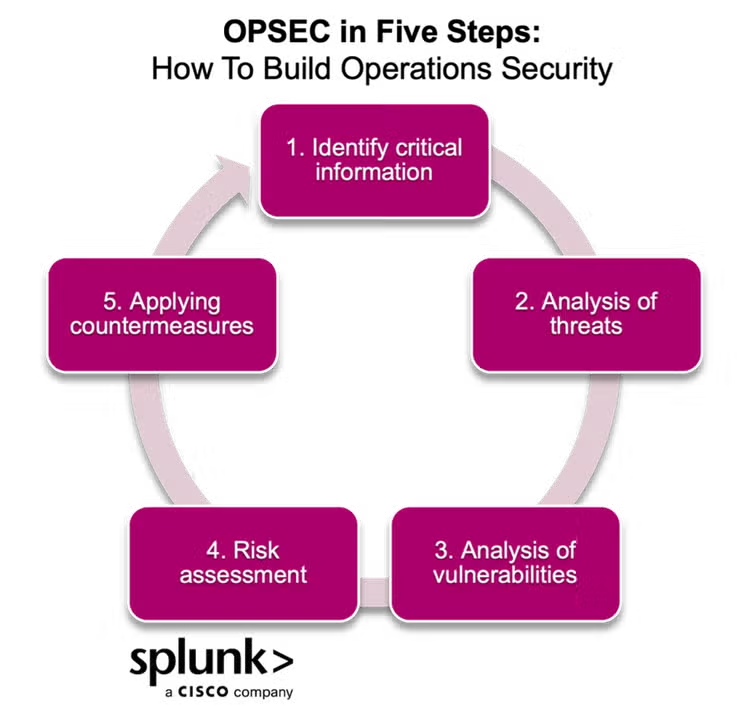
1. Identify critical information
The OPSEC process begins by identifying critical information. This includes classified or unclassified data that, on its own or in aggregate, could enable an adversary to plan or execute an attack.
Critical information consists of specific facts about friendly intentions, capabilities, or activities that adversaries need to act effectively. This may include long-term strategic plans as well as day-to-day operational details that expose how sensitive activities are conducted.
Examples of critical information include:
- Status of key assets and installations
- Personally identifiable information (PII)
- Logistics, resource plans, and budgets
- Activity schedules, processes, and procedures
- Operational capabilities and limitations
Critical information also includes indicators — discrete data points that adversaries can piece together, much like a jigsaw puzzle, to gain advantage.
Organizations typically identify critical information through criticality analysis or business impact analysis. These exercises reveal the processes and assets that support mission and business objectives and help teams prioritize what needs protection.
The output of this step is a critical information list (CIL). A CIL documents specific information assets along with their source, owner, priority, and handling requirements, such as storage and access controls. Organizations should review and update the CIL regularly to reflect evolving missions, technologies, and threat conditions.
2. Threat analysis
Once critical information is identified, teams analyze the threats targeting it. Threat analysis evaluates circumstances or events that could negatively impact information assets, operations, or national objectives.
This process includes identifying:
- Adversaries and their objectives
- Adversary intent and motivation
- Adversary capabilities and resources
- Likely attack methods and techniques
Threat analysis assigns ratings based on both observed and estimated intelligence:
- Intent reflects the adversary’s motivation.
- Capability reflects the tools, access, and resources available to them.
Organizations often use both qualitative and quantitative techniques to assess the potential consequences of adversarial actions.
Threat analysis draws on counterintelligence studies, historical data, and intelligence reporting related to both foreign and domestic actors. Because the threat landscape changes constantly, this analysis should be conducted regularly and updated as conditions evolve.
Teams should also consider threat shifting — how adversaries adapt when safeguards are introduced. Examples include delaying attacks, changing targets, or using alternative techniques to bypass controls.
Threat analysis directly informs the selection of countermeasures (Step 5) by clarifying which risks matter most.
3. Analysis of vulnerabilities
After assessing threats, organizations identify vulnerabilities within their security environment. Vulnerabilities are weaknesses that adversaries can exploit to access, analyze, or act on critical information without detection.
Examples of common vulnerabilities include:
- Posting geotagged photos from secure locations on social media.
- Discussing sensitive procedures in public or on unsecured communication channels.
- Using fitness trackers during military or operational movements.
- Wearing identification badges outside controlled facilities.
- Failing to prevent tailgating at secured entry points.
Technology environments also contain vulnerabilities. Weaknesses in architecture, configuration, code, or infrastructure can expose sensitive information if left unaddressed.
The NIST National Vulnerability Database catalogs many of these issues through Common Weakness Enumerations (CWEs). Examples include improper configurations and flaws in how data is stored or transmitted. Through vulnerability management, organizations should identify these vulnerabilities and either eliminate them or implement controls to reduce the likelihood of exploitation.
4. Risk assessment
Risk assessment brings threats and vulnerabilities together. Assessing the risk evaluates the likelihood that an adversary could exploit a vulnerability and the potential impact if critical information were exposed.
This step helps organizations justify mitigation actions through cost-benefit analysis and prioritize countermeasures based on risk severity. Risk assessments typically map risks according to susceptibility and anticipated impact to guide decision-making.
Organizations may approach risk assessment in different ways:
- Threat-oriented: Identify adversarial threat sources and threat events and then consider how each threat scenario develops.
- Asset/Impact-oriented: This starts with identifying impacts or consequences of concern and critical assets and identifying adversarial threat events that could lead to those impacts or consequences.
- Vulnerability-oriented: Start with a set of predisposing conditions or exploitable weaknesses in information systems and environments to identify adversarial events that could exploit those vulnerabilities together with possible consequences.
ISO 31000 defines risk assessment as the combined process of risk identification, analysis, and evaluation. The results are compared against established criteria to determine which risks require action.
These decisions should account for organizational context, stakeholder perspectives, and both actual and perceived adversarial impacts. Owners of critical information and relevant intelligence partners should play a role in evaluating acceptable risk levels.
5. Applying appropriate countermeasures
When adversary risk exceeds acceptable thresholds, organizations must deploy countermeasures. These safeguards reduce exploitable vulnerabilities and limit the effectiveness of threats to a tolerable level.
Countermeasures may include actions, technologies, procedures, or policies designed to protect people, information assets, and operations. Selecting and implementing the right controls is critical to the security and welfare of individuals, information assets, and the nation.
NIST SP 800-53 Security and Privacy Controls guidance outlines key questions organizations should address when selecting controls:
- What security and privacy controls are required to manage mission and individual risk?
- Have those controls been implemented, or is there a plan to do so?
- What level of assurance is needed to confirm the controls are effective?
Countermeasures should integrate with broader operational and security programs where possible. Common examples include:
- Access control
- Media protection
- System and communications protection
- Personnel security
- Security awareness and training
- Supply chain risk management
Organizations may also reference ISO/IEC 27002:2022, which defines 93 information security, cybersecurity, and privacy controls across organizational, people, physical, and technological domains.
Final thoughts
OPSEC is not a one-time checklist or a static policy. It is a continuous discipline that evaluates how effectively organizations prevent critical information from reaching adversaries.
For OPSEC to succeed, leadership and staff at every level must understand evolving threats and integrate OPSEC practices into daily operations. Establishing a formal OPSEC program — tailored to organizational context and reviewed regularly — helps ensure that security postures adapt as adversaries do.
When executed effectively, OPSEC limits information leakage, strengthens operational resilience, and reduces the intelligence advantage of even the most sophisticated adversaries.
FAQs about OPSEC
Related Articles
What Is a Guardrail in AI?

Continuous Testing: The Ultimate Guide
