Leaving 2020 Behind, What's the Role of Retail Stores in the Data Age?

Thankfully, many retailers survived and even thrived during the pandemic, giving us a glimpse into the new role of stores in 2021 and beyond.
The past year alone has produced more digital transformation than the last decade, but the accelerated technology adoption and the endless creation of apps are just the beginning.
With consumers using their phones to compare prices and products and even make in-store purchases as they browse or shop in stores, the physical store is becoming a place to extend the digital channel and to enable purchases in ways we prefer. It’s about positioning your stores to create an immersive or differentiated experience that can’t be easily replicated online or by competitors.
Some stores are emerging as service, return or fulfillment centers in order to keep customers coming in. Traditional retailers like Target and Kohl’s are leveraging their network of stores in key locations to fulfill online orders, delivering options customers love such as curbside pickup or “Buy Online, Pick Up in Store” (BOPIS). Nordstrom takes its service approach — offering personal shopping, tailoring, repairs and more — to a new level with its micro Nordstrom Local spaces, using them as click-and-collect and service hubs rather than full-fledged stores.
Even digital natives like Allbirds and Casper realize they need physical store presence to create an “escape.” Casper stores, for instance, have sleep pods that are calming and restful, but also evoke the spirit of the brand. The new world of retail prioritizes customer engagement and customer needs for the long term goal of attracting and keeping customers happy.
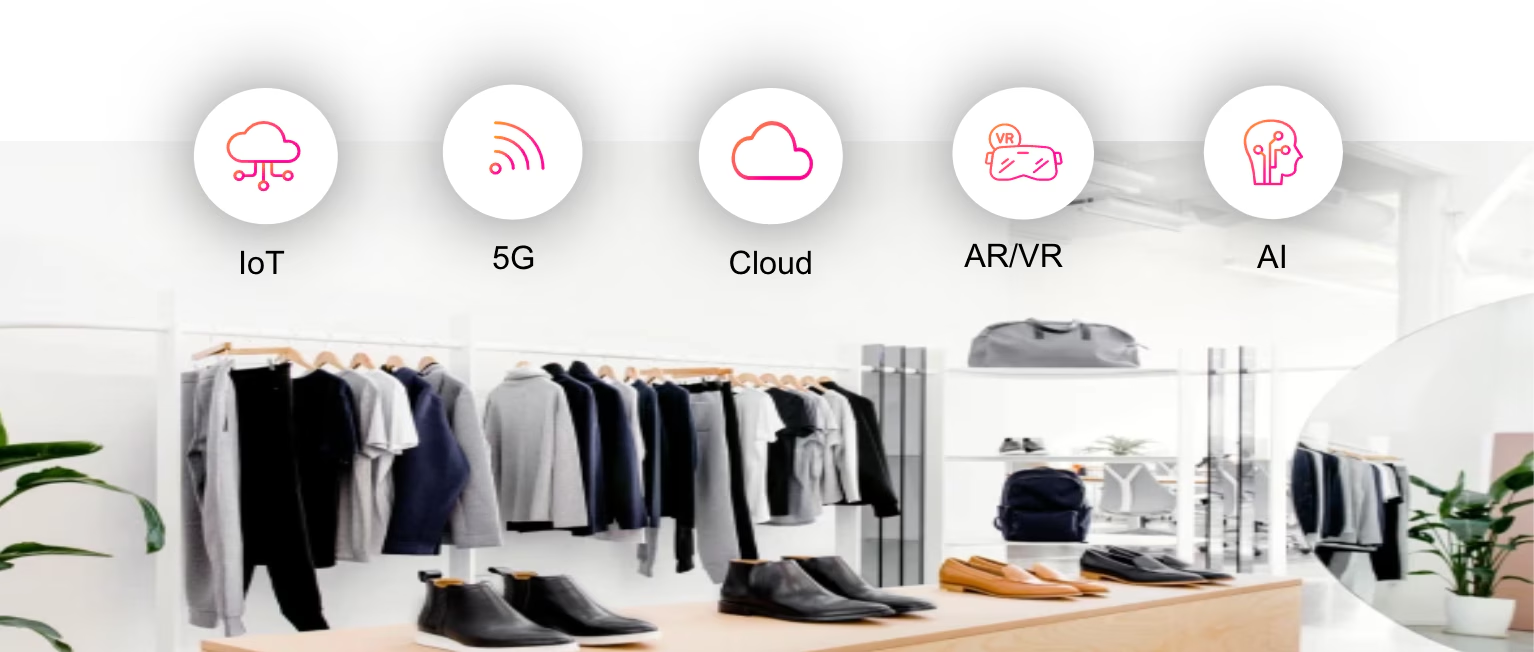
Brick-and-mortar retail is rapidly transforming with technologies such as IoT, 5G, cloud, virtual reality and AI to improve the shopping experience.
Virtual try-ons are becoming an integral part of the shopping experience, letting shoppers virtually try on clothing, shoes, jewelry and even cosmetics using AR. Jewelry brand Kendra Scott, for instance, has adapted to pandemic-era shopping by letting shoppers try on earrings using their iPhones.
IoT sensors integrated with video analytics, WiFi and beacon technology when used in a smart and transparent way can make a physical store as data-rich as a website. With analytics done at the edge and data transmitted in real time to the cloud, powerful insights can be gained across all stores.
The vast improvement in 5G networks will enable retailers to deploy a new generation of high-performing applications and digital experiences in their stores. (Imagine all the bandwidth IoT needs to communicate to the cloud!)
And with the right AI-based technologies, retail companies can further transform every aspect of their business. We’re already benefiting from the convenience and safety of buying online and picking up in store — imagine how the BOPIS process can be streamlined with AI to improve in-store operations and associate productivity so associates spend less time moving and tracking merchandise.
There is a command thread.
These technologies generate a ton of data that can be used to improve the customer experience. Making the store experience as smooth as possible is crucial at a time when immersive experiences are bringing customers to the store.
The best retailers know the three key drivers of stores’ value: experience, convenience and service. If the right technologies are integrated and the right data is used in an authentic way, retailers can create a differentiated experience with exceptional services that we remember.
One such memorable experience is walking through Nike’s SoHo flagship store. The store has built-in event spaces like a basketball court, a soccer trail space and treadmills that allow you to try products out in their intended environment while having fun.
Kohl’s comes to mind when it comes to convenience, on the other hand. The retailer is effectively using their stores as fulfillment and return centers. You not only can buy online and pick up your order in your selected store, but you can return products purchased on Amazon in their stores. (Thank you, Kohl’s, for reducing friction in my shopping journey from purchase to pick-up and return.)
When the right technologies are implemented, retailers can launch new digital services such as endless aisles that let customers order products that are out of stock or not sold in-store and have them shipped to their homes.
The risk of staying siloed is the risk of becoming irrelevant.
It’s a new way of looking at the business. It’s taking a customer-focused approach to educating and empowering omnichannel customers, the most valuable customers, by integrating channels rather than working against each other to get “credit” for the sale. Retailers that are closer to their customers and can respond quickly to their changing demands based on data from multiple touchpoints get better conversions and earn customer loyalty.

----------------------------------------------------
Thanks!
Mary Chen
Related Articles

How Splunk is Helping Shape the Future of Higher Education IT by Tackling EDUCAUSE 2026 Top Issues

Enhancing Government Resilience: How AI and Automation Empower Public Sector Missions

Solving Manual Mayhem in Telecom with Agentic AI

Upgrading to Splunk Enterprise 10.0 and Splunk Cloud Platform 10.0: Key Resources for Public Sector Customers
Building the Next Generation of Defenders: From the Classroom to the SOC of the Future
Analytics That Work: 3 Approaches for the Future of Contact Centers
Observability + Security: Real-Time Digital Resilience for SLED
Digital Resilience for State and Local Governments (Part Two)