Reflections from SIBOS 2025: How will advances in technology (and especially AI) change the financial services industry over the next 5 years?
Industries Charles AdriaenssensIt is widely held view that the world is going to change significantly over the next 5 years, but it is very difficult to predict with any degree of confidence what this will mean for the financial services industry. A lot of the presentations I listened to at SIBOS 2025 were forward looking, but very few of the speakers (or indeed delegates) felt confident that they could accurately predict what the future will hold.

The industry is aware that it needs to embrace the many technological advances that are currently taking place, but financial services organisations will need to remain agile as they get to grips with new tools and capabilities. This was the thread that ran through most of the discussions.
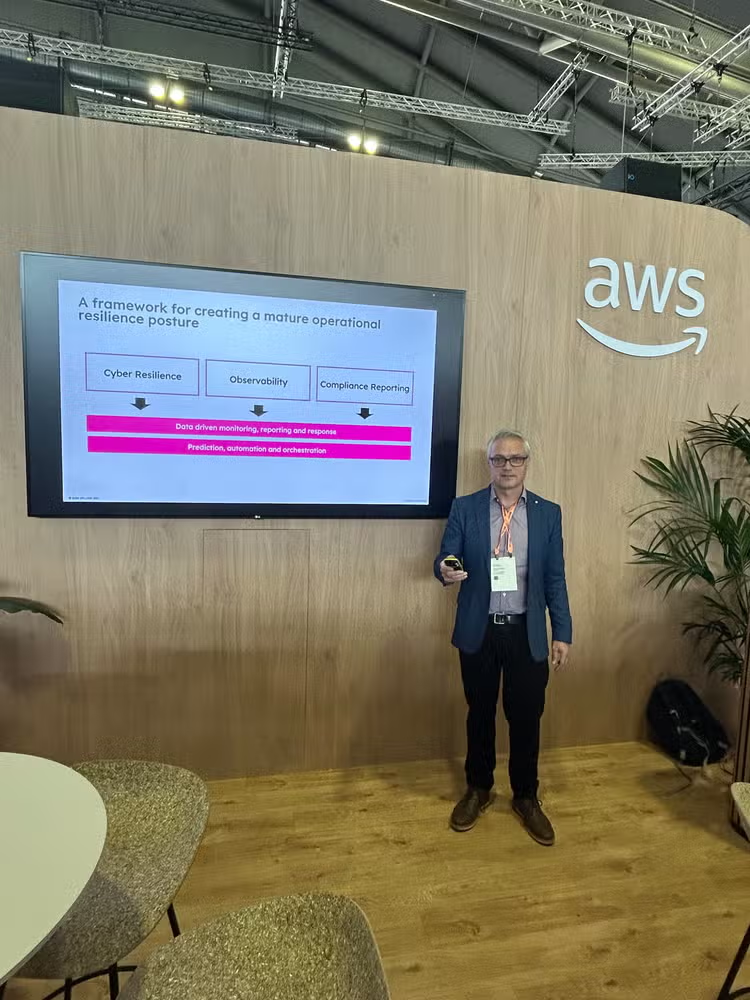
- The ability to embrace AI quickly: AI will be a significant disruptor. This is accepted. The challenge for the financial services industry will be to nurture, manage and govern AI to ensure it reaches its potential. Critical to this is the speed with which the knowledge of employees can be developed. To be truly successful AI will need to be fully embedded in the culture of organisations and from what I heard last week this process is already underway. The AI era is here, and it looks likely to be the dominant force for change and innovation over the next 5 years.
- The importance of collaboration, especially in regulation and governance: Effective governance helps to stimulate positive change, but regulators caution that they are typically looking in the rear-view mirror when they define policy. They find it hard to keep up with technological advances without support, which is why collaboration in this area is so important. Collaboration can take on many forms, for example reporting back on new and emerging technologies or new cyber / fraud threats. To deliver appropriate governance, is clear that all stakeholders, including regulators, financial services organisations and technology companies, need to work together to create appropriate guidelines and standards that will enable the industry to thrive. The appetite to do this is there. I just hope that collaborators can keep up with the pace of technological change.
- The ability to effectively harness data: In the first session I attended data was proclaimed as an ’natural competitive advantage’ for the industry. And I get that. Data is the lifeblood of financial services and is critical to delivering new and improved services. However, it is only useful if it can be read, correlated and analysed. Currently, a lot of data remains underutilised or not utilised at all. This is why the move towards the creation of global standards such as ISO20022 is so important. Having consistent and well governed data is the foundation for industry-wide knowledge generation and insight sharing. As the financial services industry moves towards real time via such initiatives as the continued growth of instant payments and the transition to T+1 settlement, being able to utilise all relevant data is no longer just desirable, it is a prerequisite for success.
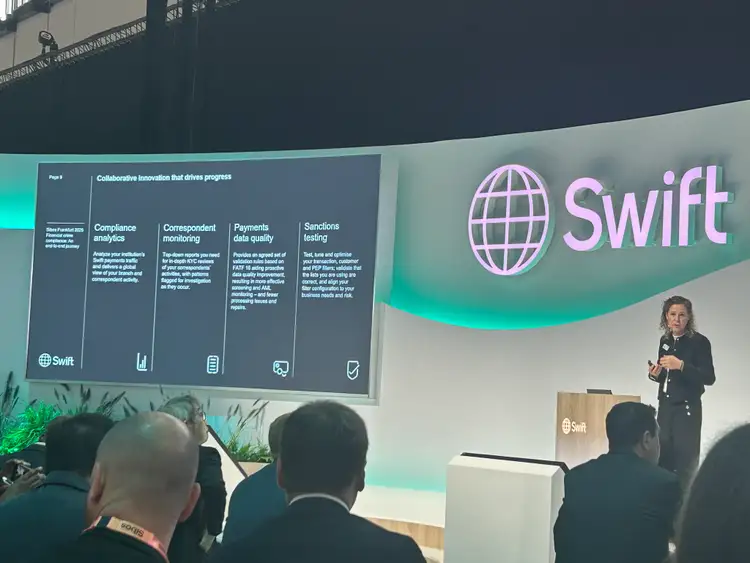
If it can do this, there are clearly exciting times ahead. So hold on to your hats it’s going to be quite a ride…
Related Articles

Helping Law Enforcement with Call Detail Records

Digital Resilience Powers Your Mission: GovSummit 2024 in Review