Predictive vs. Prescriptive Analytics: What’s The Difference?
Imagine being able to foresee future trends, anticipate customer behaviour, optimize your operations, and take actions that are not just reactive — they shape the future of the market. In the world of data-driven decision-making, we're able to do all that by paying attention to the information we analyze from predictive and prescriptive analytics.
A large and growing field, data analytics is often broken into four categories — of which predictive and prescriptive are two! If you're not exploring these advanced analytics techniques, you might be missing out on key insights that could offer your business a distinct competitive advantage.
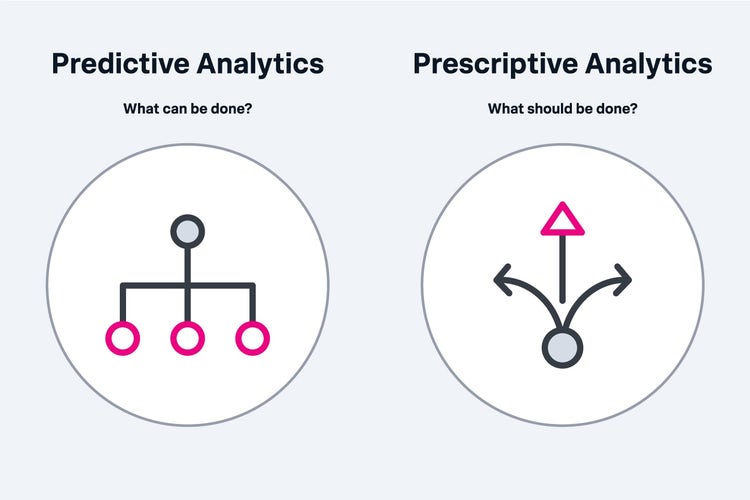
TLDR: Predictive analytics provides a range of potential outcomes based on the available data. Prescriptive analytics actually suggests actions to take in order to achieve specific goals.
Before we can dive deeper into the benefits, first we need to look at the differences between predictive and prescriptive analytics. While both of these methods of data analysis are used to guide decisions, they rely on different techniques and tools.
Overview: predictive analytics
As the name implies, predictive analytics are used to predict what might happen in the future by analyzing past data. This approach identifies patterns in previous data to answer the question, “What might happen next?”
The more data you have, the more accurately you'll be able to correctly predict future outcomes.
Through predictive analytics, companies are able to better understand customer behaviour and anticipate their needs. The companies are then able to tailor their products and services to better serve customers' intentions and preferences.
In addition, predictive analytics can be used for operational planning such as predicting demand for particular goods or services in order to optimize supply chain management processes.
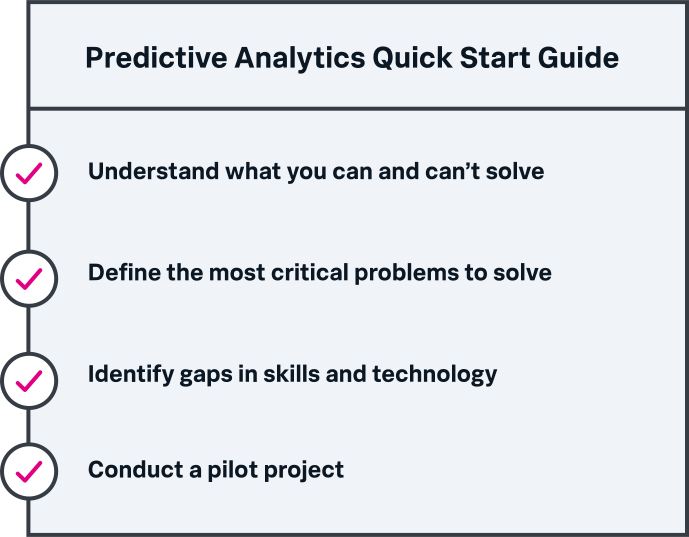
How prescriptive analytics works
Prescriptive analytics, a newer term, describes a type of analytics designed to answer the question, “What do we do now?” In prescriptive analytics, the outcome is not just a prediction or forecast, but recommendations for the best course of action.
Prescriptive analytics builds on the information provided by predictive analytics to recommend a course of action in response to the predicted outcome. Through analyzing prescriptive analytics you'll be able to map out actionable steps to take in order to shape both the present and future of your business.
The goal of prescriptive analytics is to identify the best possible outcome by studying different variables, scenarios, and potential solutions to reach a desired result. This method of data analysis helps businesses make decisions faster and more efficiently while minimizing risk.
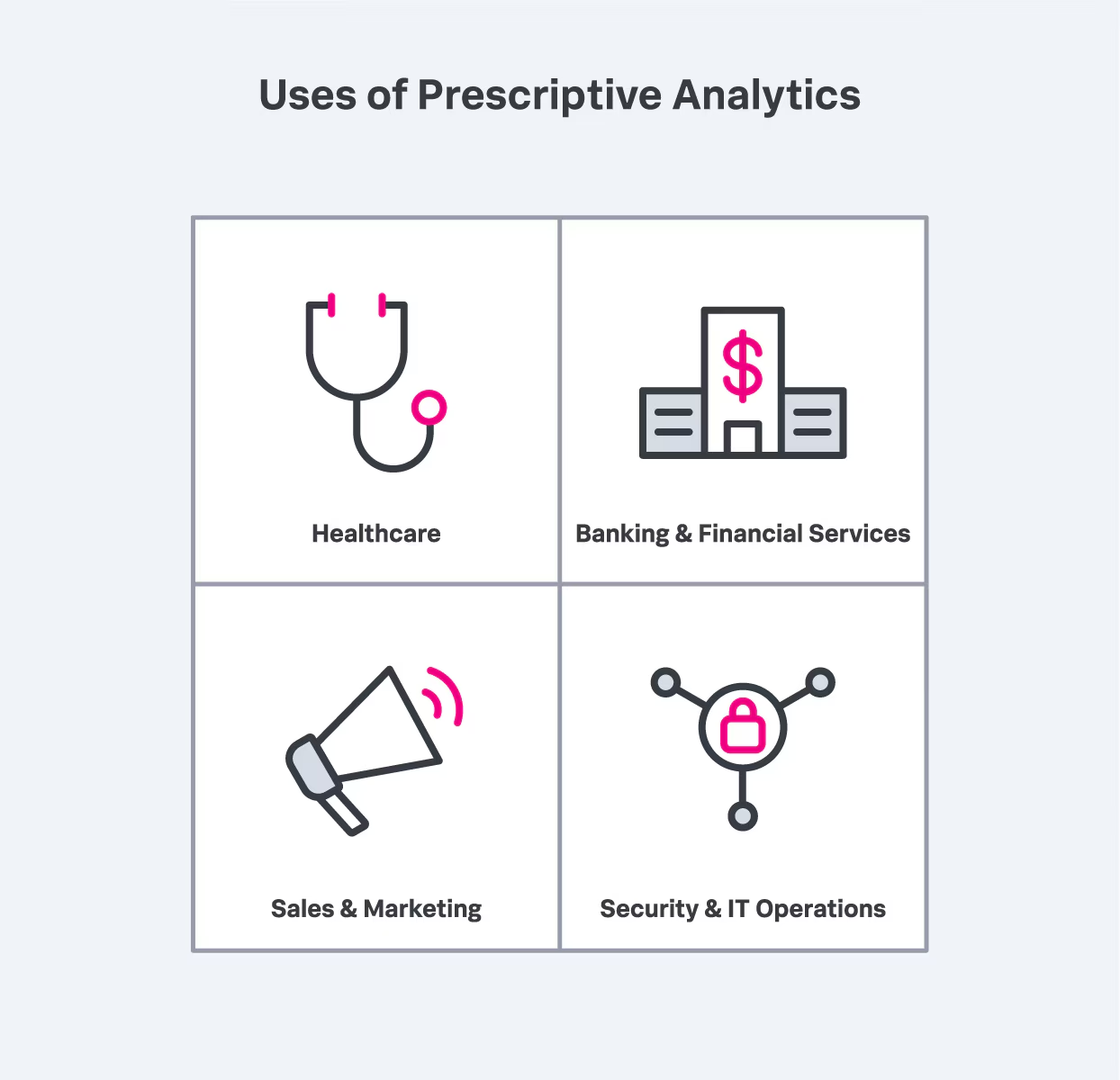
Using predictive & prescriptive analytics together
To effectively process large amounts of data and accurately predict outcomes, both analytics methods rely on machine learning. Trying to do this analysis on your own would not only be time-consuming but exhausting as well.
Investing in the right predictive and prescriptive analytics tools, you can gain a competitive edge and grow your business. These analytics solutions help companies to:
- Make better and faster decisions tailored to customer needs.
- Maintain and optimize operations.
- Keep your competitive edge.
Whether you're looking to enhance customer experience or increase operational efficiency, predictive and prescriptive analytics are powerful techniques that offer scalable solutions for any business.
(Related reading: customer analytics.)
Business use cases for predictive & prescriptive analytics
Predictive and prescriptive analytics can be used in a wide variety of business applications that you might not have thought about. Using both predictive and prescriptive analytics allows businesses to not only understand and anticipate future trends but also to take proactive measures that shape the future, drive growth, and gain a competitive advantage.
Here are areas where it can make absolute sense using both predictive and prescriptive analytics
Risk management
Companies of all stripes and sizes engage in risk management: cyber risk, financial risk, real-world and disaster risk, etc.
One example is how insurance companies can use predictive analytics to create risk profiles for their clients based on historical data allowing for better risk assessment and pricing of policies. With prescriptive analytics, they can establish the best route to mitigate risks and create a strategy for claim settlements.
(Read our full risk management primer.)
Fraud detection
Financial institutions and e-commerce platforms can use predictive analytics to detect suspicious patterns or anomalies in transaction data that might indicate potential fraudulent activity. With prescriptive analytics, they can then develop strategies or actions to take when fraudulent activity is predicted such as:
- Blocking the transaction.
- Alerting the customer.
- Increasing security measures.
(Learn the ins & outs of FCRM — financial crime risk management.)
Sales forecasting
Retail businesses can use predictive analytics to forecast future sales trends based on historical sales data and other factors like seasonal variability. This information can help in effective inventory management.
With prescriptive analytics, businesses can determine the best way to act on these forecasts, like planning promotions or special events to boost sales.
Customer retention
Companies can use predictive analytics to identify which customers are likely to churn (aka not renew or switch service providers) by analyzing factors like usage patterns and customer complaints. Prescriptive analytics can then recommend strategies, such as personalized offers or improved customer service, to retain those customers longer.
(Learn how to deliver a world-class customer experience.)
Getting the most out of prescriptive and predictive analytics
To truly take advantage of predictive and prescriptive analytics, organizations must prioritize their integration into decision-making processes. In order to do this, they need to:
Invest in the right talent & tools
To fully leverage the benefits of predictive and prescriptive analytics, organizations must ensure they have the right tools and skilled personnel. This includes:
- Investing in advanced analytics software that can handle large data sets and complex algorithms.
- Hiring data scientists and analysts who can interpret and apply the insights derived from the data.
(Uncover the most popular data science & data analytics certifications to earn.)
Ensure high quality, relevant data
For predictive and prescriptive analytics to deliver accurate results, businesses need to feed them with high-quality, relevant data. The data should be clean, well-structured, and come from reliable sources.
Incorporating data from a variety of sources can provide a more comprehensive view of the business situation and lead to more accurate predictions and prescriptions.
Integrate analytics into decision-making processes
For predictive and prescriptive analytics to be effective, their insights must be integrated into the decision-making process. This means that the organization should foster a culture where data-driven insights are valued and acted upon.
Ensure data governance structures so that insights derived from predictive and prescriptive analytics are effectively used in strategic planning, operational decision-making, and other key business areas.
Analytics for decision making
Predictive and prescriptive analytics are two advanced forms of data analysis. Through the power of machine learning to process large amounts of data, companies can use predictive analytics to anticipate customer behaviour and forecast future trends. Prescriptive analytics takes this one step further by recommending the best possible actions for businesses to take in order to achieve their desired outcomes.
Next time you want to foresee future trends, anticipate customer behaviour, optimize your operations, leave the crystal ball behind and let your predictive and prescriptive analytics tools do the work instead.
Related Articles

Top Cybersecurity Certifications To Earn Today

ISO/IEC 31000 for Risk Management

What Is Hacktivism?

The OCSF: Open Cybersecurity Schema Framework

The Double Diamond Design Process

Product Manager Role Explained: Responsibilities, Skills, and Salaries

What Is Zero Touch In IT?

Data Orchestration Explained