The Double Diamond Design Process
Are you a designer who struggles to know where to start? Or, maybe you’re not a designer, but you want to know about the design process and where you can fit in.
If so, the Double Diamond may help you.
The Double Diamond is a design thinking framework that designers of all types use regularly. Read on to learn more about how to use the double diamond framework — including my own perspectives from using it in my professional work.
What is The Double Diamond design framework?
The Double Diamond process is a design thinking framework developed by the British Design Council. It was created to help guide the design process and designers around the complexities of problem solving for a product.
This visual representation of the end-to-end design process emphasizes divergent and convergent thinking. The process consists of four main phases, represented by two "diamonds" that form a figure-eight shape.
The Double Diamond process emphasizes the importance of both divergent and convergent thinking throughout the design process:
- Divergent thinking involves exploring a wide range of possibilities and generating creative ideas.
- Convergent thinking involves narrowing down options and making decisions based on defined criteria.
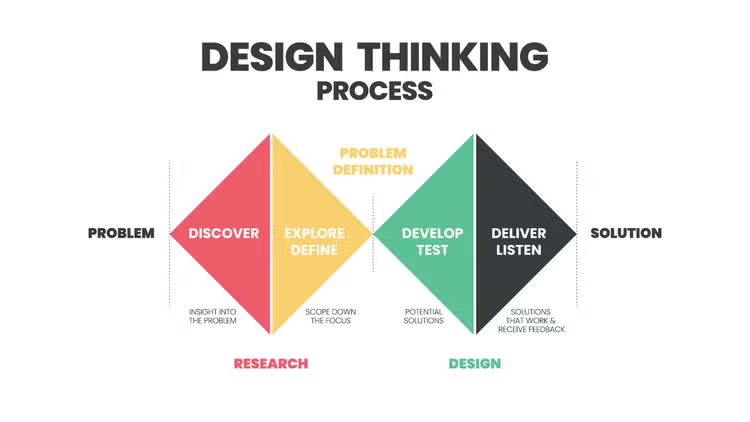
How the Double Diamond works
The double diamond is broken down into four phases:
- Discover
- Define
- Develop
- Deliver
In the following sections, I’ll walk you through each phase. I’ll also share my own real-world experience and thoughts on each phase, as I am a designer who works through this model on a daily basis.
Phase 1: Discover
The first diamond represents the beginning of the process. In this phase, designers seek to understand the problem space by researching, observing, and empathizing with users. The goal is to gather insights and identify opportunities.
Key activities in the Discover phase:
- Conducting qualitative research methods such as interviews, surveys, and observations to gather insights into users' behaviors, preferences, and pain points
- Facilitating collaborative workshops with cross-functional teams and stakeholders to generate ideas,and share perspectives
- Documenting research findings, insights, and key learnings to ensure they are accessible and actionable for the rest of the design process
An expert’s perspective. In my experience, the discovery phrase can be challenging when stakeholders already have a solution in mind for their problem. Sometimes stakeholders present solutions that do not actually solve their problem.
Importantly, the discovery phase is not intended to immediately arrive at a solution but rather to:
- Fully understand the problem.
- Explore different perspectives.
- Uncover any insights that may not initially be apparent.
(Related reading: customer experience metrics**& customer data analytics.)
Phase 2: Define
After generating a broad range of insights in the Discover phase, the next step is to define the specific problem or challenge to be addressed. This involves synthesizing the gathered information to define a clear and focused problem statement.
Key activities in the Define phase:
- Refining the problem statement based on the insights gathered during the Discover phase. This involves clarifying the scope, boundaries, and objectives of the project to ensure a clear understanding of what needs to be addressed.
- Prioritizing the identified problems or opportunities based on factors such as impact, feasibility, and alignment with strategic objectives.
- Defining clear criteria for evaluating the success of potential solutions. This may include metrics such as user satisfaction, efficiency gains, or business outcomes.
The Define phase, in my opinion, may be the most important part of the design process. The define phase helps me and the team hone the problem we would like to solve. It fosters alignment and collaboration within the wider team, including the stakeholders.
Through facilitated workshops, brainstorming sessions and open dialogue, we can all determine the feasibility of our goals. To ensure we are practical and realistic on what we can achieve, we can map out:
- Timelines
- Resource constraints
- Technical considerations
Aligning on all these things can really help a project go smoothly.
(Related reading: the software development lifecycle**& how Splunk uses design best practices when building & visualizing our data solutions.)
Phase 3: Develop
The second diamond represents the expansion of possibilities. In this phase, designers brainstorm and explore various solutions to the defined problem. Creativity and ideation techniques are used to generate a wide range of ideas without judgment.
Key activities in Develop phase:
- Building prototypes or mock-ups of the proposed solutions to test and iterate on different design concepts.
- Conducting usability testing and user feedback sessions to gather insights on how users interact with the prototypes and to identify areas for improvement.
- Refining and polishing the design of the selected solution based on feedback from user testing and stakeholder reviews
- Documenting the design decisions, specifications, and requirements to guide implementation and development efforts.
The Development phase is my personal favorite. As a designer, sometimes it is nerve-wracking to have people critique your designs or interact with the prototypes you build. However, I love doing usability testing — this process isn't solely about validating design choices, it is an opportunity to understand human behavior and challenge my own biases.
One aspect I love most about usability testing is the diversity of user behaviors. No two individuals approach the prototypes in exactly the same way. Watching each person interact with different elements, take alternative paths, or encounter unexpected roadblocks offers really valuable insights.
Usability tests are an invaluable opportunity for growth. Each insight from the testing session contributes to a deeper understanding of how humans interact with the digital world.
(Related reading: software testing & real user monitoring.)
Phase 4: Deliver
Once the team has generated potential solution(s), the focus shifts to refining and implementing the best ideas. Prototypes are developed, tested, and iterated upon based on feedback.
The goal is to deliver a solution that effectively addresses the defined problem and meets the needs of users.
Key activities when Delivering:
- Handing off the finalized design assets, specifications, and documentation to development teams for implementation.
- Adapting the solution for different languages, cultures, and regions through localization and internationalization efforts.
- Launching and rolling out the solution to end users, stakeholders, and other relevant parties
The Delivery phase is the last sprint to the finish line. There's nothing like seeing your work live. During this phase it's important that you regroup with the team to make sure everyone is aligned on two key parts:
- How everything is supposed to look and function
- Assurance that everything is built correctly
The best part? It is so rewarding to see all your hard work live and being used by users.
Benefits of using the Double Diamond model
Using the Double Diamond process offers several benefits for design and problem-solving:
- Promotes collaboration among multidisciplinary teams, bringing together individuals with diverse skills, perspectives, and expertise to tackle problems from different angles.
- Facilitates communication and alignment among team members and stakeholders by providing a common language and understanding of the design process.
- Emphasizes understanding and empathizing with users' needs and experiences, leading to solutions that are more likely to meet user requirements and expectations.
- Creates a path forward while still being flexible. While the process follows a structured framework, it also allows for flexibility within each phase. Teams can adapt activities and methods based on the specific needs of the project and the dynamics of the team.
- Gives ample opportunity to adjust. The Double Diamond is inherently iterative, with opportunities for reflection, testing, and refinement at each stage. This iterative approach helps teams learn from failures and successes, leading to continuous improvement and better outcomes.
Double Diamond drawbacks
While the Double Diamond has some great benefits, there are some potential drawbacks.
Resource-intense can slow agility. Following the Double Diamond framework can require a lot of time and resources. In environments where there are limited resources or fast pace, it may be challenging to implement the framework fully.
Projects don’t always start from Phase 1. Another drawback is sometimes projects start somewhere in the middle of the Double Diamond. Stakeholders or designers may already know what they want to build and they want to iterate on that concept. This creates pushback when designers try to explore other solutions.
The framework can feel linear instead of iterative. There is also some criticism of this process being too linear, unable to account for any challenges or changes. For example, the Double Diamond framework structure may not accommodate for:
- Unexpected discoveries
- Challenges that may occur during the design process
Design problems involve multiple iterations of ideation, prototyping. Designers often revisit earlier stages as new insights and unexpected challenges are discovered. The iterative aspect is essential for developing innovative and user centered solutions but may not be emphasized in the framework.
Design trends today
Organizations are beginning to combine the double diamond framework with Agile and Lean methodologies to enhance flexibility and efficacy in the design process. By incorporating Agile principles — such as iterative development and continuous feedback — teams can adapt more quickly to evolving users needs and market dynamics.
Overall, the Double Diamond process promotes a holistic and human-centered approach to design, leading to more effective solutions that address real user needs and create meaningful impact. Although it has some drawbacks it is still a great map to use in the design process.
FAQs about Double Diamond Design Process
Related Articles

The Guide to Network Forensics: Importance, Tools, and Use Cases

The Very Best Cybersecurity Podcasts To Listen To in 2026