What Is IaC? Infrastructure as Code, Explained
Infrastructure as Code (IaC) is an approach to managing and provisioning infrastructure through machine-readable configuration files, rather than manual processes.
Think of IaC as one way to manage infrastructure.
Characteristics of IaC
Inspired by DevOps and Agile software development best practices, IaC focuses on creating consistent, simplified, and repeatable processes for infrastructure management. Common characteristics of IaC include:
- Continuous integration/continuous deployment (CI/CD): Automating the deployment and testing of infrastructure changes as part of the software delivery pipeline.
- Modularity and reusability: Writing reusable, modular code to simplify infrastructure management and reduce duplication.
- Idempotency: Ensuring that applying the same infrastructure configuration multiple times results in the same outcome, regardless of the system's initial state.
- Immutable infrastructure: Provisioning infrastructure as immutable resources that are replaced rather than modified, enabling faster rollbacks and consistent environments.
Now, let’s dive in for more detail on this useful concept.
(Related reading: infrastructure monitoring.)
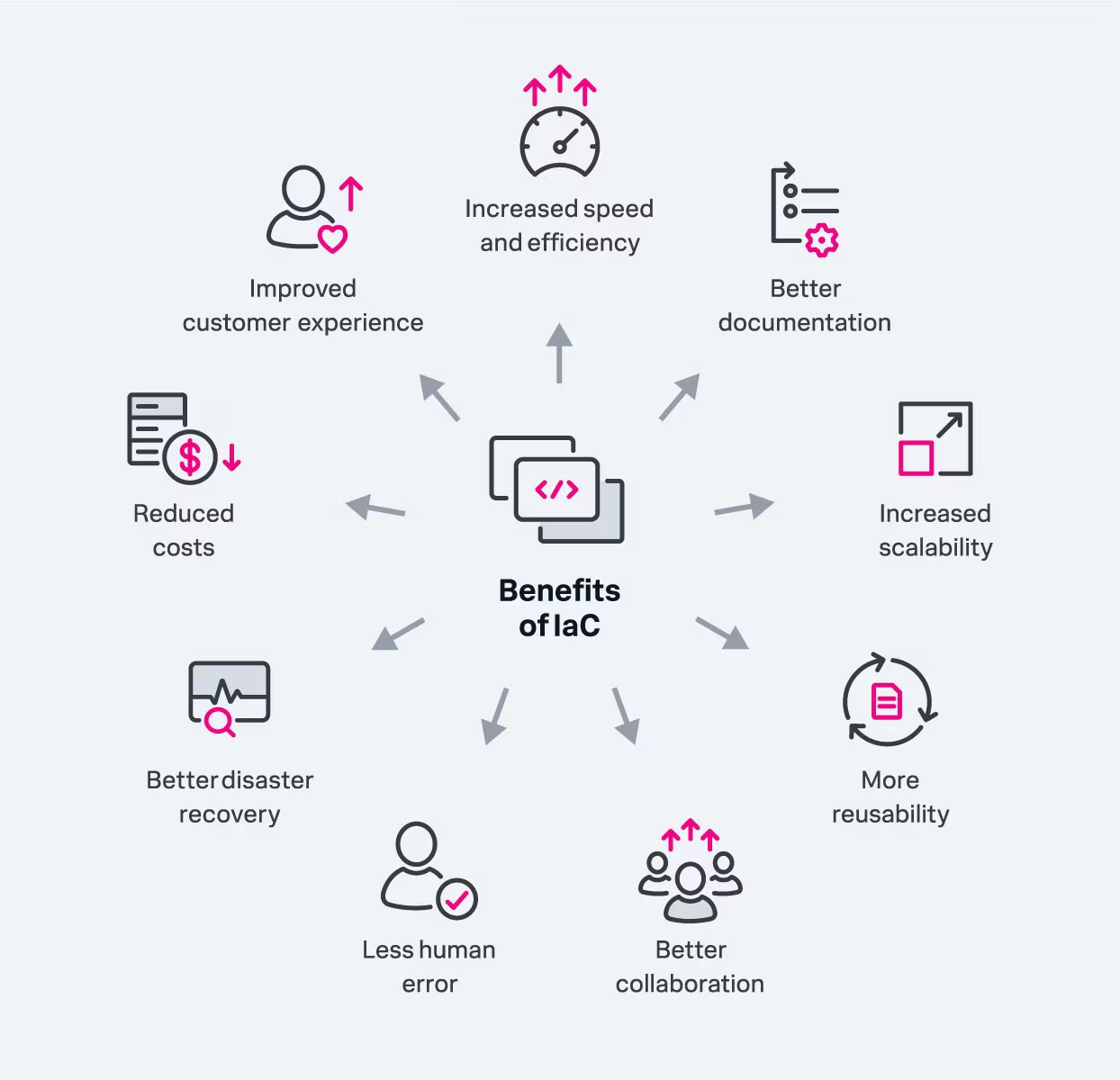
Importance and benefits of IaC
Infrastructure as Code aims to reduce risk and waste processes associated with the traditional, manual infrastructure management practices.
IaC helps improve software quality and accelerate the software development lifecycle (SDLC) pipeline — so you can deliver better software products, sooner. Here are some key benefits:
Deliver rapid value
Business value streams and operational efficiency relies on two activities:
- Rapidly provisioning infrastructure.
- Eliminating waste.
By automating infrastructure management via infrastructure as code, users can obtain as much resources as necessary, managed with repeatable automation scripts.
Reducing security risk
The human element is responsible for 95% of all cyberattacks. In an enterprise environment, manual processes — such as configuration changes and infrastructure provisioning — can expose the network to security attacks.
For example, a single incorrect IP address configuration, open port, and exposed security group can open your network to infringement and data breach incidents.
But IaC does more than just help prevent certain human errors: it can help support your entire risk management practice. Any risk management protocols can be embedded into the infrastructure management process via IaC and executed as an automated code script instead of a manual checklist. These are some areas of opportunity, certainly you could find more:
- Governance
- Compliance
- Security controls
(Related reading: GRC governance, risk, and compliance, explained.)
Simplify processes (and make them repeatable!)
Manual infrastructure management is difficult to track, monitor for changes, audit, and replicate. Subtle overlooked changes in configurations and infrastructure management routines can lead to environment drift between dev, test, and production teams. These differences can cause
- Failure in the CI/CD pipelines.
- Testing to deliver inconsistent results.
With Infrastructure as Code, a standard code template helps cross functional teams to create consistent and repeatable infrastructure management processes. This automation standardizes the automation processes and reduces the time required to debug systems.
Optimize changes
Infrastructure changes are frequent and dynamic. The traditional approach to infrastructure management was simple: once an infrastructure state is reached, it is labeled as Done.
But modern infrastructure is rarely in its final state. In fact, cloud-based and containerized workloads require infrastructure resources to maintain ephemeral states that must be tracked, monitored and controlled.
This is only possible with a standardized and automated approach that allows any user (Devs, Ops, QA, InfoSec, and others) to replicate the infrastructure management process when introducing change.

Splunk Infrastructure Monitoring
Whether on-prem, hybrid or multicloud, Splunk delivers real-time monitoring and troubleshooting to help you visualize and analyze performance in seconds and with greater accuracy.
How to do IaC: 3 dore practices for Infrastructure as Code
To be clear, IaC is not a tightly defined software development practice. Instead, think of Infrastructure as Code as a guiding principle that you can adopt across various flavors of Agile and DevOps frameworks. The core practices and tooling in IaC largely follows DevOps practices of:
- Automation
- CI/CD
- Simplified processes across cross-functional teams
Let’s now define the three core practices that make up Infrastructure as Code:
Define all infrastructure management changes as code
Defining all infrastructure management changes as code helps with both reliability and transparency:
- IaC for reliability: you can repair, rebuild, and provision identical infrastructures consistently and at scale.
- IaC for transparency: you can track, monitor, and audit all changes for compliance programmatically.
Some important elements of the infrastructure management process that you can define as code include the following:
- Infrastructure stack
- Server configurations, roles, and images
- Deployable application packages and containers
- Scripts for delivery services including the SDLC pipeline and deployment resources
- Configurations for operational services including monitoring tools
- Automated tests, validation, and compliance rules
Test and deliver continuously
Rigorous testing is important, but it is scalable only with a standardized automation process. The IaC script can be used to:
- Deploy and test individual components.
- Integrate all work in progress (continuous integration).
- Extensively test code during development (automated test-driven development).
Since the infrastructure to merge code is also managed with standardized coding practices, it makes continuously tested build production-ready (continuous delivery).
Make change small, simple, and independent
Cross-functional teams working collectively on large projects find it difficult to manage CI/CD of tightly coupled and large infrastructure systems. Each team should be able to deploy and test their build components in isolated infrastructure environments.
A core practice of effective IaC is therefore to automate the process of building small, incremental, and independent changes. These changes should be thoroughly tested for:
- Scalability
- Security performance
Treat IaC in line with your coding best practices
Finally, like any software engineering practice, another important guiding principle of Infrastructure as Code is to develop a clean codebase that is well documented, easy to understand, test and improve.
Treat your IaC code as any real code — it requires the same standards of software engineering discipline as your software products. It should follow the same code quality practices (such as code reviewing and testing). And teams should focus on reducing the technical debt associated with new IaC code.
Related Articles

How to Use LLMs for Log File Analysis: Examples, Workflows, and Best Practices

Beyond Deepfakes: Why Digital Provenance is Critical Now

The Best IT/Tech Conferences & Events of 2026

The Best Artificial Intelligence Conferences & Events of 2026

The Best Blockchain & Crypto Conferences in 2026

Log Analytics: How To Turn Log Data into Actionable Insights

The Best Security Conferences & Events 2026

Top Ransomware Attack Types in 2026 and How to Defend