Preventing Alert Fatigue in Cybersecurity: How To Recognize & Combat Alert Fatigue
Ping — an email just came in. Ping — appointment reminder. Ping — another email. Ping — someone commented on a post you’re following. Ping, ping, ping. All day long, our smartphones send us push notifications, reminders, and messages. It’s a constant noise that we start to tune out the further into our day we get.
When it’s just our smartphones, tuning out notifications might not be a big deal. But what happens when the alerts are for something far more important?
What is alert fatigue? The real-world consequences of too many alerts
Alert fatigue is what happens when people are desensitized to alerts, simply because there are too many alerts and “as a result ignore or fail to respond appropriately to such warnings”. Basically, the most important information gets lost because there’s too much information.
You may experience alert fatigue in your personal life, but the consequences of alert fatigue can be especially dangerous in certain areas — like healthcare, cybersecurity, and construction.
- In 2013, Target’s security systems detected a breach early on, but the alerts were buried under a flood of routine notifications. By the time anyone noticed, cybercriminals had stolen the credit card information of 70 million customers.
- In healthcare, ICU staff often deal with nonstop alarms from patient monitors. Over time, this desensitization, known as alarm fatigue, has led to delayed responses and preventable deaths.
- In construction and mining, backup alarms on vehicles are meant to prevent accidents, but when workers hear them constantly throughout the day, they become background noise. As a result, people stop paying attention — reducing the alarm’s effectiveness and increasing the risk of serious incidents.
These examples all share a common thread: the overwhelming noise of routine notifications. When every alert demands attention, distinguishing between important and irrelevant notifications becomes nearly impossible.
Why alert fatigue is a problem for cybersecurity
While many industries struggle with alert fatigue, nowhere is the problem more pronounced than in cybersecurity. Security analysts face an onslaught of notifications from firewalls, SIEM tools, endpoint detection, threat intelligence feeds, and vulnerability scanners — each generating a constant stream of alerts.
A 2022 study found that security teams receive hundreds of alerts per day, with more than half being false positives. The problem isn’t just the volume of alerts — it’s the time wasted investigating notifications that turn out to be non-issues. Every false positive pulls an analyst’s attention away from real threats, delaying responses and increasing the risk of missing genuine attacks.
Indeed, the reasons an alert may be ignored typically fall into one or more of these buckets:
- False positive
- False negative
- Recipients too broad
- Lacking detail and/or not actionable
Over time, security professionals become desensitized, treating all alerts with skepticism, which can lead to critical incidents going unnoticed like in Target’s 2013 data breach.
All these reasons are why Splunk solutions run on risk-based alerting, RBA. Learn more:
- Risk Based Alerting for SIEM
- Splunk solutions: Alert noise reduction
- Industry-leading security solutions from Splunk
Impact of alert fatigue on security teams
When security professionals experience alert fatigue, their performance and decision-making suffer in several ways:
- Critical alerts are often ignored, postponed, or resolved too slowly due to desensitization.
- Cognitive overload makes it difficult to prioritize and differentiate between high-risk and low-risk alerts.
- Constant notifications cause frustration, agitation, and decreased job satisfaction, contributing to burnout.
- Teams dismiss alerts as false positives or conduct shallow analyses, increasing vulnerability to threats.
- High alert volumes lead to stress and burnout, often resulting in cybersecurity professionals leaving their roles.
- Over time, security teams stop seeing alerts as actionable, reducing engagement and responsiveness.
As cyber threats evolve, security teams can’t afford to be buried under a flood of alerts. Without a focused strategy, alert fatigue can weaken even the strongest security defenses.
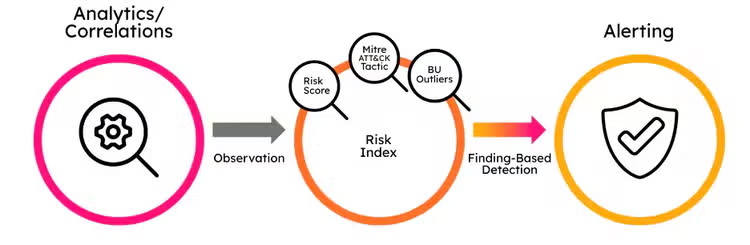
Learn more: the risk-based alerting feature guide.
How to combat and prevent alert fatigue
Understanding the risks of alert fatigue is only the first step. To effectively combat it, organizations need a multi-layered approach that reduces unnecessary noise, prioritizes critical alerts, and optimizes security workflows.
Configure alerts smartly: less is more
One of the biggest reasons for alert fatigue is the sheer number of notifications security teams receive — many of which turn out to be false positives or low-priority issues. By fine-tuning how alerts are configured, organizations can cut down on unnecessary noise and ensure that only the most relevant notifications reach analysts.
- Focus on the most important alerts — those that could lead to serious security incidents or system failures — rather than flagging every minor issue.
- Adjust alert settings based on past data to filter out routine fluctuations and reduce the number of unnecessary notifications.
- Use machine learning and anomaly detection to recognize unusual activity while ignoring expected behavior, reducing false alarms.
- Make alerts more actionable by including clear descriptions of the issue, its severity, and recommended next steps for investigation.
Streamline alerts
When security teams are constantly bombarded with alerts, it’s easy for important warnings to get lost in the noise. Streamlining alert management helps reduce distractions, improve efficiency, and ensure that teams can focus on real threats rather than sorting through endless notifications.
- Group similar alerts together and remove duplicates so teams aren’t overwhelmed by multiple notifications about the same issue.
- Automate responses for routine security events, allowing smart systems to categorize and prioritize alerts without human intervention.
- Set up predefined workflows for common incidents so known problems can be addressed quickly without requiring manual decision-making every time.
- Rotate on-call responsibilities among team members to prevent burnout and ensure that no one is stuck dealing with alerts around the clock.
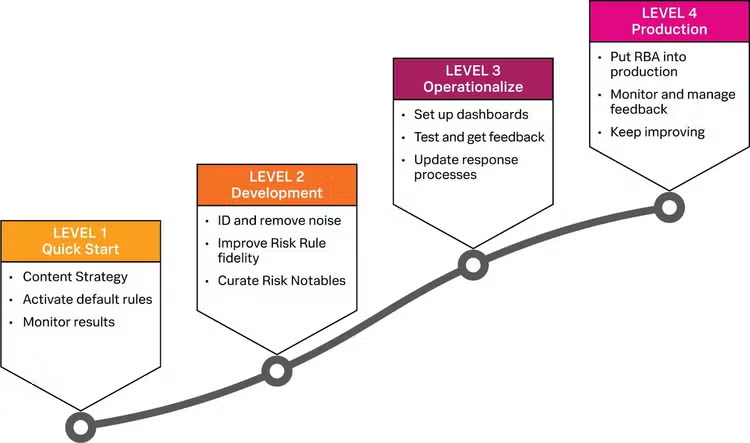
How to succeed with risk-based alerting: The amount of RBA-specific work needed decreases as you move through the phases.
Continuously improve team responses & culture
Even the best alerting system won’t be effective without a strong team behind it. By regularly reviewing alerts, improving training, and fostering open communication, organizations can ensure their security teams stay sharp, engaged, and ready to respond to real threats.
- Continuously refine alert settings to keep pace with evolving threats and ensure notifications stay relevant and actionable.
- Provide ongoing training so security teams stay up-to-date on the latest attack techniques, tools, and best practices for handling alerts efficiently.
- Establish clear guidelines for when and how to escalate alerts, ensuring that urgent issues are addressed quickly and don’t get lost in the queue.
- Encourage open discussions among team members to identify alert fatigue challenges and explore ways to improve workflows.
Use modern, advanced tools and solutions
The right technology can make all the difference in managing alert fatigue. Advanced security tools (including Splunk’s security solutions) help filter out unnecessary noise, automate repetitive tasks, and ensure that teams focus on the threats that matter most.
- Use monitoring and alerting platforms that allow teams to customize notifications, consolidate alerts, and provide meaningful data insights.
- Implement AI-powered security tools that analyze patterns, reduce false positives, and automate responses to common security events.
- Prioritize alerts based on risk scoring, ensuring that the most pressing threats get immediate attention while low-impact issues don’t overwhelm security teams.
Future trends in alert fatigue management
As technology continues to advance, organizations will have more sophisticated tools to combat alert fatigue. Emerging trends focus on improving automation, user experience (UX), and workforce well-being, making security teams more efficient and reducing the strain of constant notifications.
- AI-driven systems will become better at predicting and prioritizing alerts, using contextual analysis to reduce non-critical notifications and flag only the truly urgent threats.
- Wearables may soon track physiological signs of fatigue, allowing systems to adjust alert frequency or recommend breaks to prevent burnout.
- Future alert systems will feature clearer visual and auditory cues, making it easier for analysts to identify and act on critical alerts without getting overwhelmed.
- Real-time communication tools will enhance teamwork in alert management, while blockchain technology may help reduce unnecessary alerts in industries like healthcare.
- Automated workflows and AI-driven compliance tools will cut down on manual workloads, saving organizations time and reducing operational costs.
- Future systems will focus on reducing stress, with personalized interventions to help cybersecurity professionals manage fatigue and maintain peak performance.
By embracing these innovations, organizations will not only improve their security posture but also create a more sustainable and healthier working environment for their teams.
Smarter alerts, stronger security
Alert fatigue isn’t just an inconvenience — it’s a major security risk. When teams tune out alerts or struggle to prioritize threats, organizations become more vulnerable to delayed responses, missed breaches, and security failures.
Organizations can’t afford to rely on outdated, noisy alerting systems that drown security teams in distractions. Now is the time to assess alerting workflows, refine detection thresholds, and integrate automation to improve efficiency. Start by reviewing your security tools: Are they helping analysts focus on real threats, or are they creating more noise?
By implementing risk-based alerting, automation, and better workflows, security teams can take back control — ensuring that critical alerts receive the attention they deserve while reducing unnecessary stress on analysts.
Related Articles

What's GRC? Governance, Risk & Compliance Explained

IT/ITIL Problem Management