How 5G Can Elevate the Customer Experience: Telecoms

I n today’s Data Age emerging technologies like AI, 5G networking, the internet of things (IoT), virtual reality (VR) are powering next-gen solutions for organizations large and small. 5G is predicted to be a key to service innovation for IoT, AI, VR, and cloud computing to enable new applications and services. Telecom providers are not only rolling out 5G networks for mobile services but also to support enterprise customers digital journey in utilizing next general applications. Retail is one of the key industries that Telecom providers are supporting in this area. Some retailers have identified high-potential use cases for 5G from infrastructure monitoring to the reliability and security of applications and services.

5G provides an opportunity for telecom operators to change their value proposition from network capacity providers to digital services partners. To meet retail business demands, telecom providers must provide the infrastructure and ensure the availability and security of 5G networks to help retailers maximize powerful cloud-based analytics in real time.

Splunk can help telecoms deploy 5G networks with scalable monitoring solutions to deliver actionable insights into reliability and latency for 5G networks, applications, and services. Splunk empowers telecoms to collect and correlate data from databases, customer reference information, and machine data across their infrastructure and systems to improve operational support and processes. This fuels opportunities to gain insights to help improve and elevate customer experiences across a Telecom’s ecosystem.

Outlining opportunities for success for both retail and Telecoms that are embracing 5G in driving customer experience are outlined in a new Splunk whitepaper, “How 5G Can Elevate the Customer Experience”. The more information on the impacts to customers the better the opportunity to improve these across the business. Telecoms rely on Splunk to help them gain critical business insights as they look to stay ahead of emerging and demanding technologies and trends that affect all areas of the business. Driving positive customer experiences is critical to continuing brand loyalty and retention for Telecoms as well as shoppers purchasing items from their favorite retailer.

How do you think 5G applications will improve customer experience for Retailers and Telecoms in the future?

Related Articles

Technology Modernization Fund: An Opportunity to Upgrade Legacy Capabilities

Industries
2 Minute Read

Technology Modernization Fund: An Opportunity to Upgrade Legacy Capabilities

Federal agencies should seek additional funding for system upgrades and new capabilities from the Technology Modernization Fund. While historically underused, the $1 billion fund can help get agencies off of insecure and inefficient legacy systems and onto state-of-the-art technology, such as cloud and security automation.
Department of Defense Designates Splunk a Core Enterprise Technology

Industries
2 Minute Read

Department of Defense Designates Splunk a Core Enterprise Technology

The Department of Defense (DOD) designated the Splunk Enterprise Software Initiative (ESI) Blanket Purchase Agreement (BPA) as a Core Enterprise Technology Agreement (CETA).
How 5G Can Elevate the Customer Experience: Telecoms
Industries
1 Minute Read

How 5G Can Elevate the Customer Experience: Telecoms

Cross industry whitepaper focusing on how 5G can help both Retailers and Telecoms elevate their customer experience.
Sharing a Vision for Data-Driven Government - a New Splunk Whitepaper

Industries
1 Minute Read

Sharing a Vision for Data-Driven Government - a New Splunk Whitepaper

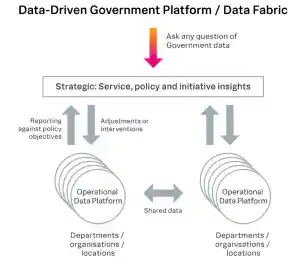
The amount of data that UK government will generate will increase significantly over the next few years, but it will present it with an opportunity to understand its citizens better and improve service and policy delivery. To do this the UK Government should consider taking a data-driven approach, by using data in new ways and overcoming some of the inherent blockers to using data more effectively.
Accelerated Data Science and Deep Learning for a Predictive Testing Strategy

Industries
2 Minute Read

Accelerated Data Science and Deep Learning for a Predictive Testing Strategy

During .conf20 we presented alongside BMW Group the way a predictive testing strategy can enable better process efficiency in automotive manufacturing. We also introduced briefly which machine learning tools and analytical techniques were useful within the given situation.
As Funding Cuts Arrive, Can CDM Deliver on the Value of Its Promises?

Industries
3 Minute Read

As Funding Cuts Arrive, Can CDM Deliver on the Value of Its Promises?

Cybersecurity is a tough job done. But when funding allocations suddenly shift after essential programs are already under development, it can be hard for even the most creative, resilient CIOs and CISOs to keep up.
Defense Department Cybersecurity: All Ahead on Zero Trust

Industries
2 Minute Read

Defense Department Cybersecurity: All Ahead on Zero Trust

The Defense Department’s embrace of a Zero Trust architecture is critical to maintaining the security of its networks in a post-pandemic environment.
UK Public Sector Predictions for 2021: Part 2

Industries
2 Minute Read

UK Public Sector Predictions for 2021: Part 2

In this blog, Senior Director, EMEA Government Affairs Gordon Morrison takes a closer look at Splunk's five key technology predictions for the UK public sector.
DoD’s Cyber Posture: A Focus on Automation
Industries
2 Minute Read

DoD’s Cyber Posture: A Focus on Automation

The importance of the security of the Department of Defense’s (DoD’s) networks is no secret (well, of course a lot of it is secret!). This is evidenced by the Department’s IT/Cybersecurity budget request that annually tops $40 billion dollars. Last year’s IT and Cyberspace Activities Budget Overview perhaps said it best: “Successful mission execution is contingent on a seamless, secure infrastructure that transforms data into actionable information and ensures dependable mission execution in the face of the persistent cyber threat.”