In Case You Missed It: Meet The 2026 Splunkie Award Finalists and Winners
Customers Megan RitchieOf all the sessions that rotated through the West Theater at .conf26, one drew a crowd that needed no convincing to stay in their seats: The Splunkie Awards Ceremony.
The Splunkies are our yearly chance to celebrate the customers who take Splunk somewhere none of us quite expected. This year's 25 finalists ranged from a global bank, a power and water utility serving the UAE, a state technology office, and nonprofits working on some of the hardest human problems there are. Some are running dozens of AI agents alongside their SOC. Others are building victim identification tools with Splunk at the heart, or using AI through Splunk to turn raw transcripts into mental health content.
At the opening keynote, Kamal Hathi assured the packed audience that what they’d heard that evening only scratches the surface; Splunk is reimagining itself so organizations can trust AI at scale.
Well, these finalists have been quietly reimagining what Splunk can do for years.
This year's awards were presented by Splunk Field CTO Cory Minton and Angela Wells, Senior Director of Customer Advocacy and Executive Customer Experience. Each winner took home a Splunkie Award trophy, some seriously great swag, and eternal bragging rights.
During .conf26, we sat down with some of our finalists to hear their stories. Across 12 conversations, five themes kept showing up.
The Foundation Comes First: Getting the Data Right
A lead observability engineer at a national banking institution brought in data from about 3,000 applications and 30,000 services. It was part of an effort that started about 18 months ago to unify the bank's metrics, events, logs, and traces on Splunk Observability Cloud. With that work done, the bank is now able to start tying its data into internal AI tools and expand its AI use cases. "The focus of AI is just making sure we get the data right and that everything matches," the engineer said. "But at scale, with the amount of applications, the amount of services, it's sometimes very hard to do.”
“But we know that with Splunk, whatever tool we decide to go with, whatever choices we make with AI, that the data will be there so our engineers can trust it.”
At Autodesk, principal data engineer Jyoti Kumar and his team tier data by how often it's used. High-value data that drives alerts and dashboards stays in Splunk. Low-value data goes to S3, where users can still reach it through Federated Search from the same Splunk UI. Autodesk sent 10 TB of data to S3 last year and 20 TB this year through July, which lets the team onboard more critical applications into Splunk.
Peter Thomas, senior director of observability at Dun & Bradstreet, sees high-quality data as what keeps AI from guessing. The company's first internal AI product is a chatbot that integrates with Splunk Observability, Splunk Cloud, its CMDB, its documentation system, its certificate management system, and more. It writes Splunk queries, runs them, and gets the data back. "For AI, the important thing is being grounded in truth," he said. "You don't want it guessing. You need to give it high quality information."
Trust Builds One Step at a Time: Expanding What AI Can Do as It Proves Itself
Bill Ouellette, senior manager of architecture and engineering of the SIEM at Asurion, and his team now have over 45 agents working with them in the SOC. They can spin up a new one in about 15 minutes. "We treat our agents as interns," he said. As an agent produces results, the team moves it up the chain, from intern to level one and on through level four. Agents can work from a runbook up to actions classified as critical. "I don't want my agents to have the ability to shut down machines."
Ed Hubbard, director of site reliability and monitoring at Travelport, starts with the process. "If your processes around which you want to implement AI are not solid, you're just going to do dumb things faster," he said. His team's strategy is "trust but verify." They make sure a process is solid, automate it with a human in the loop to say yes, and document it. "At that point in time, then we know that trust is there. We have verified it," he said. "And then we can cut it loose and let the AI do the work."
A detection and automation engineering team for a manufacturing organization has built bots that handle an alert from its inception through triage, response, and remediation. New bots are set up first in a test environment with a baseline to test against, and they move to production once the team is confident. "Every single action that is taken by the bot can be audited," a team lead said.
Response Keeps Pace With Machine Speed: Using AI To Keep up With Attacks and Data Volumes
At UnitedHealth Group, some environments hit a petabyte of machine data ingestion a day. Karun Subramanian, senior director for AI for infrastructure and operations, is building an AI-powered SRE at enterprise scale. His team uses AI through Splunk to find anomalies, reduce alert noise, and support root cause analysis, along with Splunk AI Toolkit and Splunk AI Agent Launchpad. The focus is digital resiliency and "how we can get things done faster," with the goal of reaching autonomous IT operations using AI.
Know-How Spreads Beyond the Experts: Helping More People Get Answers From Their Data
At NISC, Ashley Durnan says the company had struggled to get people to use Splunk. Her team started with one question: "How do I get our Splunk users to be smarter by using Splunk?" The goal was to help users find the right logs without running index=* searches. What began as plain-English conversations to find logs, built with Claude Skills, "morphed into this very, very powerful troubleshooting tool," which now runs as an AI plugin. NISC has 240 users on the Splunk MCP server, compared around 50 Splunk users a year ago. After a release went poorly, the team narrowed down the cause within six minutes. That would have taken hours and several developers. She's clear that AI needs structure. "If you don't put the rule book in, it's going to run wild," she said. "So you can trust it if you have the right rule book in place for AI to use."
At the Indiana Office of Technology, which serves about 92 state agencies, Brad Walsh, program manager over observability, designed his program around people first. "I always like to say it's 70% people and 30% tools," he said. Through a champions program, the people running observability within each agency learn to run their side of the program. "We teach them how to fish," he said. His was the very first program in state government built around a technology, and the same methodology has since been used for low-code, no-code, and data governance. "Now we're going to do the same thing around AI."
Data Driving Real Impact To Safeguard Against Human Trafficking & Exploitation
For Global Emancipation Network, led by founder and executive director Sherrie Bosisto, success is measured by "real human impact." The nonprofit uses technology, policy and community to end human trafficking and child exploitation around the world. GEN is celebrating its 10th anniversary this year and was the very first Splunk Pledge partner, back in 2016. Splunk has been an integral part of GEN's back end since the beginning. It's also foundational infrastructure for the tools GEN is rolling out this year, enabling investigators to more accurately identify and safeguard victims across the exploitation lifecycle. Through its Last Mile program, GEN engineers embed themselves onsite with law enforcement from under-resourced communities. Together with local teammates, GEN builds tools that help close the gap between where the department's resources are and where it wants to go. "At the end of the day, baseline success looks like deploying AI and other technologies to identify one more victim or stop one more trafficker," Bosisto said.
Emmanual Simms, founder and creative director of The Eudaimonia Project, creates mental health content that's easy for people to understand and recognize themselves in. His team films people's emotions and raw feelings, follows HIPAA-related compliance requirements, and has to keep people's identities safe. As an artist first, he relies on Splunk for that side of the work. "Splunk has made it easy for us to put everything in one container and hand it to the IT team and let them do what they do best," he said. That lets his team focus on the creative work, including film festivals and a documentary, What's Your Mental Health?
Splunk Unbound: Showing the Power of Splunk and AI
Across 12 conversations, the finalists described different industries, different challenges, and different stages of their AI journeys. Many of them started with the same groundwork: getting the data right, building trust in AI one step at a time, and keeping people involved in the work. Whether they're protecting most of the power and water for the UAE, teaching state agency staff to run their own observability, or building tools to help identify trafficking victims, they're showing what Splunk and AI can do when the foundation is in place.
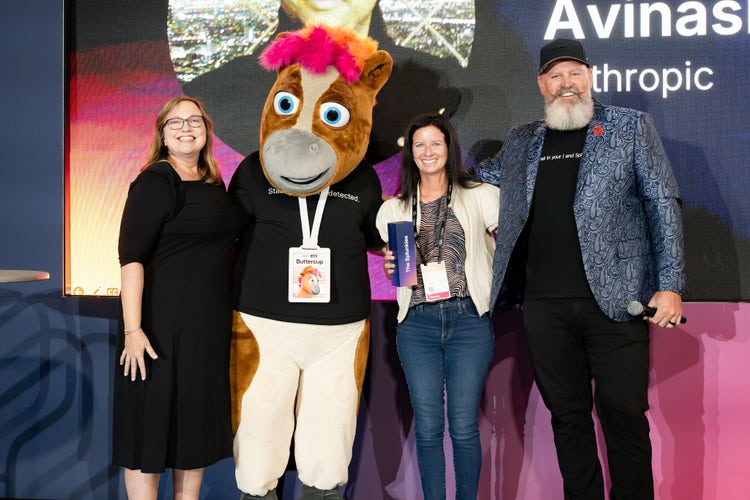
Meet This Year’s Splunkie Award Winners
Each winner received a Splunkie Award trophy, some seriously awesome swag, and, of course, eternal bragging rights.
So without further ado... cue the data-powered drumroll 🥁... here are your 2026 Splunkie Award winners!
- The Visionary: Avinash Palayadi, Anthropic
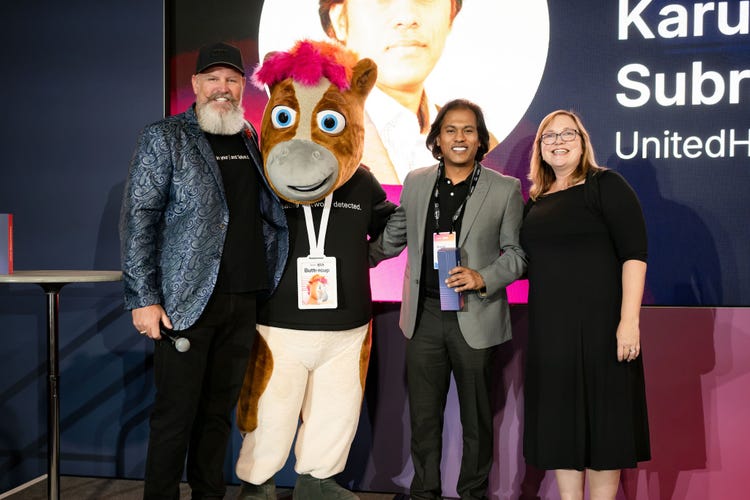
- The Inventor: Karun Subramanian, UnitedHealth Group
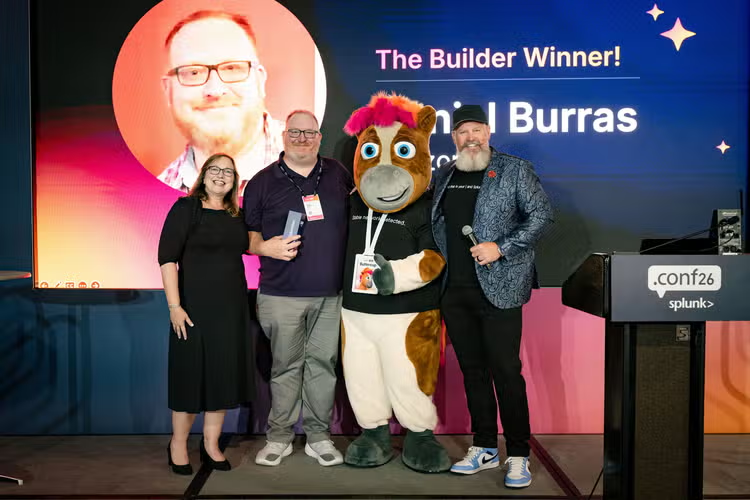
- The Builder: Daniel Burras, Verizon
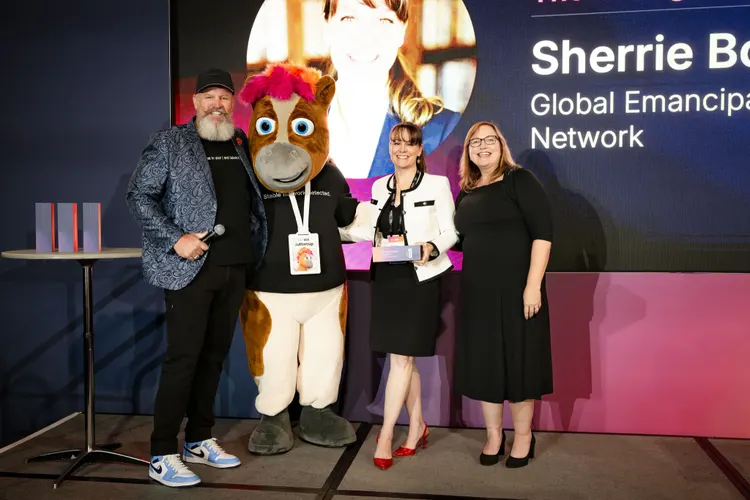
- The Change Agent: Sherrie Bosisto, Global Emancipation Network
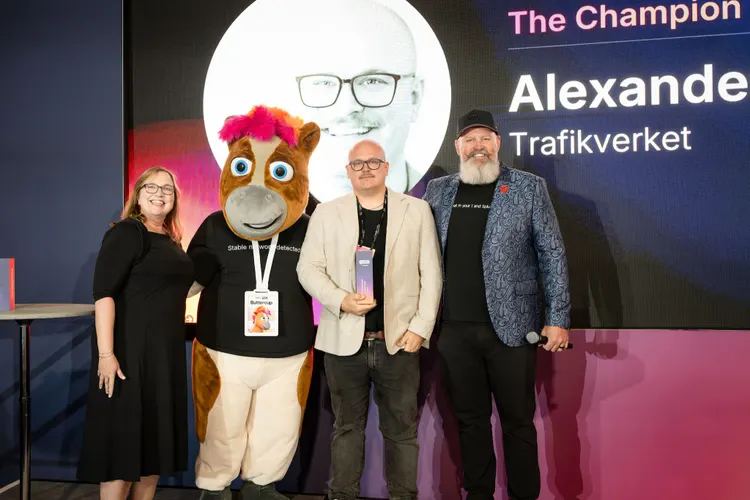
- The Champion: Alexander Spång, The Swedish Transport Administration (Trafikverket)
🚀 Want to be in the spotlight next year? Nominations for the 2027 Splunkie Awards will open next spring via social media, Splunk Blogs, and conf.splunk.com.
💌 Got an amazing Splunk story you think the world should know? We want to hear it! Send us your story any time at customeradvocacy@splunk.com.
Related Articles
Discover How the Agentic SOC Will Help You Win the AI Era
Fashionably Late: The Zero Trust Trend is Here to Stay