Kushagra Sharma's Blog Posts
Kushagra Sharma is a Product Manager at Cisco working on AIOps products that help teams operate complex systems with intelligence and scale. He focuses on translating customer problems into practical, data-driven solutions at the intersection of AI, reliability, and software platforms. Passionate about clear thinking and strong product craft, Kushagra writes to share insights on technology, product strategy, and building systems that actually work in the real world.
Display Mode
Paginated
Filter
Author
Author URL
Limit
6

From Discovery to Actionable Intelligence: Deeper Exposure Analytics in Splunk Enterprise Security 8.6
See how Exposure Analytics adds context to investigations.

Introducing Splunk Agent Skills: Portable Splunk Expertise for Your AI Agents
Splunk is publishing its first open source agent skills in a governed GitHub repository.

Security for the Agentic Era: The Cisco + Splunk Guide to Black Hat 2026
At Black Hat 2026, Cisco, Splunk, and Cisco Talos are joining forces to flip the script on attackers.

Stop Counting Alerts, Start Measuring Value
Security teams can move beyond alert counts and MITRE coverage to measure real ROI from Splunk Enterprise Security.
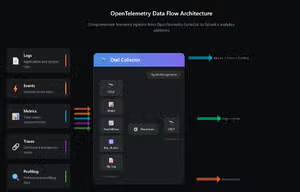
Unifying Your Data Strategy: Introducing Fully Supported Log Ingestion with the Splunk OpenTelemetry Collector
Announcing a fully supported, production-ready path for Linux and Windows host log ingestion via the Splunk OpenTelemetry Collector.

AI Isn't the Strategy. What You Build Around It Is.
Learn how AI Leadership Institute founder Noelle Russell helps executives build AI governance, scale enterprise AI, and align AI initiatives with business goals.