Hemant Seth's Blog Posts
Hemant is a Principal Product Manager at Splunk, leading the Kubernetes Monitoring offering within Splunk Observability Cloud. Prior to this role, he focused on Splunk Observability Platform administration, including identity management and license usage. Hemant brings over a decade of experience in the observability domain and holds a Master’s degree in Electrical Engineering with a specialization in Telecommunications.
Display Mode
Paginated
Filter
Author
Author URL
Limit
6
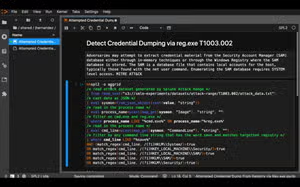
Threat Hunting With ML: Another Reason to SMLE
This blog is the first in a mini-series of blogs where we aim to explore and share various aspects of our security team’s mindset and learnings. In this post, we will introduce you to how our own security and threat research team develops the latest security detections using ML.

Splunker Stories: Manan Grover
In the latest edition of our "Splunker Stories" series, we meet one of our Sales Engineers, Manan Grover. We sat down with Manan to learn more about her conversion from a Splunktern to a full time employee, her perspectives on what “team” means, and how she is working with our customers to elevate discussions and accelerate progress.
The OpenTelemetry Tracing Specification Reaches 1.0.0!
OpenTelemetry tracing specifications reached 1.0.0; which means tracing APIs and SDKs GA is imminent! Read more about this exciting announcement in this blog.
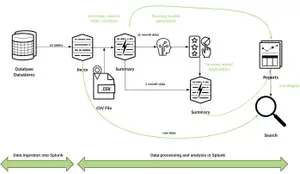
Creating a Fraud Risk Scoring Model Leveraging Data Pipelines and Machine Learning with Splunk
One of the new necessities we came across several times was that the clients were willing to get a sport bets fraud risk scoring model to be able to quickly detect fraud. For that purpose, I designed a data pipeline to create a sport bets fraud risk scoring model based on anomaly detection algorithms built with Probability Density Function powered by Splunk’s Machine Learning Toolkit.
Box Automates Intelligence and Workflows While Reducing Manual Work Hours with TruSTAR
Box is the market leader for Cloud Content Management. Read on for more in this Q&A with Box's Kyle Bailey, Manager, Threat Operations.

Splunker Stories: Bobbie Travis
In the latest edition of our "Splunker Stories" series, we meet one of Splunk’s Legal Operations Analyst, Ms. Bobbie Travis. In addition to Bobbie taking the time to meet with us, she also was an active participant in our BEAMs (Black Employees and Mentors) employee resource group recorded panel discussion Non-Technical Essential Roles in Big Data.