How AI Can Catalyze Digital Resilience: An Introduction to Splunk’s Philosophy
ChatGPT and other LLMs have become so accessible that even our grandmas know about AI. But what’s really happening beyond the hype? Recently, I sat down with IT and security leaders Cory Minton and Kirsty Paine to share the inside scoop on how we’re thinking about AI here at Splunk.
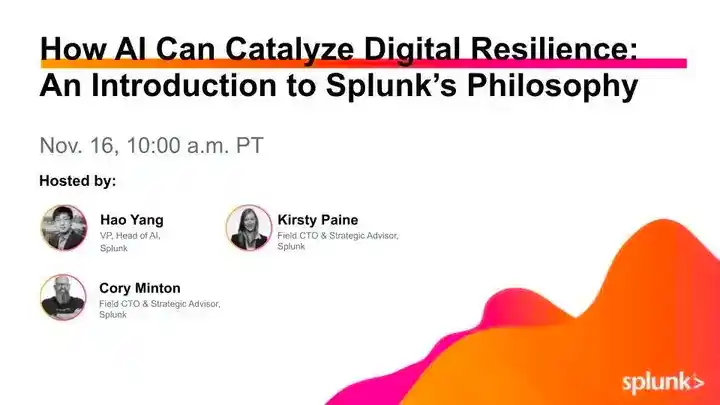
AI Is a Familiar Friend
When I came to Splunk as head of AI, I was first drawn to our purpose: to build a safer and more resilient digital world. At Splunk, we believe that AI shouldn't be pursued for its own sake; instead, it should be a strategic tool to build digital resilience. Today’s security, IT and engineering teams must navigate an increasingly complex and fast-moving technology landscape. To detect, investigate and respond to issues, they need to find the needles – not just in haystacks, but entire hayfields of data. Humans will need AI to cut through the noise and find the real needles signaling something might be amiss.
Splunk has been investing in AI since 2015 (you can hear more about our latest AI innovations from .conf23 here). Kirsty and Cory shared how Splunk customers like Transunion and Viasat are relying on anomaly detection and predictive analytics. We also considered future implications for CIOs, CTOs and CISOs, like the need to monitor and protect AI workloads or how blue teams face the next generation of AI-powered attacks.
Building Our AI Philosophy
All great technology strategies are grounded in a set of core beliefs to drive decision-making.
At Splunk, we codified these beliefs into an AI product philosophy that informs our strategy. This philosophy covers three pillars:
- Splunk and domain-specific: We will focus on improving digital resilience through better detection, investigation and response across security and observability.
- Human-in-the-loop: We believe that AI can augment human decision-making by increasing speed and effectiveness. Yet it lacks the emotional context, human understanding, and common sense to fully replace humans.
- Open and extensible: We will create an ecosystem in which organizations can customize our proprietary AI models (or bring their own) to cater to specific needs, environments and use cases.
You’ll first see how this philosophy comes to life in our assistive experiences, as well as our AI innovations from .conf23. We'll continue to invest in AI technologies that will drive outcomes in detection, investigation and response for the next 20 years.
Building Digital Resilience for the Future
Why do I think we’re set up to catalyze digital resilience with AI? It’s simple: Splunk not only has AI expertise – we’ve been investing in AI since 2015 – but also, market-leading security and observability offerings built off 20 years of experience. We can understand virtually any type of data and generate insights for security, ITOps and engineering teams, which will be key to building unified resilience across functions as worlds merge. And importantly, we have experience doing this all at massive scale, analyzing petabytes worth of data for leading organizations across the globe of all sizes and industries.
It’s an exciting time for innovation at Splunk. We’re happy you’re joining us for the ride.
Related Articles

Announcing the General Availability of Splunk POD: Unlock the Power of Your Data with Ease
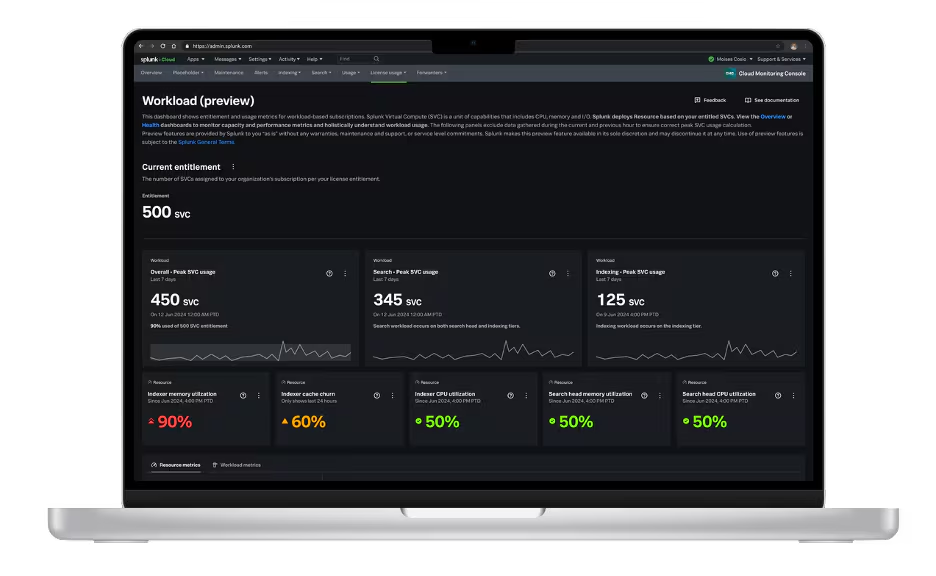
Introducing the New Workload Dashboard: Enhanced Visibility, Faster Troubleshooting, and Deeper Insights
Leading the Agentic AI Era: The Splunk Platform at Cisco Live APJ

Dashboard Studio: Token Eval and Conditional Panel Visibility
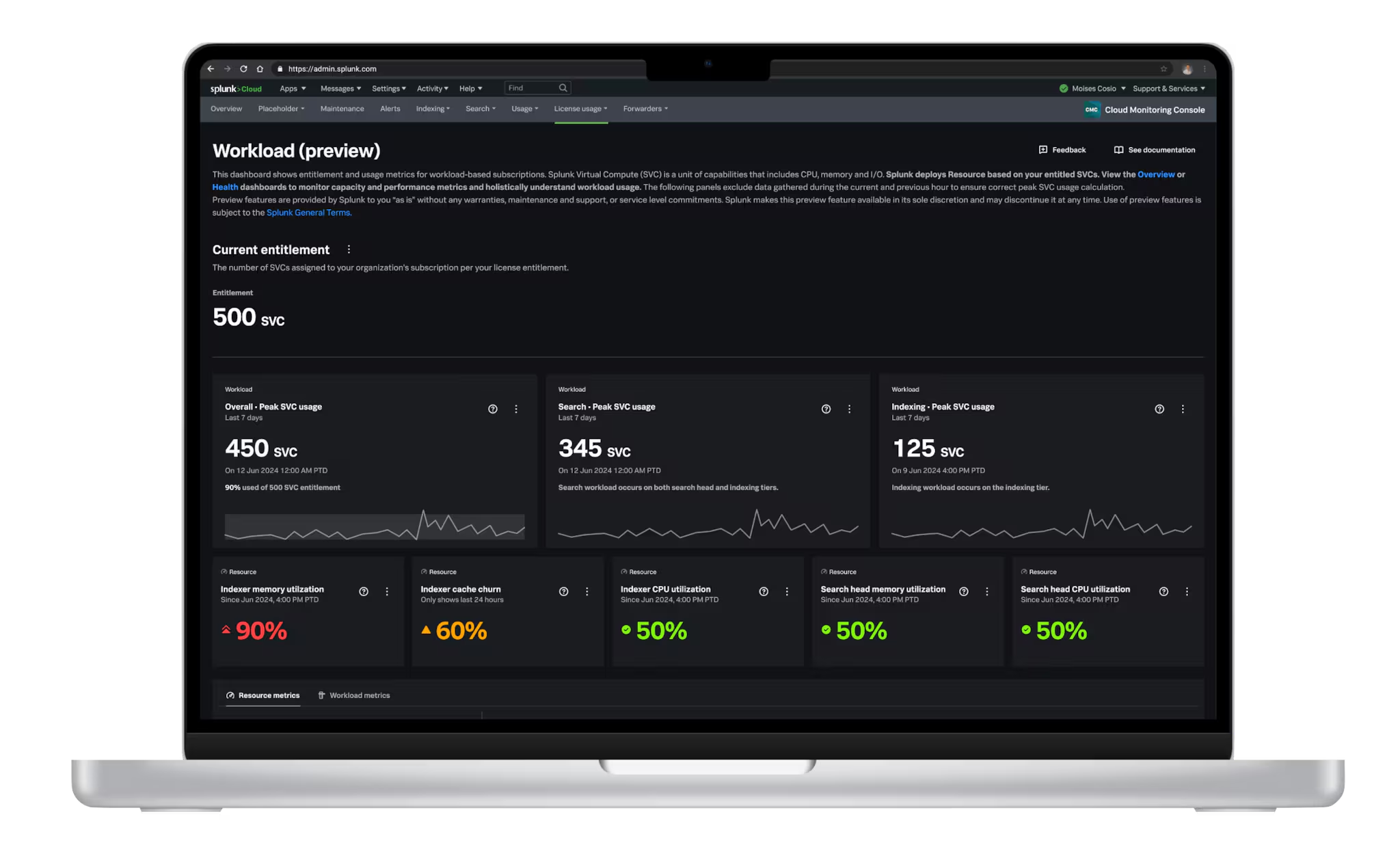
Introducing Resource Metrics: Elevate Your Insights with the New Workload Dashboard
Powering AI Innovation with Splunk: Meet the Cisco Data Fabric

Remote Upgrader for Windows Is Here: Simplifying Fleet-Wide Forwarder Upgrades
Dashboard Studio: Spec-TAB-ular Updates