Outputs vs. Outcomes: Understanding the Differences
Learn Leanne MittonKey Takeaways
- Outputs measure immediate, tangible results (e.g., products produced or services delivered), while outcomes assess the long-term impact of those outputs, such as increased revenue, customer satisfaction, or brand loyalty.
- Focusing solely on outputs can lead to misaligned goals, inefficient resource allocation, and a lack of adaptability, while tracking outcomes enables better decision-making, highlighting areas for improvement and fostering innovation.
- Shifting from outputs to outcomes involves aligning actions with goals, leveraging data to measure progress, and prioritizing customer needs, ensuring businesses achieve sustainable growth and deliver meaningful value.
In both business and project management, two concepts that you need to pay attention to are the outputs and the outcomes. These help you to measure not only the result — but the impact as well.
The two measurements go hand-in-hand, but many people focus on only the outputs, missing the bigger picture from the outcomes.
What are outputs? What are outcomes?
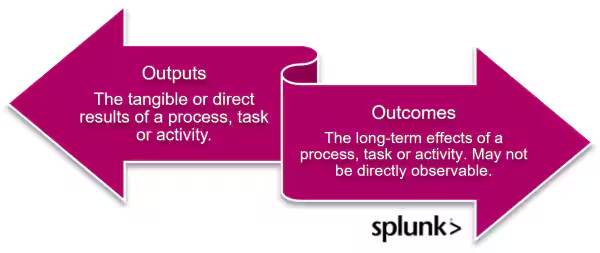
- Outputs are the tangible or direct results of a process, task or activity. Outputs can be directly measured and often include deliverables such as products or services which can be measured in terms of quality and quantity.
- Outcomes measure the long-term effects of a process, task or activity and may not be directly observable. Outcomes can take a long time to manifest and may be difficult to measure, which is why so many people overlook measuring the outcomes.
Examples: Outputs vs. outcomes
Output: Signing up 700 new subscribers to a newsletter
Outcome: Building a loyal customer base and increasing brand awareness
Output: Processing 100 customer service calls in a day
Outcome: Achieving high customer satisfaction ratings and repeat business
Output: Producing 10,000 units of a product
Outcome: Achieving a 20% increase in revenue compared to the previous quarter
In each example, the output leads to a specific positive result (outcome) for the business, such as:
- Building a loyal customer base.
- Improving customer satisfaction.
- Increasing revenue.
Not all outcomes end up positive, however, making measuring them essential — so you can tweak and adjust to turn the negative outcome into a positive one.
Why measuring outcomes is essential for success
When you look at outputs vs outcomes, the outcomes provide a clearer picture of the long-term effects. While outputs show what was produced or accomplished, outcomes show the effect of these outputs on the desired result.
By focusing on outcomes, businesses are able to ensure their efforts are achieving the desired results rather than only producing a certain number of products or services.
For example: Increasing traffic to your website by 20% may feel like something to celebrate, but it doesn't necessarily mean success if there is no corresponding increase in sales or lead generation. Instead, measuring the increased sales or lead generation (outcome) can determine whether their 20% increase in traffic (outputs) are making a meaningful impact.
By tracking outcomes, you can gain a better understanding of what is working (or not) and let us make informed decisions to adjust our strategies accordingly. When you do this, it allows you to make the most of your resources and maximize your progress.
The danger of focusing solely on outputs
Focusing solely on outputs can be dangerous for a number of reasons:
- Lack of context. Outputs alone do not provide context for why a particular goal or target was set in the first place, or how it relates to the overall mission or purpose of the business. Without understanding the broader picture, output-based decisions can actually harm the business in the long run.
- Misaligned goals and values. If too much focus is spent on producing a certain number of products or services, you may prioritize quantity over quality, resulting in poor customer satisfaction and negative brand reputation.
- Inefficient resource allocation. Focusing too much on producing more products may not necessarily result in higher profits. If the products are not selling, the business will not make money, even if it is producing a large quantity.
- Failure to adapt. By measuring only outputs, businesses may fail to adapt to changes in the market or shifts in customer needs. This can lead to stagnant performance and ultimately, failure to compete with more agile competitors.
In short, outputs are an important measure of progress and productivity, but focusing solely on them can be dangerous. When you combine the outputs with the outcomes, businesses can ensure that they are aligned with their goals and working towards long-term, sustainable growth.
Outcomes help you make better decisions
Outcomes can help you make better decisions by giving you a clearer picture of the impact and guiding you towards more effective strategies.
Here are some ways outcomes can lead to better decision-making:
- Highlighting areas for improvement. Outcomes help you identify areas where you are struggling to achieve your desired results. By analyzing your outcomes, you can pinpoint areas that need improvement and implement changes accordingly.
- Measuring success. Outcomes provide a clear and measurable picture of the success or failure of a process or project, allowing you to determine whether your efforts are achieving the desired results.
- Encouraging innovation. Outcomes can inspire new thinking, approaches and solutions to challenges and problems. By analyzing outcomes, you can identify new opportunities to innovate and improve your business.
- Strengthening decision-making. By providing a clear picture of the impact of your actions, outcomes give you the information necessary to make more informed and effective decisions.
In essence, outcomes provide a clear understanding of the impact of your actions and enhance your decision-making capability. They guide you towards better strategies and solutions, allowing you to improve your business and achieve your goals more effectively.
How to shift your focus from Outputs to Outcomes
Making the shift from measuring outputs to outcomes can be a challenging process, but it doesn’t have to be. Here are some ways to make the transition:
Aligning actions with goals
By focusing on outcomes, you ensure that your actions and decisions are aligned with your goals and mission. This can help you avoid wasted effort and resources on activities that do not contribute to achieving desired outcomes.
Example: Instead of setting a goal to produce 1,000 units of a product, set an outcome to increase revenue by 20% for the quarter.
Using data to measure outcomes
By collecting data and using it as a measure of your progress toward the desired outcomes, you can track your performance, identify trends and make data-driven decisions.
Example: If your desired outcome is to improve customer satisfaction, use surveys and feedback to collect data on customers' experiences and measure satisfaction rates.
Focus on customers’ needs
Keep your customers' needs at the forefront of your business decisions, by understanding their needs and preferences, leading to better outcomes such as increased customer satisfaction.
Example: Rather than producing more products, invest in product research and development to identify features that will better meet the needs and desires of your target audience.
When you shift your focus from outputs to outcomes, you're able to ensure that your business is aligned with its goals and mission while delivering value to your customers.
(Read about Kotter’s 8 steps to organizational change.)
Achieving success through outcome-based thinking
It is essential to focus on outcomes when striving for success. Outcome-based thinking encourages us to consider the end result of our actions and to prioritize our goals accordingly. This approach helps us to stay motivated and to remain focused on the bigger picture.
By understanding the importance of outcomes and utilizing outcome-based thinking, we can ensure that our efforts will lead to the desired results.
Related Articles

What is Data Center Security?

SAML & SAML Authentication, Explained