Data Science vs. Data Analytics: Key Differences
Learn Austin Chia , Laiba SiddiquiIs data science just a fancy word for data analytics? Not quite — but I get it — this is confusing. Both fields aim to extract valuable insights from data, yet they take different approaches and serve unique purposes, which confuses a lot of people.
In this article, I’ll explain what sets data science apart from data analytics, the roles you can explore in each field, and how to figure out which career path fits you best.
Data science vs. data analytics: The quick answer
When I first started exploring data science and analytics, I thought they were the same thing. I used the terms interchangeably, and I noticed a lot of people did, too. It seemed like they were just two different ways of describing the same field.
But after a lot of digging, I realized they’re not the same at all. So, here’s a table summarizing their key differences:
Now, let’s understand both fields in detail.
Data science: The umbrella term
We can classify data mining, data forecasting, and more under the broader category of data science. That’s because it’s a multidisciplinary field that combines mathematics, statistics, computer science, and domain-specific knowledge to extract actionable insights from raw data and build predictive models. It’s how we make predictions and solve problems using data.
And it’s growing fast. A report from 2023 shows that the global data science market is expected to grow by 26% every year and could reach $759.7 billion by 2030. That’s because more and more businesses are realizing the value of making data-backed decisions.
Take Google, for example. It uses data science to give personalized search engine results. By analyzing what people search for and how they browse online, it provides the most relevant results for each user.
This is a perfect example of how data science helps improve our everyday experiences while making information easier to find.
The data science lifecycle
Data science is iterative — data scientists form hypotheses and conduct experiments to achieve specific outcomes using available data. This process is known as the data science lifecycle and here’s how you can approach it:
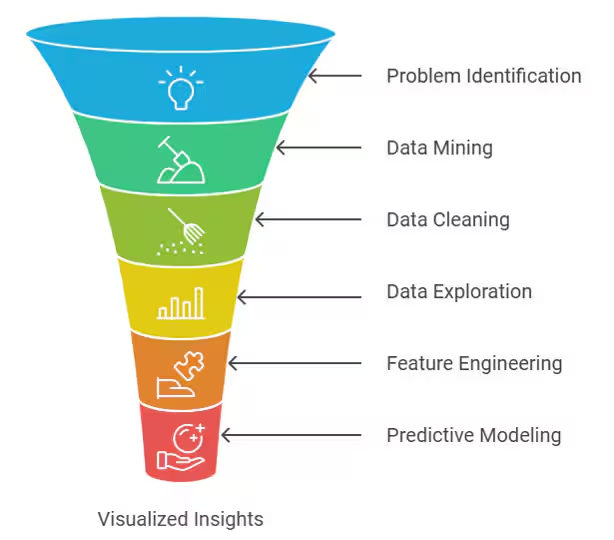
Data science lifecycle funnel. Source: Image by Author
- Problem identification: Define the challenge or goal.
- Data mining: Extract relevant data from large datasets.
- Data cleaning: Remove redundancies and errors from the collected data.
- Data exploration and analysis: Make sense of the data.
- Feature engineering: Use domain knowledge to extract meaningful details.
- Predictive modeling: Forecast future outcomes and behaviors.
- Data visualization: Represent data points using charts and animations.
Tools used for data science
Data science relies on diversified tools to analyze data and build predictive models. Here’s a breakdown of some of the most commonly used tools in this field:
- Python is used for data analysis, machine learning, and visualization. Its libraries like Pandas, NumPy, and scikit-learn make it a go-to choice.
- R helps with statistical computing and graphics.
- SQL is used to query and manage structured data in relational databases.
- Apache Hadoop is used to process large datasets across distributed systems.
- Apache Spark helps with fast computation and integration with machine learning tools.
- Tableau allows interactive dashboards and easy visualization sharing.
- Git helps track changes in code and manage project versions.
Roles and responsibilities
Since data science is a vast field, it also opens many roles. So here are some of the most common ones with their responsibilities:
- Data scientists build predictive models using large amounts of data.
- Machine Learning engineers work on automating AI/ML models.
- Artificial Intelligence (AI) engineers build and maintain AI systems.
- Product owners define priorities for data science projects and align technical teams with business objectives.
- Project managers oversee teams and set timelines to make sure all projects meet deadlines and requirements.
These are just a couple of roles. As you explore the field in detail, you will come across a lot more opportunities to move into.
Data analytics overview
Data analytics is a specialization within data science — it focuses on querying, interpreting, and visualizing datasets. First, it collects raw data from multiple databases, APIs, or IoT devices. It then cleans and preprocesses the data to make sure it's accurate and consistent. Once done, it feeds data into analytical models. These models apply ML algorithms to analyze and extract meaningful insights, while data pipelines automate the flow and transformation of data for continuous analytics.
This, in short, helps teams make better decisions and predict future outcomes.
Data analytics process
Data analysts use four primary approaches to understand and conceptualize existing datasets:
- Descriptive analytics: Evaluate the qualities and quantities of datasets.
- Diagnostic analytics: Pinpoint reasons behind events that took place.
- Predictive analytics: Identify correlations and causation.
- Prescriptive analytics: Recommend decisions based on past results.
Predictive maintenance is a great example of how all four analytics processes work together in the industrial sector. Descriptive analytics collects and summarizes historical data, such as temperature, vibration, and runtime metrics, to understand baseline performance and detect anomalies.
Once anomalies are detected, diagnostic analytics correlates them with failure events to identify root causes — it could be overheating or excessive vibration.
Building on these insights , predictive analytics employs statistical models and ML to forecast the likelihood of equipment failure based on patterns like a spike in vibration frequency. Then, prescriptive analytics uses optimization algorithms and decision models to recommend suitable actions, such as scheduling maintenance or adjusting operating conditions.
(See how predictive & prescriptive analytics work together.)
Tools used for data analytics
To implement the above-mentioned analytics techniques, data analysts use a diversified range of tools such as:
- Excel organizes, analyzes, and visualizes smaller datasets with built-in formulas and charts.
- SQL helps with managing data in databases to extract and manipulate large datasets.
- Python and R are used for advanced data analysis and data visualizations.
- Tableau and Power BI help create interactive dashboards and reports to show data insights.
Roles and responsibilities
Like data science, the data analytics field also offers a variety of roles, and each one of them focuses on using data to solve problems and support better decision-making. Here are some key roles with their responsibilities:
- Data analyst collects, cleans, and organizes data. They use tools like Excel, SQL, and Python to analyze trends and create reports that help businesses understand their performance.
- Business intelligence analysts turn data into actionable insights. They design dashboards and reports using tools like Tableau or Power BI to guide business strategies.
- Analytics managers lead a team of analysts. They set goals and oversee projects to ensure the delivery of accurate and actionable insights.
- Financial analysts analyze financial data to assess performance, forecast trends, and recommend investment opportunities.
- Risk analysts evaluate potential risks using data to predict uncertainties and minimize financial or operational losses.
Similarities between data science and data analytics
Despite their differences, data science and data analytics share similarities as well. For example:
- Both data science and analytics use data to draw insights and make decisions.
- Both processes involve using statistical methods and techniques to discover patterns in the data.
- Both roles require knowledge of programming languages such as Python, R, or SQL.
- Both processes involve collecting, cleaning, organizing, and analyzing data.
- Both processes involve creating visualizations for presenting data.
Choosing your data career path
I know deciding between data analytics and data science can feel like a big challenge because I’ve been through this. But it doesn't have to be complicated — you only have to understand yourself and what you want from your career.
- Data analytics focuses on interpreting data to inform business decisions.
- Data science involves using and experimenting with advanced techniques to predict future trends.
(Related reading: data science & data analytics certifications.)
Who can be a data scientist
Data science would be an ideal field if you love solving complex technical challenges and playing around with algorithms to create predictive models and forecast the future.
As Sundas Khalid, a data scientist at Google says, “There will be many people who will tell you to start with coding whether that is Python or something else. I completely disagree with that advice. Coding is a tool to apply data science. It is not data science in itself. But what data science is, is statistics and machine learning. That's the core knowledge that a data scientist needs to know.”
This highlights the importance of foundational concepts, which means you must strengthen your statistics and machine learning concepts before getting into Python or SQL.
I analyzed recent job openings for data scientists at top companies like Google, PayPal, MasterCard, and Apple and realized that this approach aligns exactly with what top companies prioritize in their job listings. Almost all these roles required a strong background in statistics, mathematics, or any other quantitative field.
Who can be a data analyst
Data analytics is the right field for anyone who enjoys analyzing data to make decisions. While data scientists hold specialized roles, any stakeholder can be a data analyst.
For example, business analysts may use BI dashboards to visualize KPIs. Many organizations hire dedicated data analysts to handle tasks like data wrangling and interpreting insights. Simply put, analysts provide the data-backed narratives that decision-makers rely on.
From an education perspective, you need a minimum of a bachelor's degree in math, economics, or computer science. But programming skills and knowledge of database management will give you an extra edge.
So, if you want to move into any of these fields, I’d recommend building both your academic foundation and hands-on technical expertise because that’s what every top employer seems to value.
Salary and growth opportunities
As of December 2024, the average salary for a data analyst in the U.S. is $82,640 per year. With some extra training and experience, you could move into roles like business intelligence analyst or data scientist, which usually pay more.
For example, data scientists earn an average of $122,738 annually as of the December 2024 report — thanks to the high demand for their skills.
As you continue to grow your expertise, you can aim for even senior roles, like machine learning engineer or data architect. These positions come with higher salaries and let you work on more complex and exciting challenges in the data field.
Note: Salaries are subject to change depending on experience and location.
(Related reading: IT & tech salaries)
Choose the field that interests you
Both data science and data analytics offer rewarding career paths. While data analysts focus on understanding past performance and making data-driven decisions, data scientists use data to predict future trends.
The best path is the one that matches your skills, interests, and career goals. Both fields are exciting and growing and offer incredible opportunities to make a real impact.
FAQs about Data Science vs. Data Analytics
Related Articles

Security Intelligence: An Introduction

What Is Network Architecture?