Business Process Reengineering Explained
As organizations respond to the ever evolving environment, the need to stay ahead triggers transformative efforts that touch on the fundamental elements that make up the enterprise.
Indeed, certain “trends” — AI, cybersecurity, personalized content, hybrid work, and automation — are critical areas that businesses need to focus on, and adapt and adjust their company structures accordingly.
However, change is never easy. The bigger and more complex an organization is, the higher chances of transformation failing are. Deloitte suggests that 70% of digital transformation efforts fail due to lack of management support and employee resistance. So, transformation has to be carefully managed: significant changes to how products and services are developed and delivered can result in spectacular success or failure in equal measure.
The role of business processes
Whether it is a big bang switch or an iterative phased change, one of the key elements that is impacted during transformation is business processes.
Whether they are cross-functional like customer journeys and value stream maps, or resident in a siloed business unit, changing business processes invariably affects: the people, technology, vendors, as well as other business elements that are involved in an organization’s day-to-day activities.
Business process reengineering is one of the main techniques that have been touted as quintessential to successful process transformation efforts in organizations worldwide. A buzzword for management and consultants, it is sometimes considered a magic pill, or worse, a fancy makeover.
But what is it really, and does it deliver on its promise or is it past its expiry date? We will uncover this and more in this article.
(Related reading: business process analytics.)
What is Business Process Reengineering (BPR)?
The GAO defines business process reengineering as a systematic, disciplined improvement approach that critically examines, rethinks, and redesigns mission-delivery processes in order to achieve dramatic improvements in performance in areas important to customers and stakeholders.
Some of these improvements according to Bain include
-
Productivity
-
Cycle times
-
Quality
-
Employee and customer satisfaction
Business process reengineering is a strategic initiative, where the management decides to make significant modifications to how the operational activities are conducted in order to gain effectiveness and efficiency needed to translate into improved financial performance.
BPR involves transforming the organization from an As-Is state to a To-Be state by tackling non-value adding steps within their business processes through actions such as:
-
Collapsing activities
-
Reducing processing times
-
Streamlining approvals
To demonstrate the value of the business process reengineering effort, the key measures reported include cycle times, handoffs between functions, and manual processing, which are then mapped to overall business objectives such as enhanced customer experience, cost reduction, and productivity gains.
(Related reading: process vs. practice & outputs vs. outcomes.)
History of BPR
BPR became a popular business concept in the 1990s where competitive pressures forced organizations to recognize and break away from outdated assumptions and rules of how their businesses ran, and seek to reorganize according to outcomes by making fast and dramatic changes to how work is carried out.
Techniques such as value stream mapping, Lean Six Sigma, and process mining have been applied to capture the data that justifies the rational behind leaving ancient operational models that no longer generate value in the current operational context.
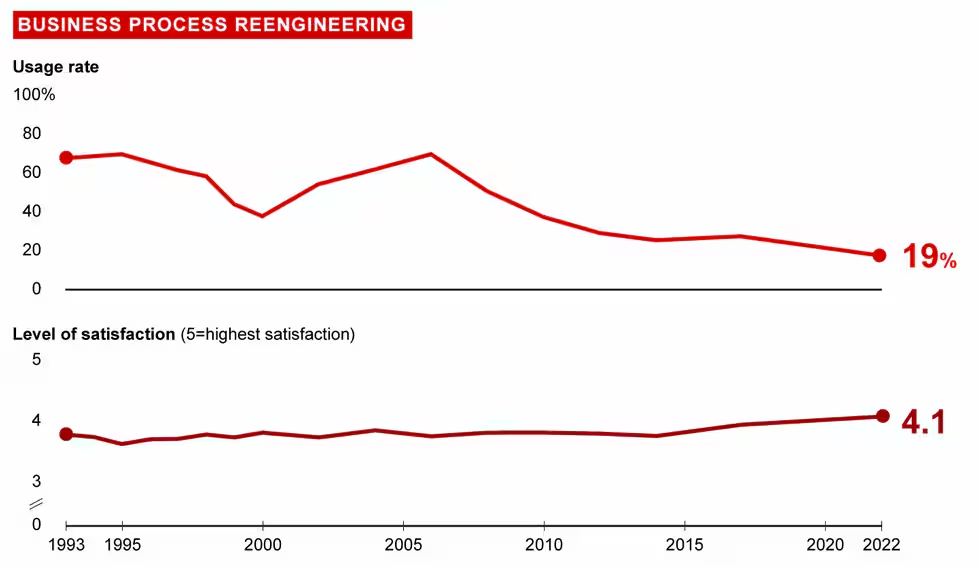
BPR Usage Rate vs Satisfaction Level (Image source)
Bain reports that the concept of business process reengineering has dropped in popularity since its highs in the nineties, but the satisfaction from it has remain constant over the years (image above). This implies that there is still benefit when organizations choose to rejig their ways of working to remain relevant in the digital age.
BPR approach
The main phases of business process reengineering can be summarized as follows:
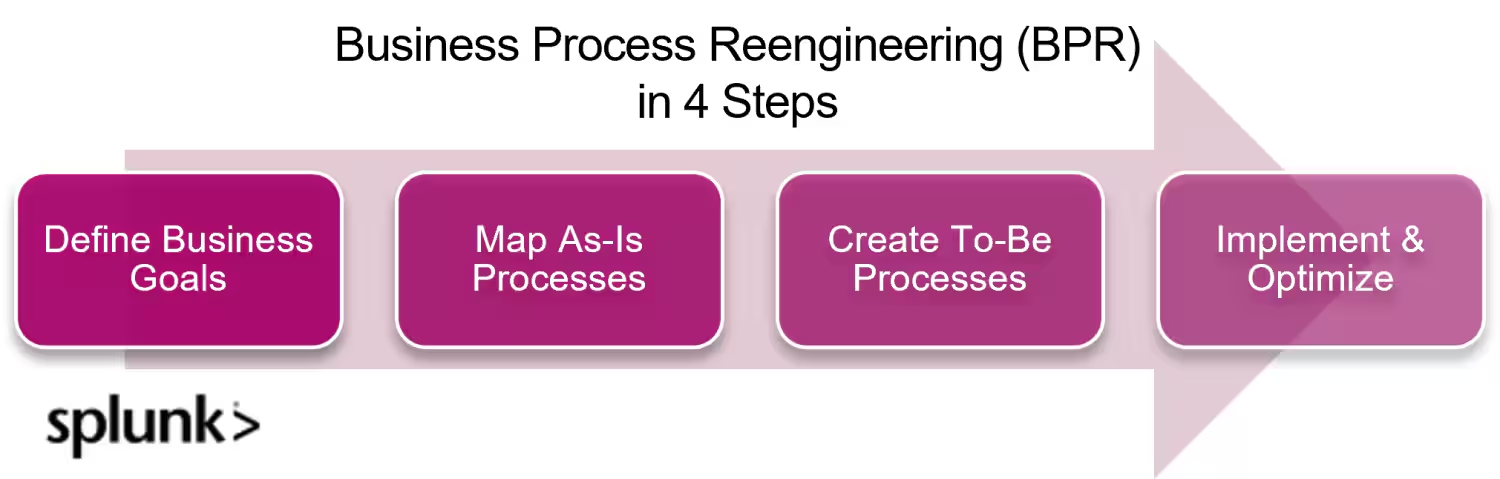
Step 1. Define business goals
The business process reengineering efforts must be founded on the organization’s strategic goals and objectives. Once the organization has made the decision to change its way of working — in order to enhance its bottom line, gain market leadership, or comply with stakeholder requirements — the targets and timelines set will inform the approach that BPR will adopt.
Consider the example of a government transportation agency with the responsibility of managing driving license issuance. The agency’s business process reengineering efforts will be informed by overall public service goals for improved service delivery and better accountability for costs. BPR goals could include:
-
Preventing long queues.
-
Providing one-stop services.
-
Reducing environmental footprint by going paperless.
It is also at this point that plans for the BPR effort are created. The leadership communicates its vision, and appoints stakeholders from the affected business functions to participate in the initiative.
The organization may bring skilled consultants onboard to provide technical support on the same, and also bring an outside eye that may be unbiased.
Step 2. Map as-is processes
Here the BPR effort involves identifying the current state process and using this information to analyze it against the goals, then trace gaps and unearth improvement opportunities. This is especially useful for cross-functional processes where members of certain teams do not have visibility on how their actions affect another team upstream or down-stream.
Documenting the process using a process map may provide additional insights as visualization can provide better clarity on the flow of work across multiple teams.
Back to our example of the transportation agency whose current process might involve the following steps:
-
Go to their local offices in your city. Travel Time: 1 hour.
-
Pick a form and fill it with your driving license details. Time: 5 minutes.
-
Queue at the first counter for validation of the form and presentation of your original license. 10 minutes to 1 hour depending on volume of applicants.
-
Queue at the second counter for payment of the renewal. 5 minutes to 1 hour depending on volume of applicants.
-
Queue at the third counter for processing of your renewed license. 10 minutes to 1 hour depending on volume of applicants.
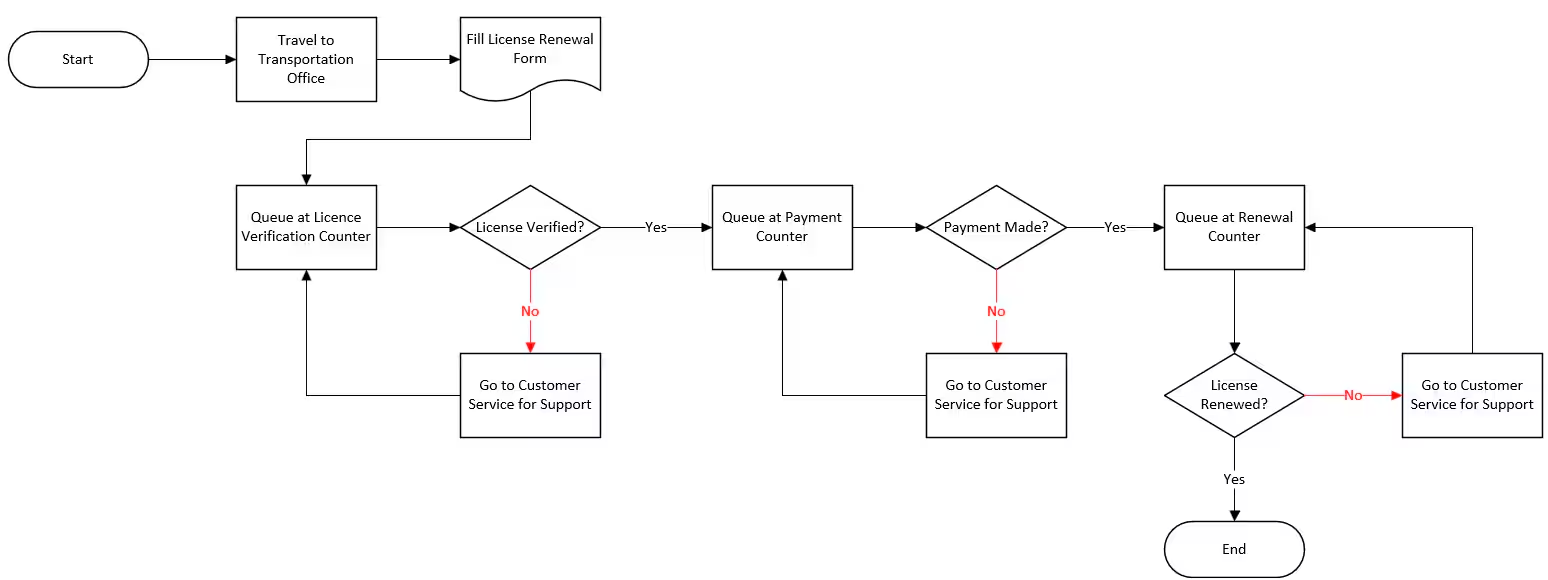
Licence As-Is Process
Once the process is mapped and discussed with stakeholders, an analysis is then conducted to identify opportunities to save time and reduce handoffs between different agency functions. It would also identify ways of reducing the amount of queuing particularly by citizens who go to customer service for support.
Step 3. Create to-be processes
In this phase, the stakeholder agrees to the actions required to remodel the existing process to a future state. That future state will:
-
Address the identified gaps.
-
Adopt suggested improvements.
-
Lead to your achievement of the business goals.
The To-Be process will incorporate changes to roles, actions, tools, sequences, and handoffs. This updated process is then published, stakeholders provide feedback to be incorporated, and management signs it off for implementation.
Back to our example of the transportation agency whose future process might involve the following steps:
-
Log in to the Travel Agency online portal. Time: 1 minute.
-
Select the renewal option which auto-validates the driving license details. Time: 1 minute.
-
Select the online payment option and make payment. 2 minutes.
-
Generate the renewed license. 1 minute.
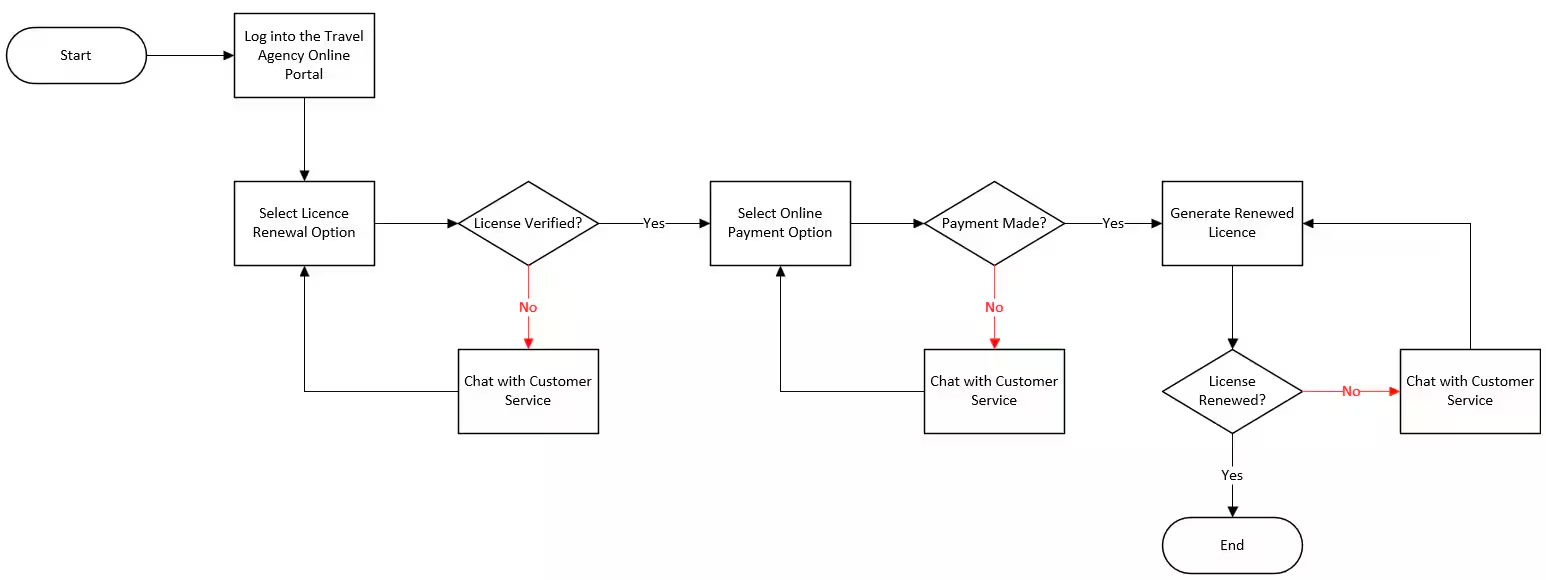
License Renewal To-Be Process
Step 4. Implement and optimize
Here the organization takes steps to implement the To-Be process. This change can be carried out holistically as a formal business project, or piecemeal across different functions. Some of the actions taken may include:
-
Formally approve the To-Be process and assign resources for implementation.
-
Changing the organizational structure including reassignment of roles.
-
Implementing required technology solutions to automate manual process activities.
-
Building new dashboards and reports for tracking the To-Be process.
-
Implementing compliance requirements related to the To-Be process.
-
Communicating the To-Be process to stakeholders through a structured marketing campaign.
Once implemented, the To-Be process is measured and reported against the original goals and objectives. Lessons learnt are captured, and the process is then fine-tuned where necessary to deliver optimal benefits.
In the case of the transportation agency, they can communicate to the public the license renewal portal, the new process steps, and the benefits in terms of time saved for citizens.
They can also call out next goals. For instance, future optimization could include AI chat assistance for citizens finding challenges with the automated renewal process.
(Related reading: business process automation.)
BPR risks
The change implied by BPR is radical in nature. As such, it requires significant involvement across the organization, which is rife with risks arising from resistance by affected stakeholders, or results failing to match anticipated business benefits.
Considering the transportation agency example, here are some risks and challenges:
-
Taking away work from those who were carrying out the license verification, payment, and issuance may be opposed by unions, if there is no transition plan for the affected workers.
-
The use of technology and onboarding of third-party payment processors may bring additional costs and complexity which the agency did not have to deal with before, leading to raising of license renewal prices to cater for such.
According to the Open Group, many business process re-engineering efforts have been undertaken and abandoned because they were too ambitious, while others cost far more in both time and money than originally intended.
A formal change management program can help address the risks of failure from a BPR initiative. This can tackle the sources of resistance and ensure leadership support in making the BPR effort successful.
Also, a formal risk assessment of the to-be process can aid in anticipating future issues arising from the To-Be process, which would lead to identification and implementation of appropriate mitigation actions.
Related Articles

How to Use LLMs for Log File Analysis: Examples, Workflows, and Best Practices

Beyond Deepfakes: Why Digital Provenance is Critical Now

The Best IT/Tech Conferences & Events of 2026

The Best Artificial Intelligence Conferences & Events of 2026

The Best Blockchain & Crypto Conferences in 2026

Log Analytics: How To Turn Log Data into Actionable Insights

The Best Security Conferences & Events 2026

Top Ransomware Attack Types in 2026 and How to Defend