What Splunk Experience Day Thailand Revealed About the Future of Resilience
Security Robert PizzariKey takeaways
- AI is changing cybersecurity, making skilled teams, collaboration, and hands-on training more important than ever.
- Splunk Experience Day Thailand brought together leaders to share ideas on AI, cybersecurity, resilience, and digital transformation.
- Splunk BOTS gives security teams practical experience responding to realistic cyber incidents and strengthening cyber readiness.
At this year’s Splunk Experience Day Thailand, one message came through consistently: organisations are investing heavily in AI and digital transformation, but many are still working out how to prepare their people for the pace of change that comes with it.
That shift was reflected in the strong engagement we saw across the event, which brought together over 230 business leaders, practitioners, students, and public sector stakeholders to discuss cybersecurity, resilience, and the growing impact of AI across industries.
The challenge is no longer just implementing new technologies, but ensuring teams can operate confidently in increasingly interconnected and fast-moving environments.
Why the Human Element Still Matters
Multiple reports have highlighted cyber incidents as one of the top business risks facing organisations in Thailand today, while ransomware and digital threats continue to rise alongside AI adoption and digital transformation efforts.
That trend is reflected globally as well. Splunk’s latest report, The Hidden Cost of Downtime 2026, found that 95% of security leaders believe cyber threats are becoming more sophisticated, partly driven by AI.
In fact, organisations are now averaging 60 disruptions each year across security, applications, infrastructure, and networks. As the pace and complexity of operations increase, the pressure on teams to respond quickly and effectively continues to grow.
AI and automation can help organisations move faster, but accountability still sits with people. Building resilient operations ultimately depends on teams that can make informed decisions, collaborate effectively across functions, and adapt under pressure during disruptions.
A Shared Commitment to Cyber Readiness
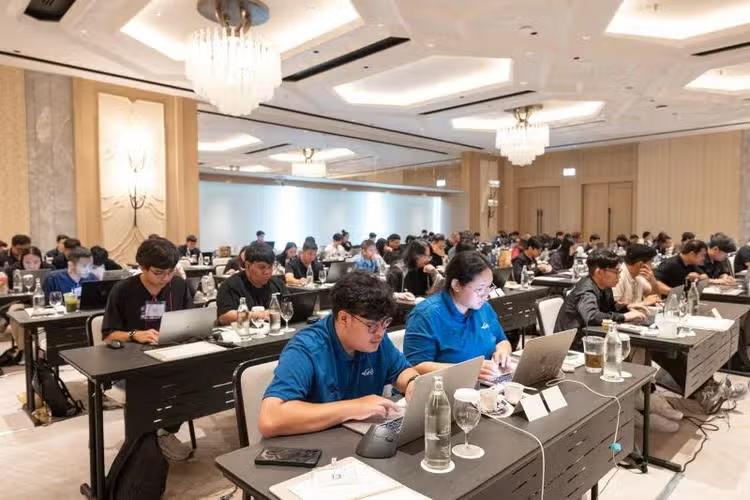
Conversations on cyber resilience are important, but resilience is built through practice. One of the key highlights at this year’s event was the continued collaboration between Splunk, Thailand’s National Cyber Security Agency (NCSA), and KASIKORN Business-Technology Group (KBTG) on the Splunk Boss of the SOC (BOTS) hackathon competition, which attracted over 70 participants.
Designed to simulate real-world incidents that security analysts face regularly, Splunk BOTS is a blue-team, jeopardy-style, capture-the-flag (CTF) competition that enables participants to test their skills in a practical, high-pressure environment. Now in its second year, the initiative reflects a shared commitment to advancing cyber readiness and developing the capabilities needed to address an increasingly complex threat landscape.
As shared by Air Vice Marshal Amorn Chomchai, Secretary-General at NCSA:
“In an era where AI is used in attacks, we must use AI for defence as well. More importantly, there is no substitute for experience. Therefore, training and practices become essential. Programmes like Splunk BOTS help organisations build a more resilient and prepared cyber workforce,” he added.
Indeed, as Thailand continues to advance its digital economy ambitions, sustained investment in skills development and stronger partnerships across the public and private sectors will be critical to ensuring its cyber capabilities keep pace.
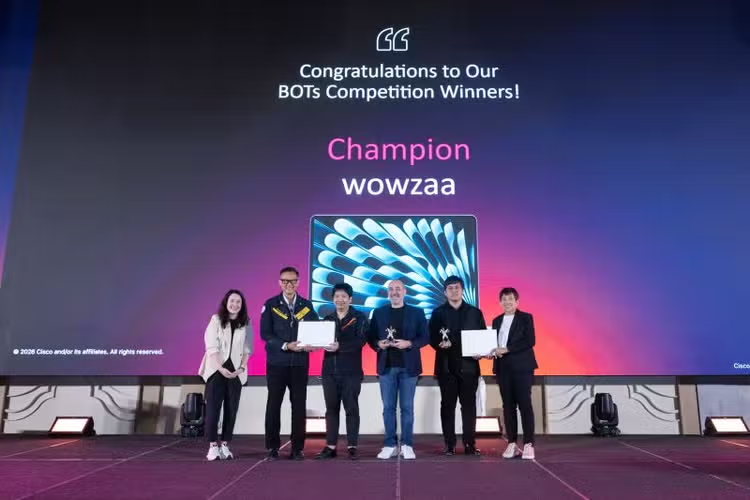
Mr. Chatchawat Asawarakwong, Vice Chairman and Group Chief Information Security Officer (CISO) at KBTG:
Together, these conversations reinforced a broader theme that emerged throughout the event: in an AI-driven world, readiness is no longer just about preparing for disruption, but also about adapting to constant change.
The New Rules of Resilience
AI is redefining what resilience looks like and changing the rules of the game. With the rapid pace of AI development and growing attention on platforms such as OpenAI and Mythos, security teams are increasingly having to contend with new questions around governance, visibility, accountability, and emerging attack pathways.
What stood out in Thailand was the shared urgency around these challenges, but also the recognition that no organisation can navigate them alone. Whether through initiatives like Splunk BOTS, ongoing engagement with regulators, or sharing best practices on observability and data management strategies across industries, there was a clear understanding that keeping pace with change requires organisations to learn, adapt, and evolve continuously.
As Thailand continues to position itself as a regional AI hub, building resilience must evolve in parallel. Ensuring organisations can innovate with confidence will require not only investment in AI capabilities, but also the governance, operational readiness, and collaboration needed to manage risk while unlocking AI's full potential.
Related Articles

Celebrating 2024 Worldwide BOTS Day

Introducing Splunk Attack Range v2.0