Proxy Servers: How Proxies Work, Common Types, Uses & More
Key Takeaways
- Proxy servers act as intermediaries between clients and destination servers, enhancing security and privacy by hiding clients' IP addresses, controlling access, and enabling content caching and filtering.
- Different types of proxy servers, such as forward, reverse, and anonymous proxies, offer specific benefits like improved performance, protection for servers, and bypassing geo-restrictions, but may also introduce risks like latency or vulnerabilities if misconfigured.
- Centralized logging and analysis of proxy server activity (e.g., via tools like Splunk) provides real-time visibility into network usage, performance bottlenecks, and potential security threats, helping organizations monitor and protect their environments.
Are you worried about your privacy online? You're not alone. In one U.S. survey, three out of every four respondents expressed growing concerns about their data privacy.
In the past five years, the vast majority of businesses and organizations have been victim to cyberattacks, and the average cost of data breaches has increased by $137,000.
As these privacy and security threats grow, proxy servers have become a key technology to:
- Address the risks of data breaches.
- Enhance online anonymity.
Proxy servers can encrypt data and minimize exposure to threats, making them a crucial component in modern cybersecurity strategies. Let’s dive in to this important topic.
What is a proxy server?
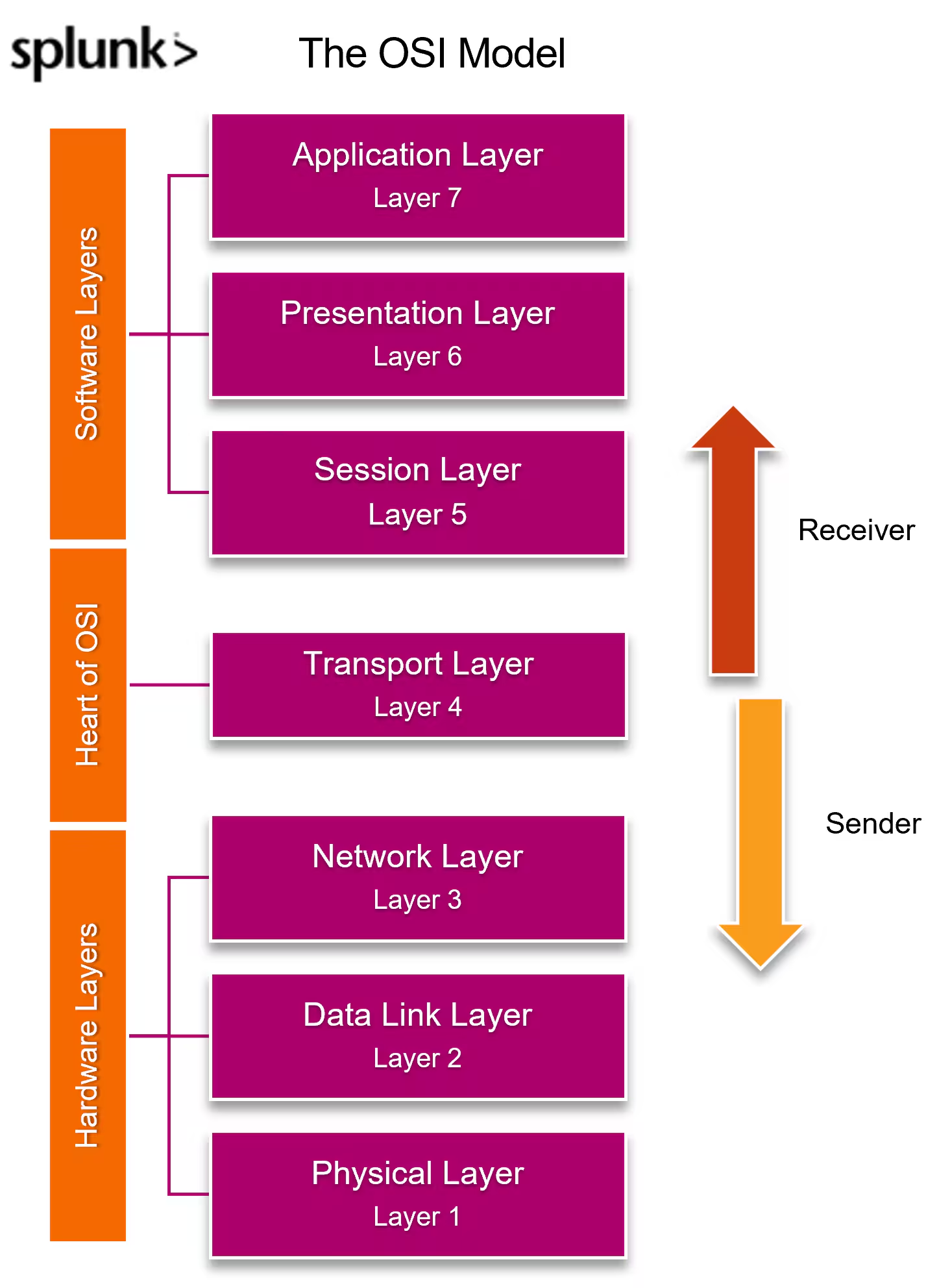
A proxy server is a gateway between the end user (you) and the internet, acting as an intermediary between users and the web pages they visit. Within the OSI model, proxies typically operate at layer 7, the application layer.
Just as a student might ask their class/batch representative to communicate with a professor on their behalf, a proxy performs a similar role in digital communications:
- The request the client (you) make on the internet goes through the proxy server.
- The output (response) comes back through the proxy server to the client.
This setup offers various levels of security and functionality. A primary use is to prevent cyber attackers from accessing private networks. By masking the user's IP address, proxies help protect personal information and provide a layer of anonymity during internet browsing.
(Related reading: complete guide to computer servers.)
Proxy server vs. VPN: what’s the difference?
Both proxy servers and virtual private networks (VPNs) act as intermediaries between a user and the internet, but their functions and features differ.
- Proxies primarily mask IP addresses and route specific types of traffic, providing anonymity without full encryption.
- VPNs, in contrast, encrypt all internet activity, offering a more advanced layer of security.
Proxies are lightweight and ideal for tasks requiring minimal resources. In contrast, VPNs provide robust security but can introduce latency due to encryption overhead, making them less suitable for high-speed activities like gaming or streaming.
How proxy servers work
Every device connected to the internet has a unique IP address, akin to a home mailing address, to route requests appropriately. Likewise, proxy servers have unique IP addresses.
When connected to a proxy, the user's computer adopts the proxy's IP address for internet requests. The proxy server then retrieves data from the internet and sends it back to the user's browser, effectively concealing the user's identity from websites.
This functionality is crucial for maintaining privacy, as it limits the exposure of personal IP addresses that could otherwise be tracked.
Proxy server design and architecture
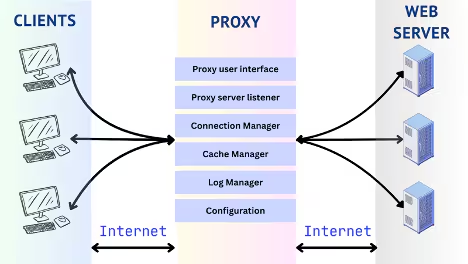
The architecture of a proxy server system typically consists of multiple layers, processing all incoming and outgoing requests through key components.
- The proxy user interface allows administrators or users to configure and manage proxy settings.
- The proxy server listener monitors and forwards incoming client requests to the appropriate destinations.
- The connection manager facilitates efficient communication between clients and web servers.
- The cache manager stores frequently accessed data locally to reduce latency and improve response times.
- The log manager records all requests and responses for monitoring, auditing, and troubleshooting purposes.
- The configuration module includes the rules and settings that govern the proxy server's operations.
In some setups, a local proxy server may connect to a backbone proxy server, acting as a centralized hub to manage requests from multiple users and optimize traffic management.
While the local proxy server pays attention to individual user profiles, the backbone proxy server manages group profiles and performs more aggressive pre-fetching, caching, and filtering operations to support broader scalability.
For effective management of user-profiles and access patterns, browsers that interact with the proxy servers often disable their internal caches to make sure that all traffic passes through the proxy server.
How proxy servers improve performance
Proxies improve performance primarily through caching and optimizing traffic routes:
- A caching proxy stores frequently accessed data locally, reducing bandwidth usage and speeding up access for multiple users within the same network.
- By routing requests through faster pathways, proxies minimize latency and provide efficient data transfer, particularly beneficial for users in regions with slower internet connections.
What proxy servers can help with: Potential use cases
Proxy servers are widely used by businesses to:
- Manage employee internet access.
- Block certain websites.
- Access region-specific content.
By acting as intermediaries, proxies can restrict access to websites that don’t comply with organizational standards. For example, an employee trying to access a restricted site may encounter a message like:
This website is not permitted according to organizational standards.
This capability is useful for private organizations, government institutions, and academic environments. But proxy servers can help with more than just managing what people may or may not access.
Improving anonymity
Proxies also help improve anonymity by preventing websites from tracking your IP address. This feature is particularly valuable for journalists and militaries worldwide.
On the flip side, this anonymity can sometimes be exploited for illegal activities, so it is important to implement proxies responsibly.
Caching and bandwidth optimization
Corporate networks frequently use proxy servers to monitor frequently requested websites and allow users faster access through local caching.
This reduces bandwidth usage by eliminating the need to retrieve data from the internet with every request, thereby speeding up access to frequently visited sites.
Monitoring and logging user activity
Proxies can observe internet usage patterns, which can help at the organizational level:
- Analyzing browsing habits.
- Detecting misuse.
- Maintaining organizational integrity.
(Related reading: IT monitoring and what are logs?)
Improving cybersecurity
As an intermediate layer in the browsing process, a proxy server can also function as a firewall, blocking access to malicious sites and analyzing them before users connect. This setup helps in detecting unauthorized downloads and improving cybersecurity.
Load balancing for large networks
In large-scale companies, proxies help balance workloads by integrating several servers to distribute user requests efficiently. This minimizes unnecessary delays and keeps user browsing optimized, ensuring smooth and fast internet access even during peak times.
Ad and tracker blocking
Proxies can detect and filter out advertisements by blocking intrusive ads before they reach the user's browser, providing a faster browsing experience.
This feature is beneficial for users seeking uninterrupted and clean web navigation.
Types of proxies: Common proxy servers
There are more than 20 types of proxies that can be listed based on several functionalities. We’ll discuss the major types below.
- Forward proxy: Positioned next to clients, forward proxies handle requests from end users, masking IP addresses and serving as a single point of entry for network administration. However, latency and single-point failures can arise due to multiple user connections.
- Reverse proxy: Located near web servers, reverse proxies manage incoming traffic, reduce bandwidth load, and perform caching. If not secured properly, they can expose backend servers to cyberattacks.
- Transparent proxy: This proxy hides its presence, allowing companies to monitor employee activity without disrupting the user experience.
- Anonymous proxy: Commonly used to hide the user's identity by presenting the proxy's identity instead, this type is effective for privacy but may limit internet access.
- High anonymity proxy (aka elite proxy): This advanced version of anonymous proxies removes specific user data from requests before they reach websites, making the proxy's involvement undetectable. These are particularly valuable in intelligence and journalist activities. Beware, however: some proxies are false promoted as high anonymity — an attempt to trap users and track or steal their data.
- Residential proxy utilizes IP addresses assigned to actual devices, like home computers and smart phones, appearing as though browsing traffic comes from real users. Residential proxies are ideal for accessing localized content, but availability can be limited and costs higher.
- Data center proxy: Created within professional data centers, these proxies are fast and inexpensive, suitable for bulk tasks like web scraping. However, they are easily detectable due to non-residential Ips — so only use these where performance and scalability are more important than anonymity.
- Rotating proxy automatically changes IP addresses at intervals or with each request, minimizing detection risks and maintaining anonymity. These are particularly useful for high-volume request activities.
- SOCKS proxy handles a wide range of traffic types using the TCP protocol. SOCKS proxies, currently at version SOCKS5, can handle all data types. While offering flexibility, they lack built-in encryption, so additional security layers are recommended.
- HTTP proxy: Specifically designed to manage web traffic, HTTP proxies optimize browsing speeds, control access, and anonymize online activities, but are limited to web data.
Drawbacks & solutions related to proxy servers
As with every technology, proxies have certain drawbacks that savvy users should be aware of. Let’s look at the three primary concerns.
Cybersecurity concerns
While some proxies may have some security features, in general they lack encryption. This lack of encryption can lead to potential cyberattacks. In fact, man-in-the-middle attacks and DDoS attacks are common threats to proxy servers.
Solution: Implementing SSL/TLS encryption can safeguard communication against interception or manipulation.
Limitations around performance
Performance limitations may arise from resource shortages and improper traffic management, causing latency and timeout issues.
Solution: Proper balancing methods and real-time monitoring of network traffic and server logs can help identify and resolve these issues efficiently and in real time.
Poor management
Improper maintenance — such as lack of regular updates and weak administrative controls — can leave proxies vulnerable to misuse and cyberattacks.
Solution: Regular updates and strong authentication protocols, such as multi-factor authentication (MFA), are critical for maintaining cybersecurity and ensuring only authorized access.
Using AI for proxy server management
AI has revolutionized proxy server management by enhancing security and efficiency. Here’s what AI can do:
- Detect threats in real time by analyzing network patterns and identifying unusual activity, such as sudden spikes in data usage that may indicate a cyberattack.
- Optimize traffic handling by dynamically choosing the fastest routes for data transfer, reducing delays during tasks like streaming videos or downloading large files.
- Circumvent challenges like CAPTCHAs that block traditional proxies, mimicking human behavior to avoid detection and facilitate advanced tasks like web scraping.
Future trends in proxy servers
The proxy server market is projected to grow significantly, increasing from USD $3.4 billion in 2022 to USD $7.2 billion by 2031. Beyond AI, new trends are being integrated with proxies to boost their capabilities. For example:
- 5G mobile proxies, with faster speeds and lower latency, handle tasks like social media automation and live streaming more efficiently while switching between towers for anonymity.
- Blockchain enhances proxy security and reliability through decentralized systems, ensuring data remains tamper-proof and private.
- Edge computing places proxies closer to data sources, reducing delays and improving performance, especially for smart devices and real-time applications.
- IPv6 for proxies provides a vast number of IP addresses, solving limitations of IPv4 and reducing detection chances.
Industries are also embracing proxy servers in new ways. For example, e-commerce businesses increasingly use proxies to track competitor prices, check ads in different locations, and monitor inventory. What can proxy servers do for your organization?
Related Articles

How to Use LLMs for Log File Analysis: Examples, Workflows, and Best Practices

Beyond Deepfakes: Why Digital Provenance is Critical Now

The Best IT/Tech Conferences & Events of 2026

The Best Artificial Intelligence Conferences & Events of 2026

The Best Blockchain & Crypto Conferences in 2026

Log Analytics: How To Turn Log Data into Actionable Insights

The Best Security Conferences & Events 2026

Top Ransomware Attack Types in 2026 and How to Defend