What is IoT Monitoring? Why IoT Monitoring Matters
Key Takeaways
- IoT monitoring involves collecting, analyzing, and visualizing data from connected devices to ensure optimal, secure, and efficient operations.
- Effective IoT monitoring provides real-time insights, enables predictive maintenance, and helps organizations detect and resolve issues to reduce downtime and security risks.
- Leveraging robust, scalable monitoring tools — such as Splunk Observability Cloud with real-time dashboards, anomaly detection, and edge-centric data collection — is essential for maintaining reliability and business value as IoT ecosystems grow.
Many organizations turn to IoT to gain a competitive edge as the world becomes more digital. Experts estimate that by 2025, there will be 55.7 billion IoT devices, which will generate a shocking 80 zettabytes or 80 billion terabytes of data. They help companies transform their business for real insights that improve strategic decisions, cost savings, and performance.
What is IoT monitoring, and how can it help your business? Read on to learn more.
What is IoT monitoring?
At the most general level, IoT monitoring is defined as collecting, structuring, analyzing, and managing IoT devices and networks. It helps ensure continual security, performance, and efficiency. That's why it's so important, especially in areas like critical infrastructure.
IoT monitoring typically follows a three-step process, and we'll look at each of these steps in detail:
- Step 1: Discovery
- Step 2: Monitoring and interventions
- Step 3: Device alerts and automation
Step 1. Discovery
The first step in IoT monitoring is finding, organizing, and connecting every IoT device in a unified ecosystem. This is a complex enterprise since it can compromise various device models, each producing distinct data types and operating on different firmware versions.
There are different kinds of IoT devices:
- Sensors: Collect data
- Controllers: Analyze and base actions on data
- Actuators: Follow controllers’ instructions, like releasing steam or closing a valve
There are different ways that teams find and register their IoT devices. Some of these include service discovery protocols, network scanning, or even just adding them to their centralized IoT platform. Teams then add unique identifiers, like MAC addresses, to the devices and define each device with a metadata tag. They can then authenticate the devices before allowing them into the network.
Step 2. Monitoring and interventions
Many organizations leverage IoT devices non-stop, like wastewater treatments or energy, and they only have downtime for maintenance. In these use cases, IoT sensors must continually collect data, creating an endless stream of event data for metrics like:
- Operational states
- Power levels
- Connectivity
- And more
Step 3. Device alerts and automation
IoT devices play a critical role in safety today. Outages can have severe consequences, such as oil well blowouts or power outages. As a result, teams need to monitor IoT environments in real time to notice anomalies immediately and intervene or troubleshoot any issues that come up promptly.
IoT monitoring requires a real-time IoT database that can perform:
- Fast aggregations
- Analytics
- Time series support
Organizations often automate processes to ensure precision and quick response times. In industrial manufacturing, for example, automated robotic systems manage tasks like welding and material handling with high accuracy and safety. Automation can halt production during malfunctions, adjust machinery in real time, and intervene to prevent accidents when human response is too slow.

IoT monitoring offers many benefits, including reduced costs, easier scalability, greater efficiency and happier customers.
Why IoT monitoring matters
IoT monitoring provides incredible possibilities for businesses, teams, and customers across organizations. Stakeholders rely on monitoring to visualize operations, security, and compliance. Many of the crucial capabilities IoT offers are impossible without robust, scalable monitoring.
Health and performance
IoT monitoring is critical for system health and performance. Monitoring offers continuous real-time visibility into IoT networks, devices, and systems, ensuring your team’s functioning properly.
Research shows that failing to fix an issue on the first attempt often leads to an average of 1.6 additional dispatches. IoT monitoring enhances first-time fix rates by providing technicians with accurate insights into the problem, reducing reliance on incomplete end-user triage. This ensures your team has the information needed to resolve issues quickly and effectively.
Efficiency
Insights are key to optimizing performance and efficiency. By continuously monitoring IoT data and applying data analytics, teams can make informed decisions and automate processes. For example, manufacturing organizations deploy IoT sensors to track machinery, environmental conditions, and output in real time.
Data analytics help identify inefficiencies, such as slow machines or unsuitable temperatures, enabling automated adjustments to machine speeds, humidity, or workflows. This ensures smoother operations and higher product quality.
Security
IoT security is a concern for most organizations today: in the first half of 2023 alone, there was a 37% increase in IoT malware attacks. IoT monitoring is a valuable way to help keep you from becoming the next victim.
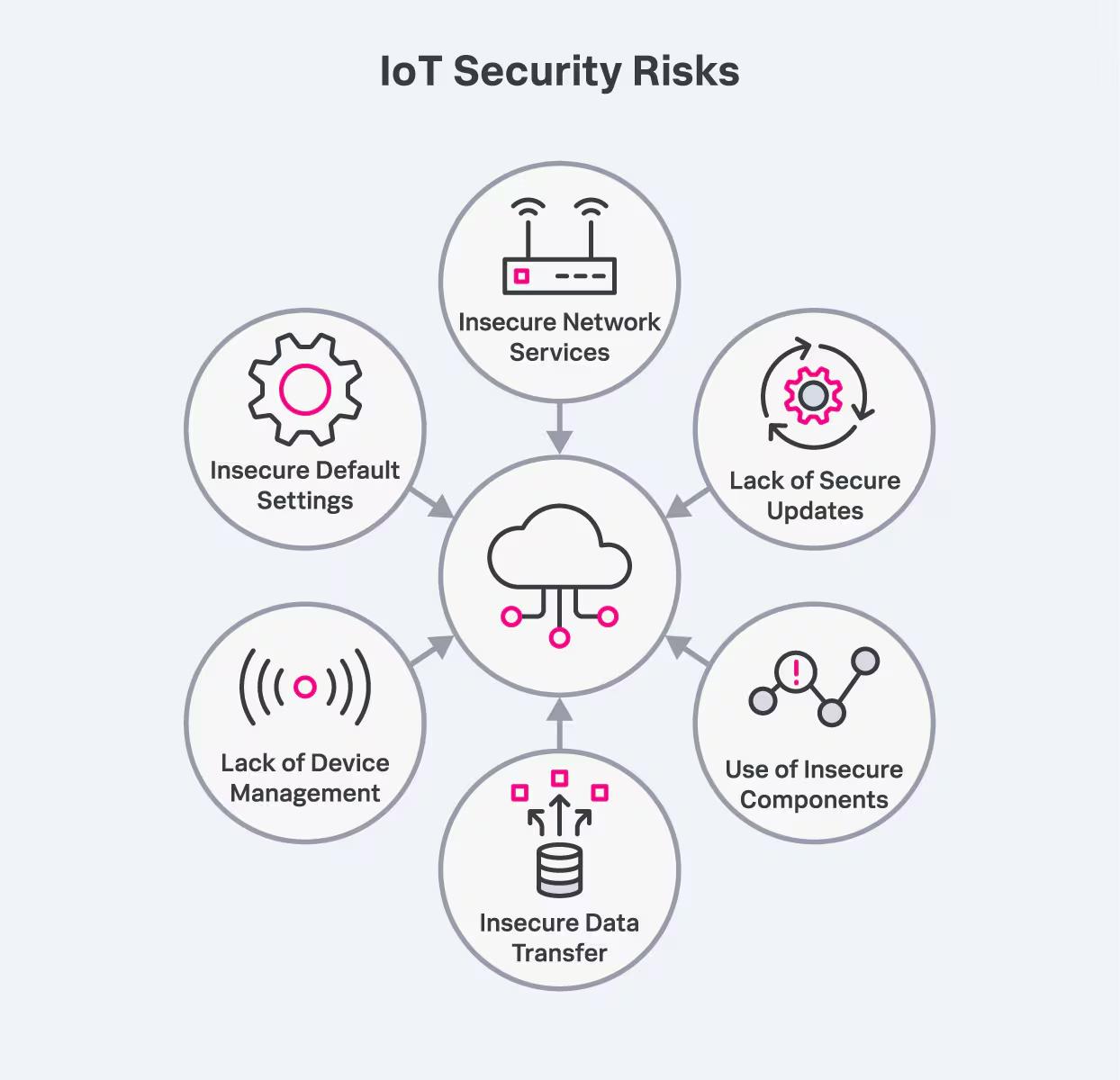
Your team can identify vulnerabilities and detect unauthorized access attempts and security threats in your IoT network. This gives them the insights they need to find anomalies better and secure your network against data breaches and cyberattacks. This can mean:
- Monitoring software patches
- Unusual transmissions or connections
- Firmware updates
Predictive maintenance
IoT monitoring helps you track critical equipment and systems in real-time, capturing valuable data that can predict failures and reduce downtime. For instance, machinery traditionally receives maintenance on a set schedule in a manufacturing environment—every x hours of operation or every few months. However, this approach may not account for varying usage rates or wear patterns.
With IoT sensors integrated into the equipment, organizations collect data on vibration levels, temperature fluctuations, and operational efficiency, which they can then use to predict when a machine is nearing failure. This data-driven, condition-based model ensures maintenance is performed only when necessary, preventing costly breakdowns and extending the life of critical assets.
Cost optimization
As more companies seek ways to cut costs, IoT monitoring can provide valuable ways to optimize costs. With predictive maintenance, your team can ensure that components last longer and work better, saving on costly repairs or sub-optimal outputs.
Monitoring can also help your team find inefficiencies so that you better leverage your resources and improve profitability. For example, IoT sensors can track energy use across systems like HVAC, lighting, and machinery, enabling a smart energy management system to adjust settings based on occupancy or usage patterns automatically. This can lower energy costs during off-peak hours and flag equipment anomalies for preemptive maintenance, reducing high operational expenses.
(Related reading: IT cost management)
Decision making
The ability to gather and analyze the data that IoT provides in real-time will lead to greater operational efficiency and promote business growth and allows your organization to:
- Uncover the hidden patterns that impact business
- Optimize your operations
- Make informed decisions that will lead to greater operational efficiency and promote business growth
With advanced IoT analytics, you can leverage predictive insights to forecast future outcomes as vast and varied as customer behavior and potential system failures. These insights help enable proactive decision-making that prevents problems before they happen and maximizes performance. This focus on real-time data-driven insights is essential if you are looking to improve your organization’s decision-making processes.
Getting started with IoT monitoring
To begin with IoT monitoring, you'll need a dedicated IoT monitoring solution. While many IoT device manufacturers provide free tools, these are typically limited to their own devices. To avoid blind spots, consider a centralized solution that offers visibility across your entire IoT ecosystem in a single interface.
When selecting an IoT monitoring tool, prioritize the following features:
- Auto-discovery: Automatically detects all IoT devices on your network
- Remote monitoring: Enables centralized management of devices
- Device status tracking: Monitors device performance and health
- IoT security: Safeguards devices and connections against vulnerabilities
- Connection security: Ensures secure communication between devices
- Alerting: Provides real-time notifications for issues
- User-friendly interface: Simplifies navigation and operation
Most reputable providers offer free trials or demos, allowing you to evaluate their tools risk-free.
Supporting IoT monitoring with observability
Observability is essential for enhancing IoT monitoring and supporting your IT team effectively. Observability goes beyond traditional monitoring by enabling you to analyze system behaviors based on data insights to provide a deeper, more holistic view of modern IT systems and their health and performance.
Instead of predicting every potential error or failure, observability allows you to focus on system behavior over time. By asking targeted questions such as, “What’s causing latency right now?” or “Is this issue affecting all users or just a subset?” you adopt an exploratory approach. This methodology is increasingly vital as IT systems grow more complex, helping you identify and resolve issues effectively.
Improving business with IoT monitoring
Monitoring IoT devices is crucial for remaining competitive in any industry. It provides the necessary insights for enhancing security, maintaining security, and making strategic decisions to improve business growth. Organizations of all sizes leverage IoT data to their maximum advantage and gain a competitive edge in the marketplace today.
Related Articles

LLM Monitoring: A Comprehensive Guide on the Whys & Hows of Monitoring Large Language Models

What is Predictive Modeling? An Introduction

QoS Explained: Quality of Service in Networks

Top Cybersecurity Trends in 2026: 9 Trends to Watch

The Role of SCA in Software Security: The Software Composition Analysis Complete Guide

Server Monitoring Today: Why Monitoring Your Servers Matters & How to Approach It

The Software Development Lifecycle: The Most Common SDLC Models

Active vs. Passive Monitoring: What’s The Difference?