Infrastructure Security Explained: Threats and Protection Strategies
Key Takeaways
- Infrastructure security protects physical and digital assets like hardware, software, networks, and cloud environments from threats such as cyberattacks, unauthorized access, and natural disasters.
- Common threats include phishing, ransomware, and botnets. Key defenses include firewalls, intrusion detection systems (IDS), encryption, strong access controls, timely patching, and regular backups.
- Cloud infrastructure requires robust measures like encryption and user management, while critical national infrastructure demands resilience to secure essential systems like power grids and telecommunications.
Infrastructure security plays a crucial role in keeping businesses running smoothly by protecting both physical and digital assets. From safeguarding servers and hardware to securing cloud environments and sensitive data, it forms the foundation of a reliable cybersecurity strategy.
This article delves into the key aspects of infrastructure security, including its components, common threats, and effective practices. By understanding and implementing these strategies, organizations can better protect their operations and maintain resilience against potential risks.
What is infrastructure security?
Infrastructure security refers to the measures and strategies employed to protect an organization’s digital and physical infrastructure assets from a variety of threats, including cyberattacks, unauthorized access, natural disasters, and other disruptive events. These protective measures aim to ensure the confidentiality, integrity, and availability of critical infrastructure systems and data, which are vital for business operations.
The assets encompassed by infrastructure security include:
- Intellectual property (IP).
- Sensitive information.
- Software applications.
- Hardware devices.
- Data centers.
- Cloud environments.
These components form the backbone of an organization’s technology infrastructure, enabling everything from internal communications to customer-facing services.
In addition to focusing on direct threats like malware, phishing, and ransomware, infrastructure security also addresses broader risks such as equipment failure, human error, and physical breaches. It involves creating a comprehensive security framework that combines technology, policies, and processes to safeguard assets, ensure compliance with data protection regulations, and maintain operational continuity.
The importance of infrastructure security
The security of your infrastructure is critical. Threats can come from all directions (including internally) from malicious cybercriminals and state actors to natural disasters such as fires and floods. If your infrastructure is not adequately secured, organizations risk business disruption, financial losses, legal penalties and a damaged brand reputation.
Let’s look at the threat in numbers, according to the 2025 Verizon Data Breach Investigation Report:
- Third parties are now twice as much involved (30%) as they were last year in exploiting vulnerabilities in the infrastructure and disrupting business operations.
- This has led to a 34% increase in successful exploitation for unauthorized access.
- Around half of infrastructure vulnerabilities remain unresolved, exposing sensitive business information and operations to known exploits and cyber-attacks.
So, what components of the infrastructure need security? How do you secure your infrastructure? What are best practices for infra security? Let’s answer these important questions.
Four levels of infrastructure security
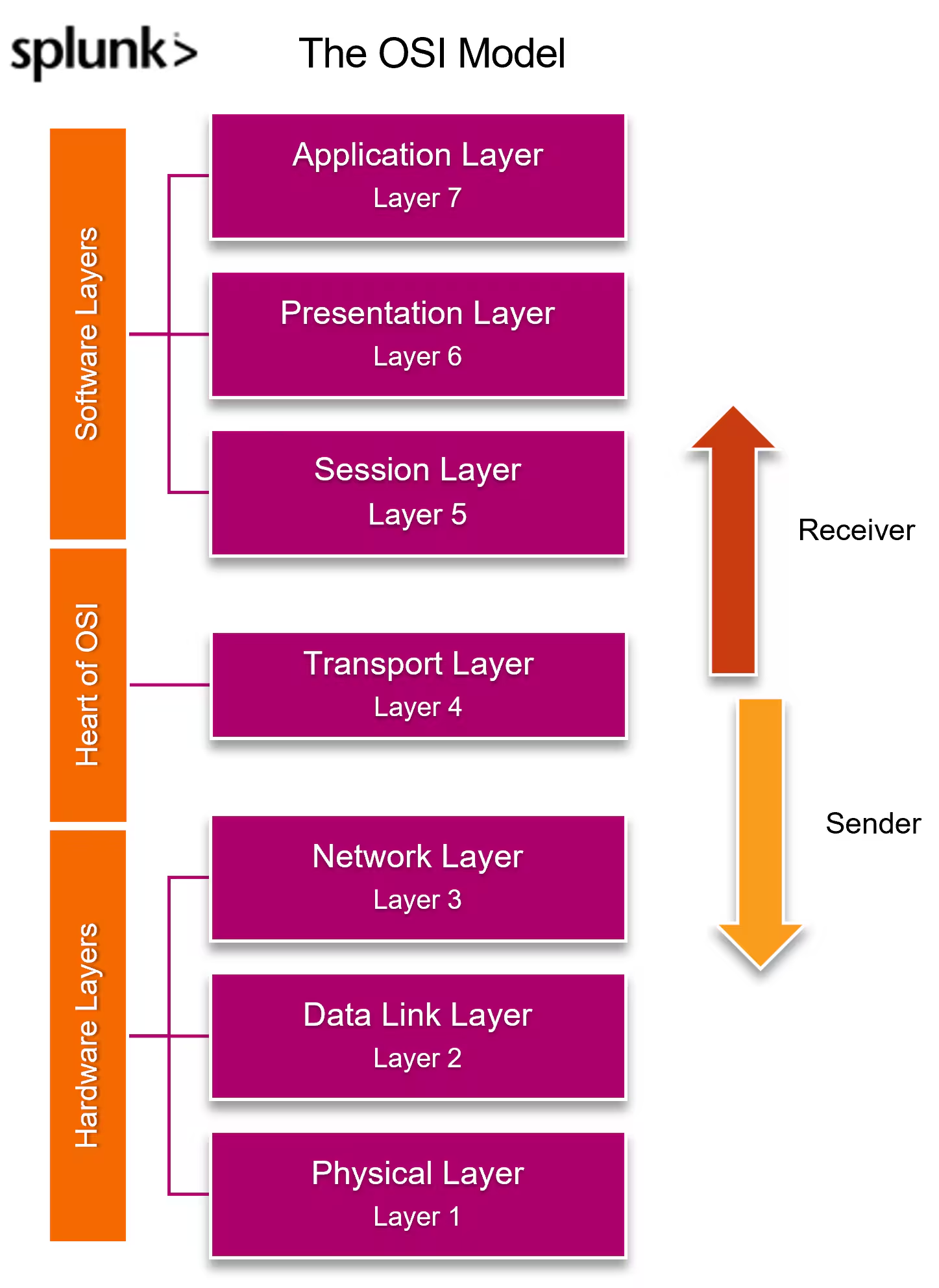
A technology stack can be categorized in several abstraction layers, and each requires a unique set of security measures against a range of security threats. The OSI model defines 7 conceptual layers of the interconnected technology stack. Let’s align the 7 layers of the OSI model that serves as a conceptual framework for defining an end-to-end infrastructure environment, in terms of three domain levels of security.
Physical infrastructure security
The infrastructure assets must be secured against physical threats from malicious actors and natural disasters. The measures can include:
- Physical access controls such as locked doors and fences, security cameras, tamper detection and biometrics security.
- Environmental protections such as fire suppression, climate control, backup power supply, redundancy and failover plans.
These measures protect components in the Layer 1: Physical Layer of the OSI model. The components include switches, power supplies, HVAC, cables and the wider building infrastructure.
Hardware and network security
The same physical security measures extend to the Layer 2: Data Link Layer and Layer 3: Network Layer of the OSI model.
Layer 2: Data link layer
Layer 2 deals with MAC addresses and switching and is vulnerable to cyber-attacks such as MAC spoofing and ARP poisoning. These can be secured by measures such as:
- MAC filtering.
- Network segmentation.
- Switch port security controls.
Layer 3: Network layer
Layer 3 handles IP addresses and routing. Infrastructure components such as routers, firewalls, VPN gateways, load balancers and monitoring tools are involved. The common threats facing this layer include routing attacks, IP spoofing, DDoS attacks, and man-in-the-middle (MitM) attacks.
The following hardware and network security measures can help enhance infrastructure security at Layer 2 and Layer 3:
- Dynamic ARP Inspection against ARP poisoning.
- Disable static and unused ports to protect against VLAN hopping, DDoS and MitM.
- Assign MAC limits to protect against MAC flooding.
- Enable port-based network access controls.
- Implement ingress/egress filtering and assign Access Control List configurations on firewalls to protect against IP spoofing.
- Encrypt Layer 3 traffic to protect against packet sniffing.
- Encrypt channels and use mutual authentication to protect against MitM attacks.
- Deploy rate limiting on firewalls to protect against DDoS attacks.
Software and application security
The Layer 4: Transport Layer of the OSI reference model handles end-to-end network communication using protocols such as TCP and UDP. The Layer 5: Session Layer of the OSI model manages and controls the authenticity, integrity and reliability of the communication sessions.
Both layers have an important role in data communication between applications and software systems running across the data center and cloud-based infrastructure environments. Infrastructure systems operating within these conceptual layers suffer from exploits that specifically target network protocols in Layer 4 and network sessions in Layer 5.
For example, Layer 4 attacks include TCP/UDP flooding, port scanning attacks to discover vulnerabilities and RST injection. Layer 5 attacks include session hijacking, session fixation and timeout, lack of session encryptions and concurrent session abuse.
Security measures for layers 4 and 5
The following infrastructure security measures are effective against these threats:
- Use Stateful Packet Inspection (SPI) to protect against packet spoofing, unauthorized access and flood attacks due to incomplete TCP handshakes.
- Rate-Limit the TCP/UDP traffic. Use Intrusion Protection System (IPS) to control anomalous session behavior.
- Encrypt TLS session data.
- Use secure session management best practices, such as session expiration after inactivity, deploy one-time-use tokens, randomized and unpredictable session tokens.
- Block multiple concurrent sessions and enforce re-authentication.
The final two layers of the OSI model
Layer 6: Presentation Layer and Layer 7: Application Layer handle data transmission between applications components that may run independently and communicate across servers.
At the presentation layer, security controls ensure that all security sensitive information is encrypted. The Application Layer interfaces applications to the end-user, and is secured with measures such as access controls and firewalls.
Lastly, the data itself must be secured with additional measures. While not part of the infrastructure itself, the data breach is a common end-goal for infrastructure infringement. Measures such as Identity and Access Controls (IAC) that follow the Principle of Least Privilege access should be enforced across all levels and domains of your infrastructure security.
Common threats to infrastructure security
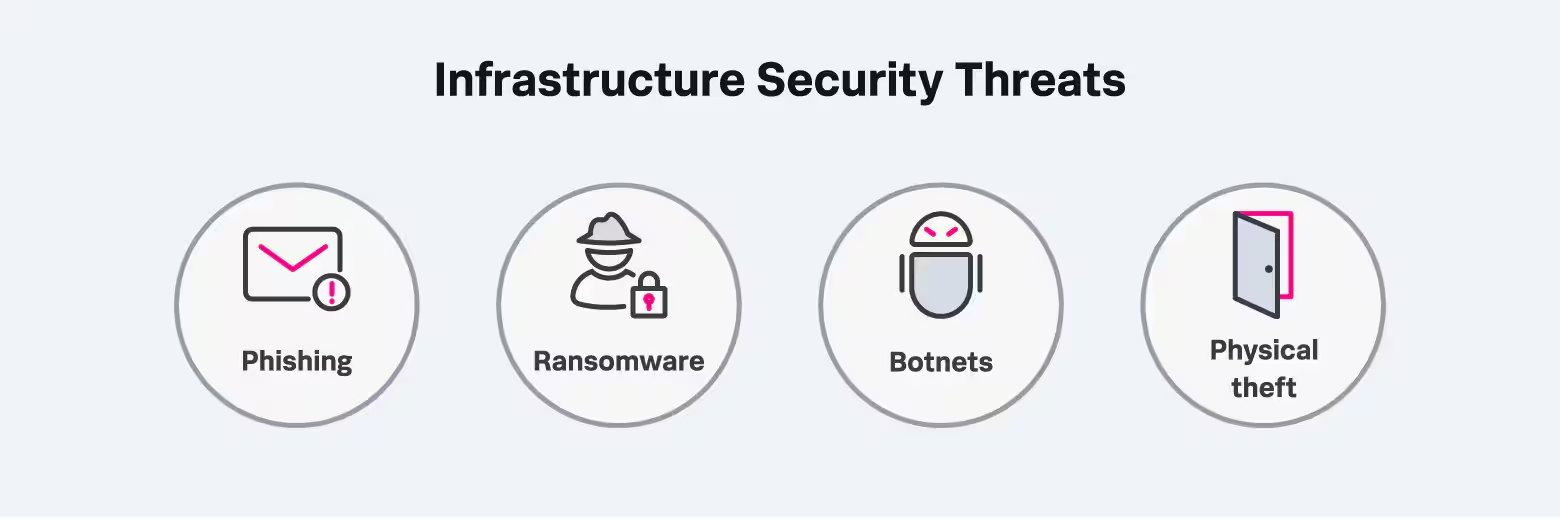
Organizations face a wide array of threats to their infrastructure, ranging from traditional cyberattacks to physical breaches. Some of the most common threats include:
- Phishing attacks: These attacks aim to steal login credentials, providing attackers with access to corporate resources. Phishing schemes are becoming increasingly sophisticated and difficult to detect.
- Ransomware: Ransomware encrypts critical data and demands payment for its release. Even when ransoms are paid, there is no guarantee that data will be restored.
- Botnets: Botnets are often used for DDoS attacks or cryptocurrency mining, exploiting enterprise resources without detection.
- Physical theft: Stolen devices, such as laptops, can expose sensitive information if not adequately protected by physical barriers like locked doors or encryption.
Tools and solutions for infrastructure security
A variety of tools and solutions can strengthen infrastructure security:
- Firewalls: Serve as the first line of defense by blocking malicious traffic.
- Antimalware systems: Detect and remove malware from the network.
- Intrusion detection systems (IDS): Monitor network activity for unusual behavior.
- Authentication software: Identify compromised credentials and suspicious activity.
- Encryption tools: Protect sensitive data from being accessed by attackers.
- Penetration testing tools: Simulate attacks to identify weak points in the infrastructure.
- SIEM tools: Automate security monitoring and provide real-time insights into potential threats.
Best practices for infrastructure security
To efficiently protect infrastructure, organizations should adopt a comprehensive set of best practices:
- Enforce strong password policies with two-factor authentication and regularly audit user permissions to prevent unauthorized access.
- Apply security patches promptly and remove unused software reduces vulnerabilities, while properly configured firewalls block malicious traffic.
- Data encryption, both in transit and at rest, safeguards sensitive information, and regular offsite backups protect against data loss from ransomware.
- Conduct penetration tests and adopt secure development practices, such as DevSecOps, ensures a proactive approach to identifying and mitigating risks.
Cloud infrastructure security
With the cloud everywhere, securing infrastructure in the cloud presents unique challenges. Unlike traditional infrastructure, cloud environments operate under a shared responsibility model, where the cloud provider secures the infrastructure while the organization remains responsible for securing its data, configurations, and access controls.
Challenges such as this complicate cloud security:
- Increased attack surface.
- Limited visibility into runtime operations.
- The dynamic nature of cloud workloads.
Organizations must adopt robust measures to address these challenges, including user management, data encryption, and proper configuration of security tools.
National infrastructure security
On a national scale, infrastructure security takes on an even greater level of complexity. National infrastructure, often referred to as critical infrastructure, includes physical and digital systems such as power grids, transportation networks, water supplies, and telecommunications.
In the U.S., the Department of Homeland Security oversees critical infrastructure security through the National Infrastructure Protection Plan (NIPP), which aims to enhance resilience and mitigate risks across sectors.
To wrap up
Infrastructure security serves as the foundation of an organization’s cybersecurity strategy. By protecting physical and digital assets, implementing best practices, and leveraging the right tools, businesses can minimize risks and ensure resilience against a wide range of threats.
As technology continues to evolve, infrastructure security must also adapt to address emerging challenges and safeguard the systems that organizations rely on every day.
Related Articles

Intelligent Applications Explained

Open Source vs. Closed Source Software

Secure By Design: What Makes Software SbD

Information Retrieval & Intelligence: How It Works for AI

Adversarial Machine Learning & Attacks on AIs

CPUs vs GPUs: Comparing Compute Power

Why Effective Data Management Matters: Key Principles & Best Practices

Executive Order 14028: Improving U.S. Cybersecurity