Chargebacks vs. Showbacks: Everything You Need to Know
IT budgets often feel like a black box — resources go in, and expenses pile up, but who’s using what? Chargebacks and showbacks can bring clarity to the chaos, helping organizations manage IT costs with transparency and accountability.
But what exactly are they, and how do they differ? Read on for a full explanation.
What is a chargeback? What is a showback?
Managing IT costs effectively starts with understanding how resources are being used — and that’s where chargebacks and showbacks come in. These two methods help organizations allocate IT costs more transparently and encourage departments to make smarter decisions about their resource consumption.
In our context of managing IT and technology costs, we can define the terms as:
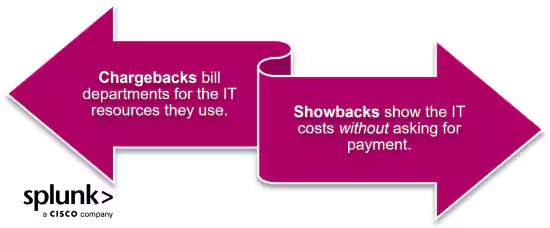
- Chargebacks bill departments for the IT resources they use.
- Showbacks show the IT costs without asking for payment.
Think of it like your gym membership. A showback is the gym giving you a detailed report of how many classes you attended and how much time you spent on the treadmill. You’re not being charged for each activity, but you gain a clear picture of your usage.
Now imagine you’ve signed up for personal training sessions. A chargeback is when the gym bills you for every session you book, holding you financially accountable. This makes you think carefully about your scheduling and ensures you’re getting value for what you pay.
In IT management, showback and chargeback work similarly:
- Showbacks focus on cost visibility.
- Chargebacks add accountability by linking costs directly to usage.
Together, they provide a balanced approach to managing IT budgets and improving resource efficiency.
(Related reading: IT spending & budgets, globally and by industry & cloud cost trends.)
Understanding chargebacks
Think of chargebacks as the financial equivalent of those personal training sessions. Each department is billed for the IT resources it consumes, making them accountable for their usage. Just as paying per session motivates gym members to make strategic choices about their fitness goals, a chargeback encourages departments to use resources efficiently and budget accordingly.
Key features of chargebacks
- Ensures departments pay for the IT resources they consume, promoting accountability and efficiency.
- Provides visibility into IT service costs, helping departments understand their financial impact on the organization.
- Encourages departments to optimize resource consumption through direct financial implications.
- Offers detailed insights into resource usage, enabling better budgeting and cost management.
Understanding showbacks
Showbacks, in contrast, are like the gym’s usage summary. Departments receive a detailed report on their IT resource consumption without the immediate pressure of financial accountability. This transparency helps teams understand their usage patterns and plan smarter — similar to how seeing your gym attendance and class choices might inspire you to optimize your fitness routine.
In IT, showbacks can help indicate which software you’re underutilizing, for example, and you can decide whether that low usage rate is still worth the continued cost.
Key features of showbacks
- Provides visibility into IT usage and associated costs without requiring departments to pay.
- Offers cost insights to help departments plan for their IT resource needs.
- Easier to adopt than a chargeback, as it doesn’t require changes to financial systems.
- Highlights cost implications, promoting mindful resource use without enforcing financial accountability.
(Related reading: CapEx vs. OpEx, different expenses explained.)
How chargebacks and showbacks work together
Chargebacks and showbacks aren’t mutually exclusive — they complement each other to create a balanced cost management system.
- Starting with showbacks helps departments build awareness of their IT usage and associated costs without financial pressure.
- Once teams understand their consumption patterns, chargebacks can be introduced to add financial accountability.
When used together, these methods provide a full picture of IT costs while driving smarter resource usage:
Enhancing visibility and accountability. Showbacks create transparency by showing teams how much they use, helping them understand their consumption patterns. Chargebacks take it further by assigning financial responsibility and ensuring every resource is used with intention.
Informed decision-making. Showbacks highlight usage patterns, giving teams the data they need to optimize resource consumption. Chargebacks reinforce this by requiring payment and encouraging departments to plan and budget strategically.
Strategic resource management. Showbacks and chargebacks together balance insights and accountability. Showbacks help teams identify cost-saving opportunities, while chargebacks ensure those insights translate into financial responsibility and better budget management.
Fostering a cost-conscious culture. Showbacks are ideal for educating departments on usage patterns. Gradually introducing chargebacks encourages fiscal responsibility and smarter IT spending across the organization.
By combining showbacks and chargebacks, organizations can improve cost visibility, resource accountability, and financial efficiency — all while aligning IT spending with business goals.
Differences between chargebacks vs. showbacks
Although chargebacks and showbacks both aim to improve cost visibility, they serve different purposes and have unique impacts. Here’s a quick comparison to help clarify their roles:
Chargebacks and showbacks aren’t an either/or decision. Many organizations successfully use both methods together, starting with a showback to build transparency and gradually implementing a chargeback to ensure financial accountability.
How chargebacks improve cost visibility
The main value of chargebacks lies in their ability to give organizations a clear understanding of where their resources go and how much they cost.
Enhancing business unit accountability & efficiency
Chargebacks promote accountability and encourage responsible consumption by attributing costs directly to the departments using IT resources. When departments see the financial impact of their usage, they become more mindful of resource allocation, treating IT services with the same care as other essential business tools. This awareness drives efficiency, leading to a more moderate and cost-effective use of resources, ultimately improving overall financial performance.
Smartly managing IT resources
Chargebacks help organizations track and manage IT expenses more effectively, highlighting areas of excessive spending or inefficiency. This clarity allows departments to optimize resource usage, control costs, and streamline operations. By providing clear visibility into IT costs, chargebacks also support better decision-making, enabling departments to budget and plan strategically based on accurate, data-driven insights.
Better decision-making with clear cost insights
Chargebacks allocate the costs of IT services, hardware, and software directly to the departments or individuals using them, ensuring everyone is aware of their financial impact. This transparency promotes fairness, accountability, and a culture of cost-consciousness. With detailed insights into IT expenses, departments can better evaluate the value and necessity of their requests, leading to more thoughtful and strategic use of technology resources.
How showbacks improve cost visibility
Showbacks are a powerful tool for improving cost visibility without the immediate financial pressure of billing departments. By providing detailed reports on IT resource usage, showbacks encourage transparency and help teams better understand their impact on overall costs.
Encouraging cost awareness
Showbacks give departments a clear picture of their IT consumption, fostering a better understanding of how their usage contributes to organizational costs. This awareness helps teams identify potential inefficiencies and adjust their resource use proactively.
Supporting smarter budget planning
With detailed insights into usage patterns and associated costs, showbacks provide the data departments need to make informed decisions about future IT spending. This visibility allows teams to plan more effectively, aligning their resource needs with their budgets.
Building a foundation for accountability
Showbacks act as a stepping stone toward financial accountability. By helping teams see and understand their costs, showbacks prepare them for the eventual transition to chargebacks, ensuring the process is smoother and more widely accepted.
Simplifying implementation
Because showbacks don’t require billing systems or financial reconciliation, they are easier to implement than chargebacks. This simplicity makes them an ideal starting point for organizations looking to improve cost visibility without overhauling their financial processes.
Showbacks create a culture of transparency and cost-consciousness, empowering teams to make smarter, data-driven decisions while setting the stage for greater accountability in the future.
Strategies for optimizing cost allocation using chargebacks & showbacks
To make the most of chargebacks and showbacks, organizations need a thoughtful approach that balances cost visibility and accountability. These strategies can help improve resource allocation and financial management:
- Begin with showbacks to build cost awareness without financial pressure. By showing departments their IT usage and associated costs, you create a culture of transparency and prepare teams for future accountability.
- Gradually introduce chargebacks once departments are familiar with their usage patterns. This phased approach minimizes resistance and gives teams time to adjust to the new system.
- Use chargebacks for essential, predictable IT services where cost recovery is critical. For newer or experimental services, stick with showbacks to encourage innovation and flexibility without financial constraints.
- Tailor the use of chargebacks and showbacks to the specific needs of different teams or projects. Some may benefit from direct cost accountability, while others might respond better to the visibility offered by showbacks.
- Invest in cloud cost management tools to automate cost tracking, reporting, and billing. Automation reduces manual effort, ensures accuracy, and simplifies the implementation of both chargebacks and showbacks.
- Engage teams early to explain the reasoning behind cost allocation methods. Address concerns and provide clear guidelines to ensure collaboration and acceptance across the organization.
- Regularly evaluate and adjust your cost allocation strategies based on feedback, shifting business needs, and evolving resource usage patterns to keep the system relevant and effective.
By combining chargebacks and showbacks thoughtfully, organizations can achieve a balanced cost allocation strategy that drives transparency, accountability, and smarter resource use.
Showbacks vs. chargebacks: Finding the right balance
Choosing between showbacks and chargebacks isn’t about picking one over the other — it’s about finding the right balance for your organization.
Showbacks provide transparency and help build awareness, making them an excellent starting point for teams unfamiliar with cost allocation. Chargebacks, on the other hand, add accountability and ensure departments take ownership of their IT spending.
For many organizations, combining both methods offers the best results. Start with showbacks to build trust and foster a culture of cost-consciousness. Then, gradually introduce chargebacks to enhance accountability and promote more efficient resource use. By leveraging the strengths of both models, you can:
- Improve cost visibility.
- Drive smarter decisions.
- Align IT spending with your organization’s goals.
Whether you’re optimizing budgets, encouraging accountability, or preparing for growth, a balanced approach to showbacks and chargebacks can set your business on the path to success.
Related Articles

What is Virtualization?

AI Data Management: Strategies, Tools, and Trends