Philipp Drieger's Blog Posts
Philipp Drieger works as a Principal Machine Learning Architect at Splunk. He accompanies Splunk customers and partners across various industries in their digital journeys, helping to achieve advanced analytics use cases in cybersecurity, IT operations, IoT and business analytics. Before joining Splunk, Philipp worked as freelance software developer and consultant focussing on high performance 3D graphics and visual computing technologies. In research, he has published papers on text mining and semantic network analysis.
Display Mode
Paginated
Filter
Author
Author URL
Limit
6
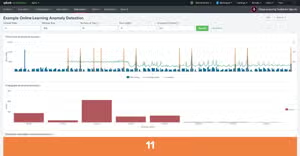
Online Learning: a Novel Approach to Applying Machine Learning in Splunk
In this blog, we’ll review how you can organize your machine learning model in a new way: online learning.
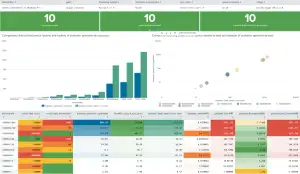
Deep Learning Toolkit 3.7 and 3.8 - What’s New?
We are excited to share the latest advances around the Deep Learning Toolkit App for Splunk (DLTK). These include custom certificates, integration with Splunk Observability and a container operations dashboard, just to name a few.

Go with your Data Flow - Improve your Machine Learning Pipelines
How do you organize the data flow in Splunk Enterprise or Splunk Cloud? Splunker Philipp Drieger shares typical data pipeline patterns that will help you improve your existing or future machine learning workflows with MLTK or DLTK.
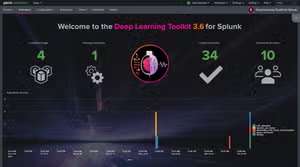
Deep Learning Toolkit 3.6 - Automated Machine Learning, Random Cut Forests, Time Series Decomposition, and Sentiment Analysis
We’re excited to share that the Deep Learning Toolkit App for Splunk (DLTK) is now available in version 3.6 for Splunk Enterprise and Splunk Cloud. Read all about the updates here.

Deep Learning Toolkit 3.5 - Part 2: Change Point Detection, Matrix Profiles and LSTM-based Predictions
In the first part of this 2-part-series we talked about recent additions to version 3.5 of the Deep Learning Toolkit for Splunk (DLTK). Here in part 2 we want to explain a few new algorithmic approaches available for time series analysis. These can be especially interesting for anomaly detection and time series prediction.
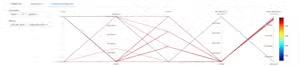
Deep Learning Toolkit 3.5 - Part 1: Git, MLflow and Image Updates
Part 1 of this blog series, talks about the latest improvements for model management, code version control and recent image updates of Deep Learning Toolkit for Splunk (DLTK).