Hemant Seth's Blog Posts
Hemant is a Principal Product Manager at Splunk, leading the Kubernetes Monitoring offering within Splunk Observability Cloud. Prior to this role, he focused on Splunk Observability Platform administration, including identity management and license usage. Hemant brings over a decade of experience in the observability domain and holds a Master’s degree in Electrical Engineering with a specialization in Telecommunications.
Display Mode
Paginated
Filter
Author
Author URL
Limit
6
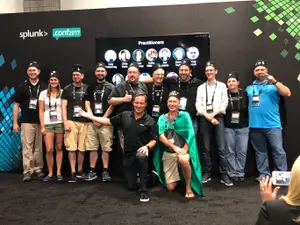
The SplunkTrust 2018 in All Its Fezzed Glory
At Day Zero of .conf2017, CEO Doug Merritt inducted 42 members of the 2018 cohort of the SplunkTrust
What You Need to Know About Boss of the SOC
We introduced a new security activity at .conf2016 called “Boss of the SOC” (or BOTS), born from our belief that learning can be both realistic and fun.

The GDPR: Ready for the wakeup call from your Data Privacy Officer?
How machine data can help organisations prepare for GDPR and support their compliance programmes
Insane in the Mainframe! Splunk and IBM Partner to Provide End-to-End Visibility for Joint Customers
Splunk and IBM have partnered to help joint customers integrate IBM Z (Mainframe) Data and Insights into Splunk software for true end-to-end visibility
Splunking Microsoft Cloud Data: Part 2
A step-by-step guide for configuring and ingesting Azure storage table, storage blob, resource and virtual machine logs
What the WEF... Choosing Windows Event Forwarding or Splunk Universal Forwarder
Forwarding Windows events and machine data into Splunk is essential, but this post isn't about the "why," it’s about the "how."