Hemant Seth's Blog Posts
Hemant is a Principal Product Manager at Splunk, leading the Kubernetes Monitoring offering within Splunk Observability Cloud. Prior to this role, he focused on Splunk Observability Platform administration, including identity management and license usage. Hemant brings over a decade of experience in the observability domain and holds a Master’s degree in Electrical Engineering with a specialization in Telecommunications.
Display Mode
Paginated
Filter
Author
Author URL
Limit
6
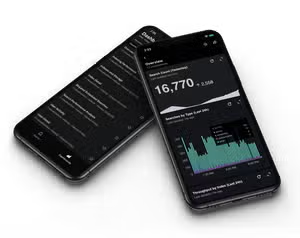
Access the Cloud Monitoring Console from Anywhere
Have you ever wanted to check the status of your Splunk Cloud Platform deployment but can't easily access your laptop? We've got you covered — the Cloud Monitoring Console is now available on Spunk Mobile.

Don’t Miss the Platform Track at .conf21 Virtual!
Get a closer look at the can't-miss sessions and what's in store for the Splunk Platform Track at .conf21.

Fall Is Coming, and So Is .conf21 Virtual! – An ITOps Track Preview
Dive into the IT track at .conf21 Virtual, featuring over 40+ breakout sessions led by Splunk customers, partners and practitioners.
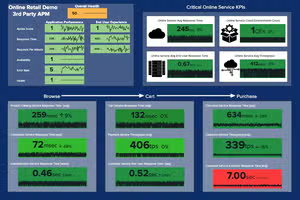
3rd Party APM: Unite Your Legacy APM Data on Your Journey to Observability!
Splunk brings you the Content Pack for 3rd Party APM to get your key data in from these legacy APM solutions, so you can interact / search / alert on all of these key End User Experience and Application and Infrastructure Performance results, enabling you gain quick and easy access to these critical results to deliver across your organization and stakeholders.

What’s New in the Splunk® Dataflow Template
Check out the recent improvements to the Splunk Dataflow template, an indispensable tool that allows Google Cloud customers to easily engineer a horizontally scalable and fault-tolerant logging export pipeline into Splunk® Enterprise and Splunk Cloud Platform™.

Biden Administration Executive Order Reinforces Log Standardization is Key to Security
The standardization of information system logs across the federal government may take time, but it is a critical component to improving investigative and remediation capabilities.