Trickbot Detections: Threat Research Release, July 2021
Splunk is committed to using inclusive and unbiased language. This blog post might contain terminology that we no longer use. For more information on our updated terminology and our stance on biased language, please visit our blog post. We appreciate your understanding as we work towards making our community more inclusive for everyone.
Criminal gangs are constantly improving their ways of delivering malicious code to victims. The delivery of this code is fundamental in order to subsequently install payloads that maximize the effect of exploitation and allows them to move laterally, and install further crimeware to quickly reap profits such as crypto mining, ransomware, data exfiltration, or even more sophisticated payloads such as banking fraud web injects. The Splunk Threat Research Team (STRT) addressed Trickbot in the July release. Trickbot is a very popular crimeware carrier (Trojan) associated with current campaigns.
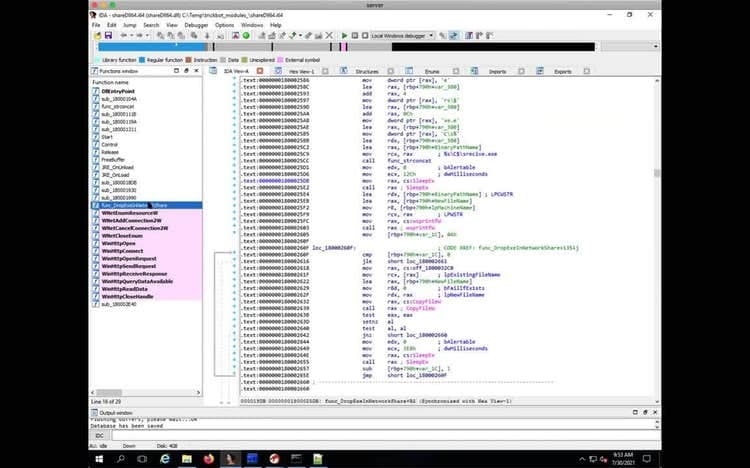
Watch the video to understand how STRT has developed TrickBot detections for Splunk by using the Splunk Attack Range to collect the generated logs, and reverse engineering TrickBot examples.
What is a Trickbot?
Trickbot crimeware is a popular crimeware carrier — aka trojan — that has gained popularity in the criminal underground. Dating back to 2016, Trickbot is related to the banking malware DYREZA, which derives from the Zeus trojan. Both are incredibly effective at infecting and propagating botnets — one of the main financial drivers of the cybercriminal underground and the crimeware as a service economy. Initially focused on DDoS and Carding, botnets nowadays are mostly focused on crypto mining and ransomware. These two criminal vectors usually provide quick rewards to groups behind these botnets.
The effectiveness of trickbot crimeware comes basically in its stealthiness and versatility in installing payloads for further lateral movement and post-exploitation profit-driven activities such as cryptocurrency, ransomware, or banking fraud. STRT developed an analytic story targeting Trickbot TTPs. Also, STRT produced a whitepaper where there are further details on Trickbot modules and capabilities including the new Banking Web Injects.
Detections
The Splunk Threat Research Team has developed an Analytic Story to detect a TrickBot threat. This story is composed of the following searches:
Responding to Trickbot with Automated Playbooks
The following community Splunk SOAR playbooks can be used against Trickbot.
Why Should You Care About Trickbot?
As one of the most popular crimeware carriers, trickbot is constantly being deployed and updated to avoid detection and deploy newer and more effective post-exploitation payloads. It is very likely that Trickbot will remain one of the main players in exploitation campaigns and continues to expand its use in the crime as a service market.
For a full list of security content, check out the release notes on Splunk Docs:
Learn More
You can find the latest content about security analytic stories on GitHub and in Splunkbase. Splunk Security Essentials also has all these detections now available via push update.
Feedback
Any feedback or requests? Feel free to put in an issue on GitHub, and we’ll follow up. Alternatively, join us on the Slack channel #security-research. Follow these instructions If you need an invitation to our Splunk user groups on Slack.
Contributors
We would like to thank the whole threat research team Jose Hernandez, Rod Soto, Bhavin Patel, Mauricio Velazco, Michael Haag, Teoderick Contreras, Lou Stella and Patrick Bareiss for their contribution to this release.
Related Articles

Predicting Cyber Fraud Through Real-World Events: Insights from Domain Registration Trends

When Your Fraud Detection Tool Doubles as a Wellness Check: The Unexpected Intersection of Security and HR

Splunk Security Content for Threat Detection & Response: November Recap

Security Staff Picks To Read This Month, Handpicked by Splunk Experts

Behind the Walls: Techniques and Tactics in Castle RAT Client Malware

AI for Humans: A Beginner’s Field Guide

Splunk Security Content for Threat Detection & Response: November 2025 Update

Operation Defend the North: What High-Pressure Cyber Exercises Teach Us About Resilience and How OneCisco Elevates It