RBAC: Role-Based Access Controls, Explained
Learn Laiba SiddiquiKey Takeaways
- Role-Based Access Control (RBAC) restricts system access to authorized users based on their roles, enhancing security, operational efficiency, and compliance by assigning permissions according to job responsibilities rather than individuals.
- Effective RBAC implementation requires careful planning, including accurate role definition, appropriate permission assignment, role inheritance, and ongoing audits to ensure compliance with security policies and the principle of least privilege.
- In Splunk, RBAC enables fine-grained access control at the app, index, search-command, field, and event level, allowing organizations to tailor user access and maintain scalable, secure data operations.
Security is the most prominent concern organizations have these days. Different employees manage different resources in an organization, but if they’re assigned individual capabilities, it can create confusion and inefficiency.
That's where role-based access controls (RBAC) allow defining roles by name, granting permissions to users, and denying access. This makes it easier to audit who has access to what and protects sensitive data.
In this article, I’ll discuss RBAC's key benefits, limitations, and best practices to follow.
Defining role-based access control (RBAC)
Role-based access control is a model that assigns permissions based on user roles rather than individual users. It restricts access to resources like databases and networks and ensures that only users in specific roles have authority.
Here's how it works: Suppose managers and assistants in an organization need access to different resources.
- You'll create two roles, a manager role, and an assistant role, and assign necessary permissions to these roles.
- When new managers and assistants join, you add them to the roles — if they leave, you remove them from the role.
RBAC can quickly adjust permissions as roles change. This way, only authorized users have access to the data, which reduces the chances of data breaches and increases data security.
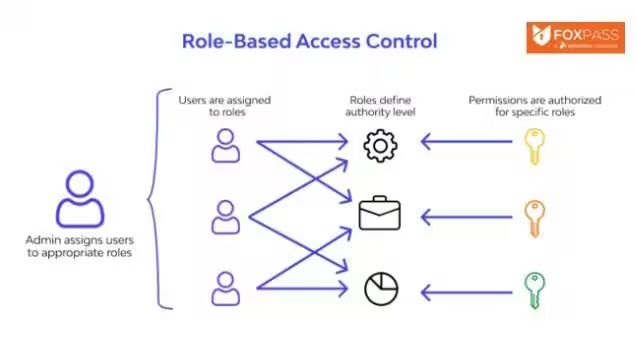
An illustration of a role-based access control model (Image source)
Components of role-based access controls
These are the components you need to consider while setting up an RBAC model:
Users
Any individual, from an HR specialist to a data analyst or entity in the organization, is defined as a user. You assign users one or more roles based on their job responsibilities.
Roles
Roles define the access levels users have within the network. The permissions assigned to each role define users' actions in a specific role. For example, the data analyst role specifies the resources they can access for data cleaning and preparation jobs.
Operations
Operations are the actions users can perform on resources within the network. They include:
- Writing
- Reading
- Updating
- Approving
- Deleting
For example, if there's a librarian role at your organization, then that person would grant users permission to check out books and return books.
Resources
Resources are the endpoints in every industry, such as documents, financial reports, and patient records. Each resource represents a specific part of the network users access and manage.
For example, if we consider a healthcare organization, then a nurse would be permitted to view and edit the patient's records in that hospital, while a receptionist would have access to appointment schedules.
Permission
Permissions connect resources with operations. For example, permission may specify that users with the Data Analyst role can view and analyze datasets. On the contrary, users with the Data Scientist role can clean and visualize the dataset.
This makes it clear that both roles are data-related, but users can only perform the tasks for which they've permission.
Benefits of role-based access controls
RBAC has been there for more than three decades. When it comes to managing access control, it provides endless benefits to businesses. So, let's look at some of its most prominent perks:
- Reduces administrative processing time: Since roles already come with defined permissions, you don't have to specify a new user's job responsibilities. You just assign the user to a role, and they'll automatically have access to the necessary capabilities.
- Improves scalability: RBAC scales easily with your business and allows you to add as many roles as needed, which is quite beneficial for larger organizations.
- Reduces the number of security violations: 40% of people believe that insider attacks are more difficult to detect than outsider breaches. This creates a strong demand for strict management. So when you use RBAC, it better aligns with your security compliance, restricts access control, and protects the network against potential breaches.
Limitations of RBAC
While RBAC has become a widely adopted standard for managing permissions within organizations, it does have a couple of drawbacks. But if you understand these limitations, you can identify potential security gaps and make better decisions about whether it’s the best fit for your organization’s needs.
So, let's explore some of these limitations in detail.
- Outdated: Despite all its benefits, RBAC fails to provide fine-grained control. Its user-centric approach cannot handle complex resource attributes which makes it irrelevant today. Models like Attribute-Based Access Control (ABAC) and ReBAC are more flexible because they provide more control over permissions.
- Expensive to implant and manage: RBAC can be costly if you want to develop a customized network. Salaries, consultant fees, software purchases, and infrastructure upgrades are other expenses that prevent small businesses from adopting RBAC.
- Causes role explosion issue: It can also create too many roles, which then leads to role explosion problems. Each new role increases the IT team's workload, slows down network performance, and increases the risk of human error.
- Poses security risks: Too many roles can lead to wrong access permissions and become the main reason for security breaches.
Best practices for RBAC
To maximize the effectiveness of RBAC and mitigate its limitations, implement best practices that align with your organization’s one-of-a-kind requirements. By following our guidelines, you can strengthen security while ensuring that your RBAC implementation remains robust and adaptable.
Only grant the access users need
Grant access only to users who need it to perform their jobs. When you give unrestricted permissions, users can perform actions outside their authority. Let’s suppose they might steal your confidential information. But when you grant permissions only to suitable users, it’d be easier to hold them accountable for data theft or damage.
Secure passwords
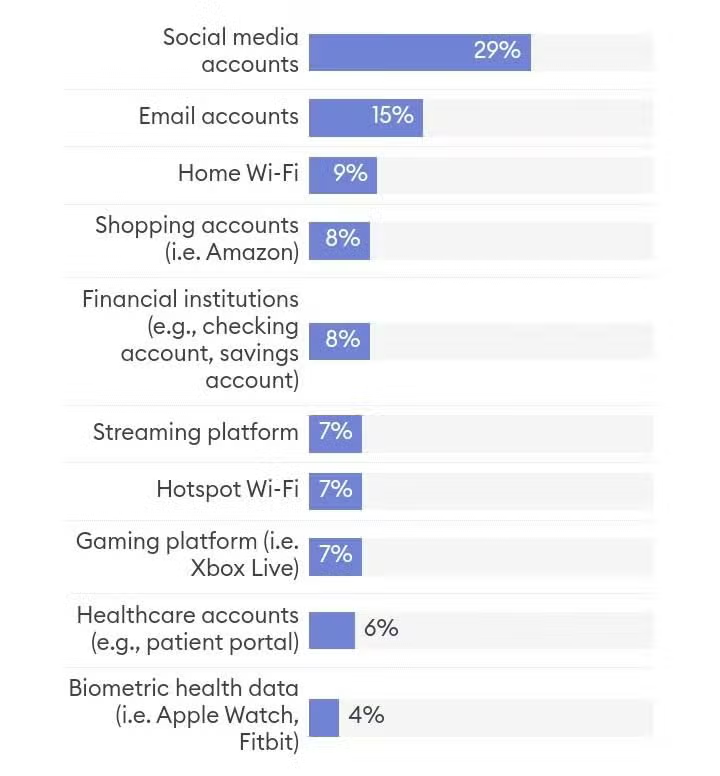
Passwords that were most likely stolen. (Image source)
In 2023, 46% of Americans' passwords were stolen — highlighting the need for stronger password security. This means if you use weak passwords within your organization, it can compromise the RBAC's effectiveness. That's why you must:
- Never share passwords with others.
- Update password recovery options.
- Ensure passwords are 15 characters long.
- Avoid using the same passwords across different networks.
Ensure physical security
Most enterprises focus on RBAC network security and forget to secure the physical location. You must restrict physical access to authorized users to prevent any unauthorized tampering, theft, and misuse.
Here's how you can do this:
- Keep terminals and systems in a secure place.
- Monitor the entire network.
- Detect and remediate attacks immediately.
Prepare for conflicting roles
You must ensure users do not have overlapping permissions. Otherwise, it may compromise security and lead to arguments within the workforce.
For instance, granting permission to test the code to both developers and quality managers can lead to conflicts because both may provide different feedback and argue over things they don’t like.
Build the right RBAC strategy
Building an RBAC strategy that suits your network needs is the foundation for effective access control. To do so, you must assess your current network condition and define your future setup.
This will help you build a strategy that addresses existing loopholes and achieves your security goals.
Hybrid approach is the solution
RBAC alone falls short as it assigns access based on user roles, which doesn't work well with IoT environments. This is where Attribute-Based Access Control (ABAC) provides more granular control. With this, you can assign roles and consider attributes such as identity, location, and access time. But when you combine the features of both models, you can have better security and adaptability.
Related Articles

Data Normalization Explained: The Complete Guide

Risk Mitigation for Organizations: The Complete Guide