What Is Network Architecture?
Key Takeaways
- Network architecture is the foundational blueprint for organizing and managing IT infrastructure, enabling secure and efficient communication between devices, applications, and data through components like topology, routers, switches, and protocols.
- Common network architecture types include peer-to-peer, client-server, hybrid, and cloud-based, each suited for specific organizational needs, from small-scale file sharing to large-scale cloud services and IoT networks.
- To design secure network architecture, organizations should implement best practices like network segmentation, firewalls, multi-factor authentication, intrusion detection systems, and regular updates to protect against vulnerabilities and ensure robust operations.
Every business needs a well-designed network architecture. The network architecture is essential to how you organize and manage your IT infrastructure to transfer data between devices and applications securely and efficiently.
A network architecture comprises a layered structure, which breaks down communication tasks into smaller parts. This way, each layer can focus on a specific function and avoid complex combinations of cases.
In this article, we'll take a look at:
- What network architecture is and the different types.
- Best practices to design secure network architecture.
Defining network architecture
Network architecture refers to the design and structure of a computer network — it includes hardware components, software components, protocols, and communication technologies.
Both small local area networks (LAN) and sizable wide area networks (WAN) rely on network architecture to organize infrastructure securely. A good architecture defines how the elements of a network are organized and how they interact with each other to enable data communication and resource sharing.
Components of network architecture
The main components of a network architecture include the following:
- Network topology: The physical or logical layout of the network, which determines how devices are connected and how data is transmitted.
- The client: Requests and receives services or resources from a server.
- Routers: Find the best paths for smooth communication and connect networks and devices.
- Switches: Connect devices like printers and servers. They receive the data and deliver it to the target device.
- Protocols: Define the rules that explain how to exchange data and communicate across the network.
- Transmission media: Data is transmitted through twisted-pair cables, coaxial cables, fiber optic cables, or wireless media (radio waves).
While network architectures share these common components, there are different types of network architectures that organizations can implement based on their specific requirements and the scale of their operations.
Network architecture types
The choice of network architecture depends on your organization's size, the total users, and other relevant needs.
Let's look at the most common types of network architecture to see which one’s right for you.
Peer-to-peer networks
A peer-to-peer network is an easy-to-set-up network where each peer or node acts as client and server. Every peer can share resources and data with other peers directly. Also, users can control who can access their data and resources. This type of network is ideal for small-scale applications like:
- File sharing
- Messaging
- Gaming
Here are two common ways to structure your peer-to-peer networks:
- A structured P2P network organizes nodes or peers in a specific way. Unlike unstructured networks, nodes follow a clear architecture to search and access specific data.
- Unstructured P2P networks organize nodes in an unspecified way. You can quickly grow and change these networks but can't search for specific data.
While peer-to-peer networks are scalable and resilient, they're not free from security risks and data loss.
Client-server architecture
In a client-server architecture, there's a difference between both clients and servers. A server receives client requests, processes them, and delivers them to the target point. It performs the following tasks:
- Stores data.
- Ensures security.
- Manages resources
Client-service architecture supports efficient file sharing, database management, email, and web hosting.
Hybrid network architecture
Hybrid network architecture combines the elements of both peer-to-peer and client-server network architecture. In this network, the devices can act as both clients and servers. These days, sensors are installed in almost all physical objects. The network of these objects is defined as IoT, which is based on hybrid network architecture.
(Related reading: hybrid computing.)
Cloud-based architecture
Cloud computing architecture designs a platform where users can access resources and services on demand. It has two main parts:
- The front end is the client-side interface where users interact with cloud services.
- The back end includes the cloud provider's resources, such as data storage, services, and applications.
Network architecture designs
Network architecture design is a core aspect of building and maintaining efficient and secure computer networks. Here are two ways to help you better understand architectural designs:
Flat/two-tier network architecture
The two-tier architecture design consists of two layers — the access layer and the distribution layer. Its key components are:
- Firewall
- Router
- Switch
- Wireless access point
This architecture design is cost-effective and easy to manage. However, these network designs cannot be scaled and pose some pressing security challenges.
There are no internal security protocols except for the firewall at the gateway. So, if a security attack passes firewalls, hackers can easily access systems like servers and personal laptops.
Three-tier network architecture
A three-tier network architecture organizes your network into three layers.
- The access layer comes at the bottom. It connects user devices like workstations and printers to the network.
- The distribution layer comes above the access layer. It separates work groups, like sales and HR, and places them on different subnets.
- At the top, you have the core layer. It acts as the network's high-speed backbone and quickly transfers data.
Although three-tier network architecture is more secure, it’s quite expensive and complex, so only big companies with large budgets can use it.
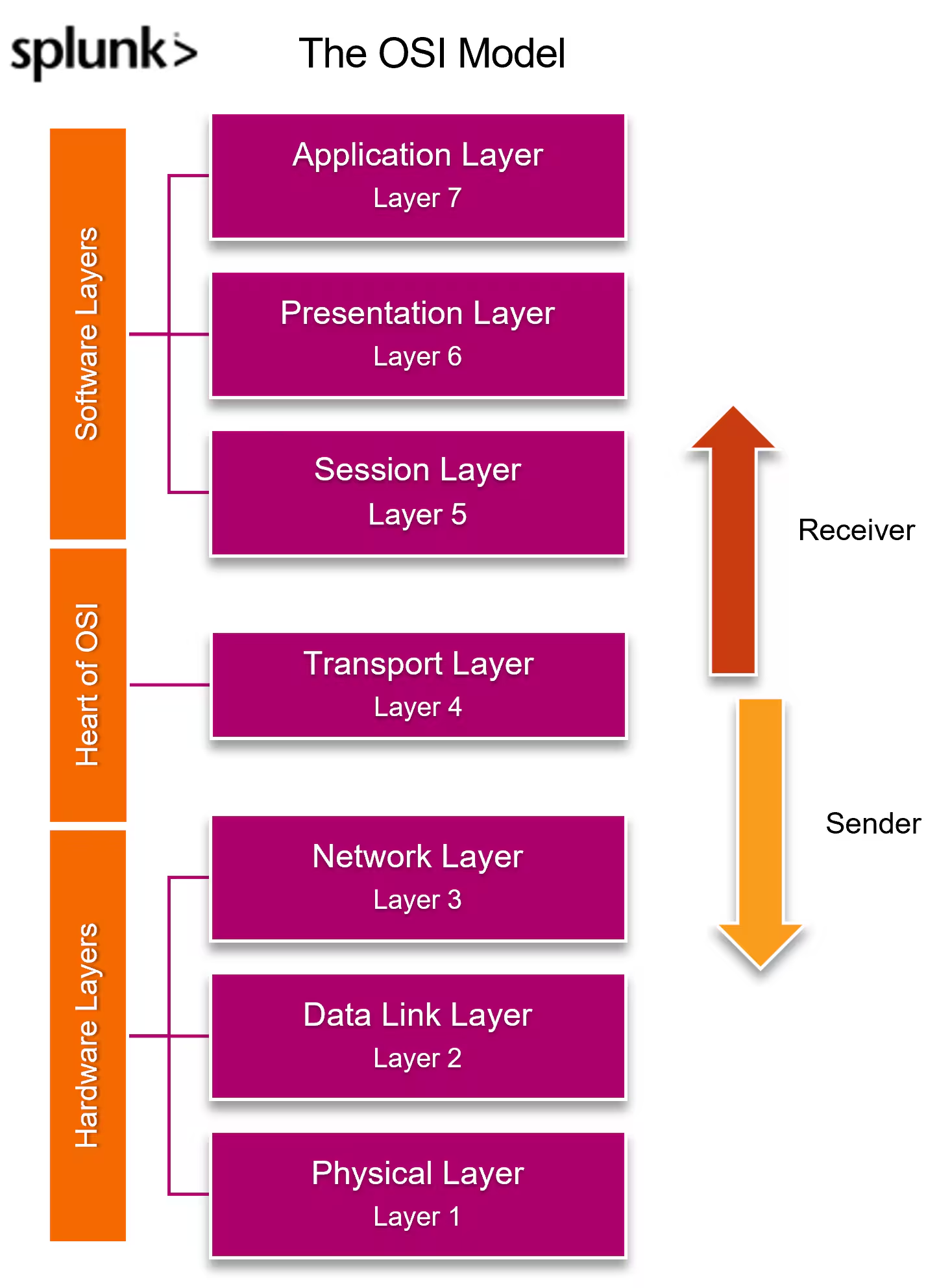
(Understand these layers: the OSI model for networks.)
Best practices to design a secure network architecture
A secure network architecture reduces vulnerabilities and minimizes the chance of data loss. However, designing such an architecture requires multiple security measures and best practices to protect your network from threats.
Here are some of the best practices that IT departments can follow to ensure a secure network architecture:
- Divide your network into smaller segments or zones based on function, sensitivity, and security requirements.
- Deploy firewalls at strategic points to control and monitor traffic entering and leaving your network.
- Implement IDS/IPS solutions to monitor network traffic for suspicious activities and potential threats.
- If remote access is required, use secure protocols like Virtual Private Networks (VPNs) or secure remote desktop solutions.
- Disable broadcasting of the SSID (network name) to prevent unauthorized access.
- Implement strong authentication mechanisms, such as multi-factor authentication (MFA), for accessing critical resources.
- Regularly apply security patches and software updates to network devices, servers, and workstations to address known vulnerabilities.
- Provide regular security awareness training to employees to educate them about potential threats and best practices for secure behavior.
Build upon a strong network architecture
Network architecture is the blueprint for your entire network that shows how devices and data communicate. That’s why you should choose the right architecture for your needs, whether it's client-server, cloud-based, or hybrid.
Once you’ve decided on the network architecture type that’s right for your organization, implement security measures such as network segmentation, firewalls, and strong authentication to build a robust system that seamlessly supports your operations.
FAQs about Network Architecture?
Related Articles

How to Use LLMs for Log File Analysis: Examples, Workflows, and Best Practices

Beyond Deepfakes: Why Digital Provenance is Critical Now

The Best IT/Tech Conferences & Events of 2026

The Best Artificial Intelligence Conferences & Events of 2026

The Best Blockchain & Crypto Conferences in 2026

Log Analytics: How To Turn Log Data into Actionable Insights

The Best Security Conferences & Events 2026

Top Ransomware Attack Types in 2026 and How to Defend