Data Lifecycle Management: A Complete Guide
Learn Austin ChiaKey Takeaways
- Data Lifecycle Management (DLM) oversees data from creation and storage to archival and deletion, ensuring efficient and secure handling throughout its lifespan.
- Effective DLM helps organizations maintain compliance, optimize storage costs, protect sensitive information, and improve data accessibility for better decision-making.
- Implementing DLM involves defining retention policies, classifying data, leveraging automation tools, and regularly reviewing processes to adapt to changing business, technical, and regulatory needs.
Data has become an essential asset for businesses, driving innovation, improving decision-making, and shaping the future. But how does one effectively manage this valuable resource?
This is where Data Lifecycle Management (DLM) comes in — a comprehensive approach to managing data throughout its lifecycle.
This blog post will guide you through the ins and outs of DLM, its key stages, benefits, and the tools and technologies that enable successful implementation. Let's dive in!
Introduction to data lifecycle management (DLM)
Definition of DLM
Data Lifecycle Management (DLM) is a policy-based approach of best practices to oversee the flow of an information system's data through its lifecycle, from creation to deletion. It includes stages such as storage, backup, archiving, and disposal and is employed by organizations that manage sensitive, private data subject to regulatory compliance.
The purpose of DLM is to guarantee that data is accessible to the appropriate users at the appropriate time.
Goals of data lifecycle management
Data lifecycle management is designed to provide organizations with three primary objectives: maintain the confidentiality, integrity, and availability of data throughout its lifecycle.
Therefore, the three main goals of DLM are:
- To protect the confidentiality
- To ensure data integrity
- To ensure the availability of data
Importance of DLM
DLM helps you to establish protocols for data, including how you acquire, access, use and delete data -- all with the goals of safeguarding your info and complying with regulations
As the amount of data generated by businesses grows exponentially, the importance of managing data effectively and securely becomes increasingly crucial. A well-implemented DLM strategy can help organizations mitigate the risk of unauthorized access to sensitive data and data corruption due to malware and other infections.
Key stages of data lifecycle management
To help you understand DLM, let's look at its five key stages:
1. Data collection
The data collection phase of DLM encompasses the following:
- Capturing data
- Defining the purpose
- Classifying data
- Eliminating redundant data
Data collection is a crucial step in the data lifecycle, as it lays the foundation for data creation and the subsequent stages. During this initial stage, organizations must do the following:
- Establish rules to collect data in standardized formats
- Create policies for different types of data (e.g., employee, partner, accounting)
- Develop policies for personal data according to data privacy regulations
Without accurate and relevant data, businesses cannot effectively analyze and utilize the information to make informed decisions, improve operations, and drive growth.
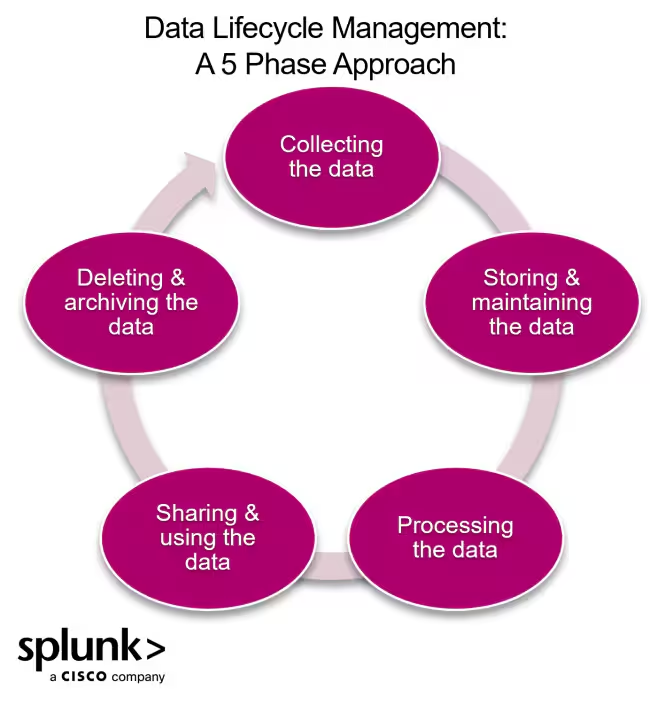
2. Data storage and maintenance
Data storage and maintenance is the processing, merging, aggregation, classification, and selection of data. This ensures the accuracy and completeness of data.
Employing a Relational Database Management System (RDBMS) or database is the most widely used approach for data storage. An RDBMS regularly retrieves data from data sources, and stores and/or deletes data at predetermined intervals to maintain the data within it.
An RDBMS is utilized to manage and preserve data securely, and it is compatible with most programming languages for data manipulation and query operations. For example, continual upkeep of customer relationship management (CRM) data is crucial to guarantee that the data is accessible for sales and marketing endeavors and to avert data quality issues.
Examples of common RBDMS software used by businesses include:
- Oracle Database
- Microsoft SQL Server
- MySQL
Alternatively, unstructured data can also be stored in NoSQL format for easier storage. NoSQL databases are good for storing unconventional data types like images and audio files.
Storing data in a data lake is also a viable option. A data lake is an unstructured storage layer that can store vast amounts of data for further analysis by AI/ML algorithms.
During this stage, organizations should establish rules and protocols related to:
- Data backups
- Data archiving
- Data retention policies
- Database maintenance
- Data security measures (encryption, user authentication)
Ensuring that relevant data is accessible to the appropriate team at the appropriate time and location is the primary objective of the data maintenance stage in DLM.
3. Data processing
Data processing is the step in the data lifecycle where raw data is transformed into useful information via a series of steps in a specific order, making it a cyclic process. At this stage, data processing and calculations take place in order to derive useful information from the data.
Common tools used for processing data at this stage include:
- Hadoop
- Apache Spark
- Python
- JavaScript
Data processing is typically used to create insights and predictions for businesses, as well as help in decision-making. It can include anything from data mining to machine learning algorithms and analytics tools. Businesses need to monitor actual data used to guarantee compliance with standards, ensuring that the organization is operating within legal and ethical boundaries.
Some data storage regulations include:
- General Data Protection Regulation (GDPR)
- California Consumer Privacy Act (CCPA)
- Health Insurance Portability and Accountability Act (HIPAA)
- Payment Card Industry Data Security Standard (PCI DSS)
- Personal Information Protection and Electronic Documents Act (PIPEDA)
- Data Protection Act 2018 (DPA 2018)
- Australian Privacy Principles (APP)
4. Data sharing and usage
Data sharing is a critical component of data management, as it facilitates tracking actual data usage to ensure compliance with business rules and standards. Data sharing across organizations and departments can increase productivity and reduce data maintenance costs.
Typically, data management involves sharing four broad types of data:
- Operational data
- Master data
- Metadata
- User-generated data
By sharing these types of data within an organization, businesses can foster collaboration, streamline processes, and make more informed decisions — the challenge lies in ensuring that shared data remains secure and compliant with relevant regulations.
Implementing data governance policies and data security measures can help organizations achieve a balance between data sharing and maintaining data privacy.
5. Data deletion and archiving
Data archiving is a fundamental part of the data management lifecycle, as it guarantees the preservation and availability of data — however, it's often neglected.
Data deletion and removal of duplicate or redundant data are essential for efficient data management, and organizations should implement efficient data deletion policies and action plans. By properly managing data deletion and archiving, businesses can:
- Optimize their data storage and usage
- Ensure compliance with data retention regulations
- Avoid potential legal or financial repercussions
An action plan outlining the steps necessary to achieve the objective of data deletion should be included in an effective data deletion policy. For example, businesses should not delete data that is necessary or legally required to be kept for a period of time. Additionally, archiving data ensures its availability for future use and reduces storage costs by removing inactive and redundant data.
Overall, successful implementation of a comprehensive data deletion policy requires an understanding of the organization's data needs and retention requirements as well as proper budgeting and planning.
Implementing an effective DLM strategy
Implementing an effective DLM strategy helps safeguard valuable business data assets, but also enables them to harness the full potential of their data, driving innovation and growth.
Here are some key things to include in your strategy:
Data governance policies
Data governance policies are documents that outline expectations, responsibilities, procedures, and goals related to data management. These policies establish rules and standards for protecting, verifying, and making data available in order to facilitate informed decision-making based on accurate, consistent, and understandable data.
Data security measures
Data security measures help protect sensitive data from unauthorized access, data breaches, and other security threats, ensuring data protection.
Some of these measures are:
- Encryption
- Access control
- Data masking
- Data loss prevention
Compliance with regulations
Compliance with regulations entails adhering to the rules and standards established by governing bodies or industry-specific organizations to ensure that an organization operates according to the law and ethical standards.
A lack of resources, understanding of regulations, and data security measures can often hinder regulatory compliance.
Some measures to ensure compliance can be:
- Auditing and monitoring data use
- Conducting regular security assessments
- Data scanning
- Providing training on data security measures
- Using an automated data governance platform
(Learn about compliance as a service.)
Benefits of DLM implementation
Having a robust DLM strategy brings about some upsides to your business, including:
Improved data access
Enhanced data access is critical in business, as it facilitates organizations to make informed decisions and enhance efficiency, productivity, and customer satisfaction.
Furthermore, it enables businesses to recognize fresh prospects and avert data breaches. Enhanced data access can aid organizations in streamlining operations, heightening customer satisfaction, and mitigating the risk of data breaches.
Compliance with regulation
Deploying a DLM system can help organizations achieve compliance with regulations by providing an organized approach to data management, guaranteeing that data is acquired, stored, and processed in accordance with applicable laws and regulations.
Controlled data governance
Controlled data governance results in improved data quality, reduced data management costs, and increased access to data for all stakeholders.
Tools and technologies for data lifecycle management
Tools and technologies can help organizations effectively manage their data, ensuring that it is secure, accurate, and readily available to support informed decision-making.
They help streamline DLM processes, optimize data storage and usage, and drive innovation and growth.
Data management platforms
Data management platforms (DMPs) are software systems that collect, organize, and activate data from various online, offline, and mobile sources. These data sources include first-, second-, and third-party audience data, which are used to create detailed customer profiles for targeted advertising and personalization initiatives.
DMPs generally offer features like:
- Data integration
- Audience building
- Cross-device targeting
- Automated data analytics
Data classification tools
Data classification tools are software programs designed to identify and categorize sensitive information within an organization. These tools are capable of assigning attributes to each piece of data, helping organizations recognize and classify sensitive data, and ensuring that it is appropriately safeguarded and managed.
Some common tools used for classification are:
- Oracle Cloud Infrastructure Data Catalog
- IBM Watson Knowledge Catalog
- Microsoft Purview Data Catalog
However, the downside of maintaining data classification tools is that they can be resource-intensive, requiring expertise and often requiring high costs.
Data monitoring and analytics
Data monitoring is a proactive process of reviewing and evaluating essential business data to guarantee quality and verify compliance with established standards. Data analytics is the transformation of data into insights. Thus, data monitoring and analytics help organizations maintain high-quality data and gain meaningful insights to support informed decision-making.
Some data monitoring tools may include:
- Splunk, including Splunk Cloud and Splunk Observability
- Datadog
- Logz.io
Common challenges and solutions in DLM
Common challenges in DLM include resource allocation and identifying methods for correct data capture, storage, usage, and management.
To address these challenges, organizations can adopt the following:
- Automated solutions: Automating data management processes is one of the best ways to ensure accuracy and efficiency in DLM. Automation tools help streamline manual activities such as entering, verifying, transferring, and archiving data.
- Proper data governance protocols: Establishing proper data governance protocols helps organizations manage their data and create a unified data strategy.
- Strong security measures: Organizations should utilize encryption techniques to ensure data privacy, as well as employ firewalls or antivirus software on their systems for additional security.
DLM vs ILM
You might be wondering if this data lifecycle management is the same as information lifecycle management.
The primary distinction between Data Lifecycle Management (DLM) and Information Lifecycle Management (ILM) is that DLM concentrates on the management of entire files of data or records in the lifecycle, while the ILM approach takes into account the value of information to an organization rather than just considering it as raw data.
Both DLM and ILM play crucial roles in data management, with DLM determining when data is no longer useful and ILM regulating the accuracy and storage of data.
Simply, DLM focuses on managing raw data throughout its lifecycle, while ILM takes a more holistic approach by considering the value of information to an organization.
DLM for business success
Data Lifecycle Management is an essential aspect of modern business operations, enabling organizations to effectively manage their data from creation to deletion.
By implementing a robust DLM strategy that includes data governance policies, data security measures, and compliance with regulations, businesses can unlock the full potential of their data assets, driving innovation, growth, and success in today's competitive landscape.
As the world continues to become more data-driven, developing a robust DLM will be a critical factor in ensuring long-term success and sustainability for organizations of all sizes and industries.
FAQs about Data Lifecycle Management
Related Articles

What is Network Telemetry?

What Is Risk Scoring? How To Score Risk