What Is Detection as Code (DaC)? Benefits, Tools, and Real-World Use Cases
Learn Shanika WickramasingheKey Takeaways
- Detection as Code (DaC) transforms threat detection into scalable, version-controlled, and testable code.
- It integrates security into engineering workflows through Git, CI/CD, and automation.
- DaC boosts transparency, speeds up incident response, and strengthens your security posture.
What is Detection as Code?
A detection rule tells your system when something suspicious is happening: too many failed logins, a strange script running, or an unexplained traffic spike. It triggers alerts before situations escalate.
Traditionally, these rules are built manually in SIEMs or dashboards, without version control or clear ownership. During incidents, teams are left wondering:
- Who created which rule
- Why it exists
- How to safely fix a detection rule
Detection as Code (DaC) changes the model. It treats detections like software: versioned, owned, testable, and automated from the start. Rather than relying on manual, UI-driven workflows, DaC uses code, version control, and automated pipelines to ensure that detection rules are reliable, auditable, and easy to maintain.
In this guide, we’ll explore what Detection as Code means, why it matters, how teams are putting it into practice, and which tools make it possible.
What Detection as Code actually means
In cybersecurity, Detection as Code is a way to manage threat detection by writing and handling detection logic as software code, such as SIEM rules, WAF filters, and alert conditions. Instead of building rules through a security platform’s user interface, security teams can…
- Write detection rules in structured formats like YAML or Python.
- Store them in version-controlled repositories like GitHub .
- Test and deploy them using CI/CD pipelines with tools like GitHub Actions or GitLab CI.
This method brings the rigor of software engineering into security operations. Detection logic becomes testable, repeatable, and integrated with development workflows rather than tacked on as an afterthought. DaC is similar to other “as code” practices such as Infrastructure as Code (IaC) and Observability as Code (OaC).
Who needs Detection as Code?
Detection as Code isn’t reserved for elite security teams. It can help anyone who deals with threat detection, incident response, or managing detection rules across environments. After all, DaC is related to the overarching practice of TDIR (threat detection, investigation, and response) and brings structure to a traditionally reactive domain.
Security Operations (SecOps) teams benefit from the increased visibility and repeatability. DevSecOps teams can integrate detections into their development pipelines. Detection engineers, compliance officers, cloud security teams, and security architects all gain from the consistency, auditability, and scalability DaC enables.
And interest in DaC is accelerating. In 2025, 63% of security professionals say they would like to frequently or always use Detection as Code in the future — but only 35% do so today. This gap points to a growing demand for scalable, testable detection practices that teams haven’t yet fully implemented, despite clear intent.
The real challenges Detection as Code solves
Building a few detections sounds simple…until you try doing it at scale. What starts as a few alert rules quickly turns into a mess of one-off changes, brittle logic, and scattered ownership. The deeper you go, the more gaps you find: rules that silently fail, alerts no one trusts, and environments that never behave the same.
Detection as Code directly addresses these gaps:
- No version control for detection logic. Without Git or source tracking, teams can’t audit changes, review commits, or roll back faulty updates. In traditional workflows, changes made through UIs get lost or overwritten with no clear traceability.
- Too much noise from untested detections. Detection rules are often pushed straight to production without validation. That creates noisy alerts and alert fatigue — just like deploying app code without unit testing.
- Manual updates to detection rules don’t scale in cloud-native or containerized environments. As logs and services evolve, detection logic quickly becomes stale or broken.
- Lack of CI/CD pipeline for detection logic. There’s no automated pipeline to test or deploy rules. That leads to fragile workflows, missed coverage, and unexpected failures in production.
- Environment differences causes inconsistent results. When detection logic differs across development, staging, and production environments, it causes inconsistent results and harder debugging. Without automation, environment drift becomes a serious liability.
When to apply DaC in your security stack
You don’t need to adopt DaC all at once. But here are some clear signs that it's time to get started with DaC:
If your detection rules frequently break due to changing infrastructure or log formats, that’s a strong indicator. Cloud-native systems, dynamic services, and container orchestration often introduce inconsistencies that break traditional rule sets.
Incident reviews can also surface warning signs. If missed alerts trace back to disabled, broken, or outdated rules, it suggests a lack of ownership and testing that DaC can address.
Teams embracing DevSecOps, CI/CD, or GitOps will find DaC a natural extension of their existing practices. If you already manage infrastructure as code, managing detection logic the same way adds consistency.
DaC is invaluable during SIEM migrations. By codifying detection logic into portable formats like Sigma or YAML and converting them with sigma-cli, you can avoid starting from scratch when changing platforms.
How Detection as Code works with software engineering
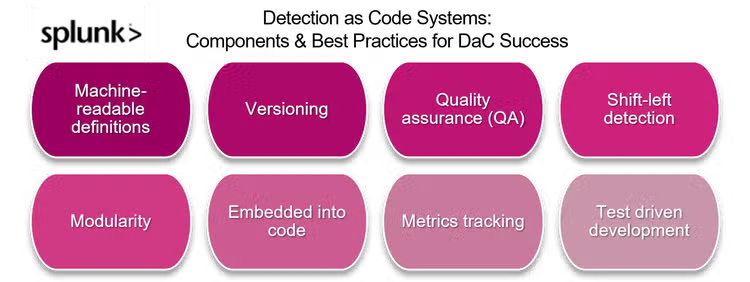
Detection logic written as code benefits from core engineering principles that make it scalable and sustainable.
Reusable Components
Detection logic should not be written from scratch every time. Just like in software engineering, shared functions, lookup tables, and data models allow teams to create modular, reusable components. This reduces duplication and creates standardized detection patterns across environments and teams.
CI/CD and Testing
Detection logic should go through the same software delivery lifecycle as application code. With CI/CD pipelines, you can:
- Test detection rule syntax and formatting.
- Validate behavior against known log samples.
- Prevent broken rules from reaching production.
- Reduce noisy alerts and firefighting by catching issues earlier.
Here’s an example CI Job for testing detection rules (GitHub Actions):
name: Test Detection Rules

 on: [push, pull_request]

 jobs:

   test:

     runs-on: ubuntu-latest

     steps:

       - uses: actions/checkout@v2

       - name: Lint and test rules

         run: |

           pip install -r requirements.txt

           pytest tests/
(Related reading: learn how to monitor the CI/CD pipeline.)
Version control
In environments with multiple contributors, version control is critical. Git allows teams to track changes, leave comments, audit updates, and roll back if needed. It becomes the single source of truth for detection logic.
Test-driven development
Begin by collecting example log events either from past incidents or generated through attack simulations. Identify which events should trigger an alert and which ones can be ignored.
Then, use those samples to build and validate rules. This approach helps verify that the logic behaves as expected and reduces false positives. Like unit tests in software, it makes alerting behavior predictable and reliable.
Automation and integration
DaC workflows can integrate tightly into development pipelines. With automation in place, rule updates happen quickly, consistently, and safely across environments. This allows security operations to keep up with development speed.
How Detection as Code strengthens your security posture
DaC improves your long-term ability to detect, respond to, and adapt to threats. It provides the structure and visibility needed to manage detections effectively across teams and environments.
Strength 1. Build custom detections that reflect your unique environment
Prebuilt detections are often generic and lack internal context. DaC allows you to model detection logic that reflects your actual telemetry, naming conventions, and architecture.
Strength 2. Quickly operationalize threat intel
Threat intelligence often arrives in the form of new indicators of compromise (IOCs), but turning those into alerts takes time. With DaC, you can codify IOCs into detection rules quickly and deploy them via CI/CD pipelines.
Strength 3. Improve and share observability into security
When detection logic lives in Git repositories rather than UI tools, more people can understand, improve, and trust it. Devs, responders, and security teams all have visibility.
Strength 4. Use built-in documentation for compliance and audits
Each commit includes authorship, justification, and timestamp. Since every rule is in version-controlled code, your audit trail writes itself. This turns detection into verifiable evidence.
Strength 5. Respond to incidents faster
When detections break, DaC enables responders to search the codebase, fix logic, validate it with a test, and deploy updates — all in minutes.
Turning hunts into detections with DaC
Detection as Code isn't just about scaling known detections — it's also a natural way to capture and operationalize insights from threat hunting. The PEAK Threat Hunting Framework emphasizes the importance of turning ad hoc hunts into durable, repeatable detections. It introduces a hierarchy of detection outputs, ranging from manual documentation to fully codified, alerting rules.
Detection as Code aligns closely with this approach. Once a hunt identifies suspicious behavior or a potential threat pattern, security teams can translate that insight directly into code-based detection logic that is version-controlled, testable, and deployable. Instead of letting valuable hunt findings live in wikis or dashboards, DaC helps institutionalize them into your CI/CD pipelines.
For example, using DaC, teams can promote detection logic through the PEAK hierarchy by:
- Writing detection rules as code using Python, YAML, or Sigma, based on hunt outcomes.
- Adding those rules to Git repos with metadata, context, and test cases.
- Using CI/CD workflows to validate, review, and deploy rules across environments.
- Replacing one-off dashboards or queries with fully integrated, alerting logic.
- Creating documentation trails for audits, compliance, and team-wide observability.
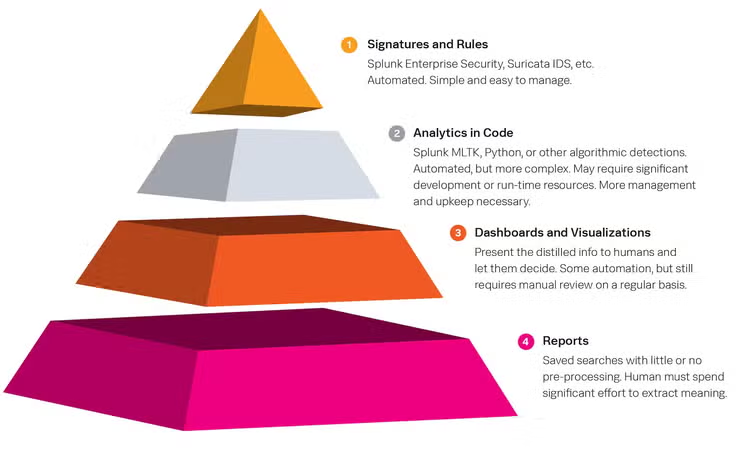
The PEAK Hierarchy of Detection Outputs
Real-world case studies
Bitstamp’s move to Python-based detection
Bitstamp, a global crypto exchange, replaced legacy detection logic with Python-based DaC using Panther. They defined rules in Git, wrote tests, and automated deployments. This reduced false positives, improved visibility, and allowed rapid iteration on emerging threats.
Fastly’s WAF Simulator for safer testing
Fastly's security team built a simulation pipeline around their WAF. Instead of deploying detection rules and hoping for the best, they simulate both real and false positive cases before releasing new rules. This iterative process dramatically reduces noise and improves resilience.
Tools and technologies that power Detection as Code
Detection as Code works best with tools designed for code management, testing, and automation.
GitHub
Version control is foundational to Detection as Code, and GitHub is the answer. GitHub helps you store, review, and track changes to detection logic like application code. With GitHub Actions, teams also automate validation and deployment of rules directly from pull requests.
Splunk
Splunk Enterprise Security remains a go-to SIEM for enterprises, with support for scripted rule deployments, integration with Git workflows, and custom alerting logic. Some teams even wrap Splunk searches with CI jobs to test syntax and prevent faulty rules from reaching production.
Splunk provides 1,800+ detection rules (and rapidly growing) through the Splunk ES Content Update (ESCU) app, covering a broad range of threats. The new Foundation-sec-8b model simplifies and accelerates detection selection, helping you quickly identify the most relevant rules for your needs.
Sigma + sigma-cli
Sigma provides a vendor-agnostic way to write detection rules in YAML. With sigma-cli, these rules can be converted into formats supported by different SIEMs, including Splunk ES. This removes duplication and enables cross-platform use.
Additional tools
- Panther: Cloud-native security platform for Python-based DaC with CI/CD support.
- CI/CD platforms: GitLab CI, Jenkins, and CircleCI automate testing and rule promotion.
How DaC fits into Agile development
Security teams often work reactively, chasing new zero-days or triaging alerts. Detection as Code introduces structure by aligning detection work with Agile software development principles.
Instead of writing rules ad hoc, teams build a backlog of detection needs, scope each one, write tests, and iterate in sprints. This supports long-term resilience and consistent coverage without team burnout.
Peer reviews, test automation, and CI/CD ensure each detection rule meets quality standards and is documented. This gives stakeholders better visibility into detection priorities.
Where AI fits into Detection as Code
Previously, writing detection logic involved combing through logs manually, trying to understand attack patterns line by line. It was tedious and slow. Now, combining large language models with structured threat data, you can:
- Translate threat scenarios into draft detection rules, complete with logic, metadata, and even test cases. Tools like GPT-style models fine-tuned on security data are helping analysts prototype detections without the need to memorize every nuance of a query language.
- Easily iterate and and brainstorm new detections. You can generate initial logic, and immediately test against known logs, all in one loop. It doesn’t replace human review, but it does compress the work from days into hours.
- Help triage false positives and enrich alerts, flagging likely duplicates, or identifying events that truly matter. It’s not magic, you still need context and curation, but it’s a serious assist for teams drowning in noise.
And this is simply the start. It can be expected that soon we will see detection-as-code IDEs with built-in AI assistants, live log context, and suggestions useful to your environment and threat model.
DaC is a modern approach to security
Detection as Code is more than a trend. It’s a scalable, sustainable approach to modern security. By managing detection logic like software, teams improve accuracy, automation, and collaboration. DaC helps organizations stay agile, aligned, and ready to detect what matters most.
Detection as Code FAQs
Related Articles

2026 IT Spending and Budget Forecasts: Where Organizations Are Investing

What Is Intelligent Automation?