Splunk AppDynamics Unveils New Security and Mobile Insights
Observability Dave HickmanToday, we're thrilled to announce several innovations for Splunk AppDynamics. AppDynamics 25.1 makes your observability teams more productive and responsive by helping you standardize observability across teams, understand critical user journeys, optimize usability, and provide a unified observability experience across IT Operations, Security Operations, and engineering teams.
AppDynamics SaaS 25.1 is generally available now, and AppDynamics On-Premise and Virtual Appliance 25.1 will follow later this month.
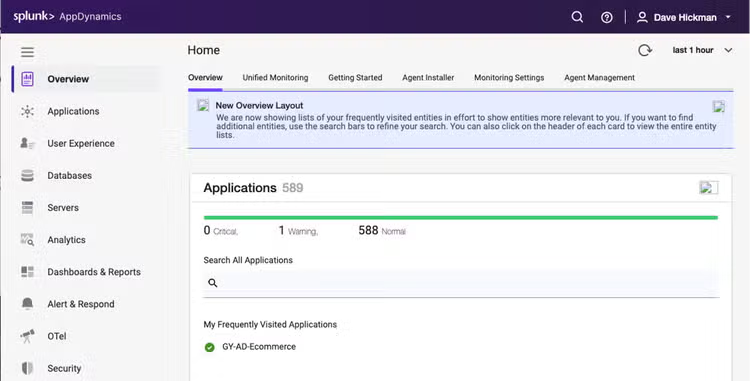
Image 1: Splunk AppDynamics branding
The Era of Splunk Observability Is Here!
The first thing you'll notice is that the user interface has been rebranded from Cisco AppDynamics to Splunk AppDynamics. The new branding brings us closer to a unified observability experience with Splunk Observability Cloud, which recently adopted the same visual design language and screen layout designed to eliminate visual distractions across your troubleshooting workflow.
Over the next several releases, we’ll further align the user experience across the Splunk product portfolio.
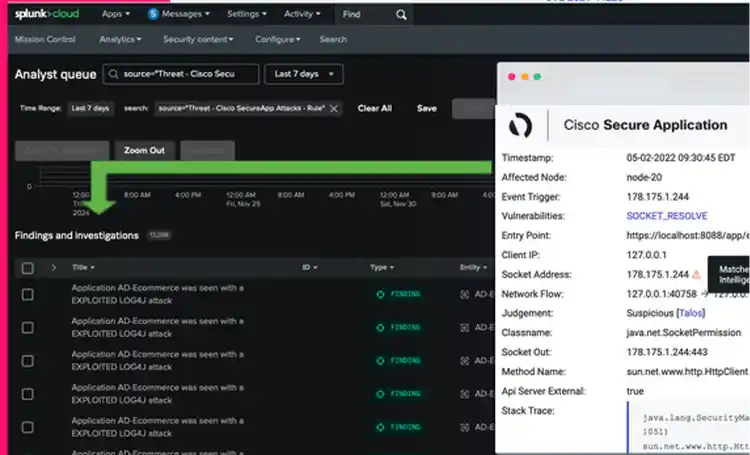
Image 2: Secure Application alerts forward to Splunk Enterprise Security to initiate an investigation
Secure Application + Splunk Enterprise Security = Better Together
Secure Application is our premiere application vulnerability and attack detection protection solution for hybrid and three-tier applications. Splunk Enterprise Security is the leading security information and event management (SIEM) solution that helps organizations detect and respond to threats. Put them together, and you get a powerful end-to-end solution for both observability teams and security teams.
To streamline security investigation workflows, Secure Applications can now send application attack data directly to the Splunk platform in real-time. Reduce reaction time by forwarding security events to attack analysts so that they can resolve the issue quickly. Attack alert sharing is achieved via the HTTP alerting capability.
Integration across application security products enables security and applications teams to quickly detect and address application attacks (such as Log4shell and other zero-day vulnerabilities) and ensure business continuity.
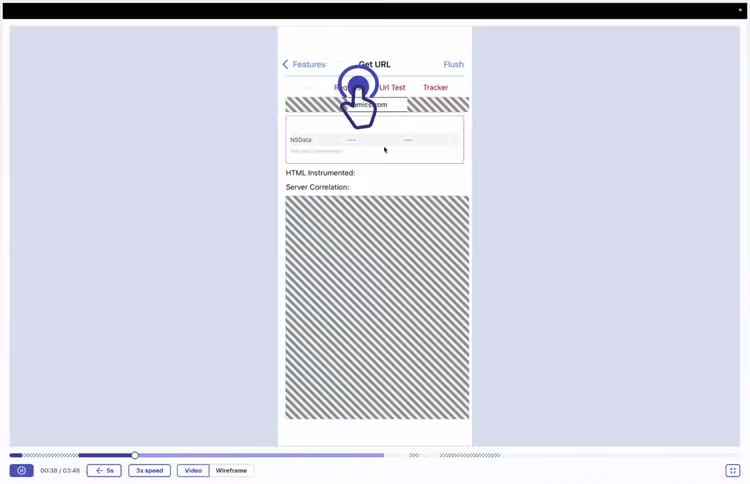
Special Preview: MRUM Session Replay
Troubleshoot and optimize mobile apps with MRUM session replay. Splunk AppDynamics Mobile Real User Monitoring (MRUM) Session replay is available now as a limited-time public preview. Get hands-on experience before its general availability in a few months.
Session replay supports two use cases. First, IT Operations and developers can use session replay to troubleshoot mobile apps and see what actions a user took leading up to the error. Thus, you can diagnose issues without needing to reproduce them, saving time and effort in determining the root cause.
Second, you can see your apps through as users do to unlock valuable insights. Application owners, developers, and designers can use session replay to understand how users engage with your application and optimize user experience.
Learn more on our EUM community forum >
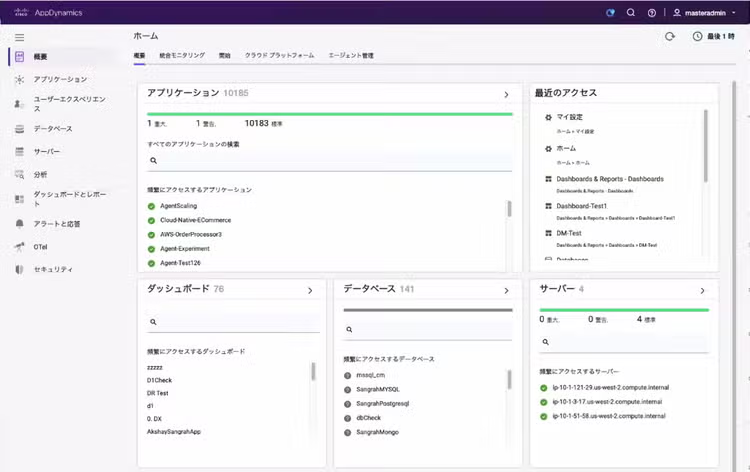
Image 3: Japanese language user interface preference
Japanese Language Support
AppDynamics is broadening support for our Japanese customer base with a localized Japanese language user interface. This is an individual user preference that can be enabled via the user preferences.
AppDynamics documentation is already available in Japanese, and we are proud to offer a more personalized experience for Japanese speakers with the new localized user interface.
Stronger Together
Splunk is quickly delivering a unified observability experience across the Splunk Observability portfolio to help standardize observability practices across teams to improve productivity with shared data, context & workflows.
A New Website
On January 29th, AppDynamics.com moved to Splunk.com. We've been hard at work building our new home within Splunk and hope you’ll feel right at home too. Come visit our new product pages and bookmark our support page.
Discover how Splunk Observability can transform your observability practice today here. For more information, visit our documentation and community sites, and check out the release notes.
Related Articles

Getting Synthetics Right: How To Design Synthetic Tests with Purpose

From Chaos to Clarity: Managing Metrics at Scale in Splunk Observability Cloud