Observability Blogs
Latest Articles
template
category
category
observability
![The Importance of Traces for Modern APM [Part 2]](https://www.splunk.com/content/dam/splunk-blogs/images/media_169b5de3cafe6e35fe4acb9c6a148b797d03da32c/the-importance-of-traces-for-modern-apm-part-2.jpg?width=300&format=jpg&optimize=medium)
The Importance of Traces for Modern APM [Part 2]
In the second part of this blog we will explore how increased entropy forces us to rethink what is required for monitoring.

On-prem application performance monitoring is still relevant, here’s why
Learn how an on-prem application performance monitoring practice enables quick understanding of exactly how application health impacts transaction KPIs.

The gift of visibility: Mobile Real User Monitoring and Cisco ThousandEyes integration
How AppDynamics Mobile Real User Monitoring (MRUM) delivers true end-to-end visibility of your network and application data — wherever your customers are.

Take Back Control of Your Workflows, Data, and Costs with Splunk Observability
Splunk’s unified Observability platform brings together a wide set of capabilities that enable practitioners to regain control of their data, processes, and costs.
The Hidden Side of Observability
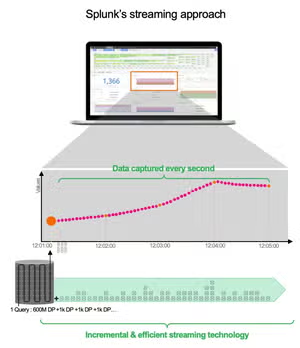
Everything is “observability” these days. But not all solutions are created equally. In fact, they are very different once you look behind the (architectural design) curtain. They have very different architectures and don’t collect data in the same way. Find out what the differences are and what you need to consider.
Why Is Log Data So Important In Observability?
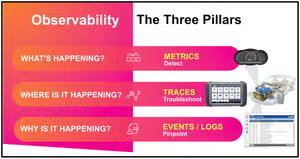
Traditional monitoring approaches struggle in digital platforms and they do not collect the rich data contained in the logs. Observability, with OpenTelemetry, is the key to managing these platforms and it is based on the capture and analysis of three types of telemetry; metrics, traces and logs.

Announcing the Splunk Add-on for OpenTelemetry Collector
Now you can use the Deployment Server to deploy the Splunk Distribution of the OpenTelemetry Collector.

Modeling and Unifying DevOps Data Part 3: Pipelines
In this third post of a series devoted to modeling DevOps data into a common set of mappings, Splunker Jeremy Hicks explores the Software Pipelines and their commonalities across the Software Development Life Cycle (SDLC).

How To Investigate a Reported Problem
Learn how to isolate the root cause of incidents using Splunk Observability Cloud.