Cloud Cost Management & Trends in 2026: Strategies to Optimize Your Cloud Spend
Cloud computing has become the backbone of modern business operations, powering everything from day-to-day collaboration to large-scale digital transformation initiatives. As organizations deepen their reliance on cloud services, the financial stakes continue to grow. According to Gartner, global spending on public cloud services is projected to reach over $720 billion in 2025, a significant increase from nearly $600 billion in 2024.
While the cloud offers unmatched flexibility and scalability, its pay-as-you-go pricing and complex billing models can quickly lead to unexpected expenses. As a result, many businesses are now focused on developing robust strategies to manage and optimize their cloud costs. Addressing this challenge effectively requires more than just tactical fixes — it demands a holistic approach that combines awareness of industry trends, practical cost management techniques, and organizational best practices.
Understanding the types of cloud costs
Effectively managing cloud costs begins with understanding where those costs originate. The complexity of cloud pricing models can be daunting, with choices ranging from pay-as-you-go arrangements to reserved instances and custom agreements. Each provider offers a slightly different approach, further complicating financial planning.
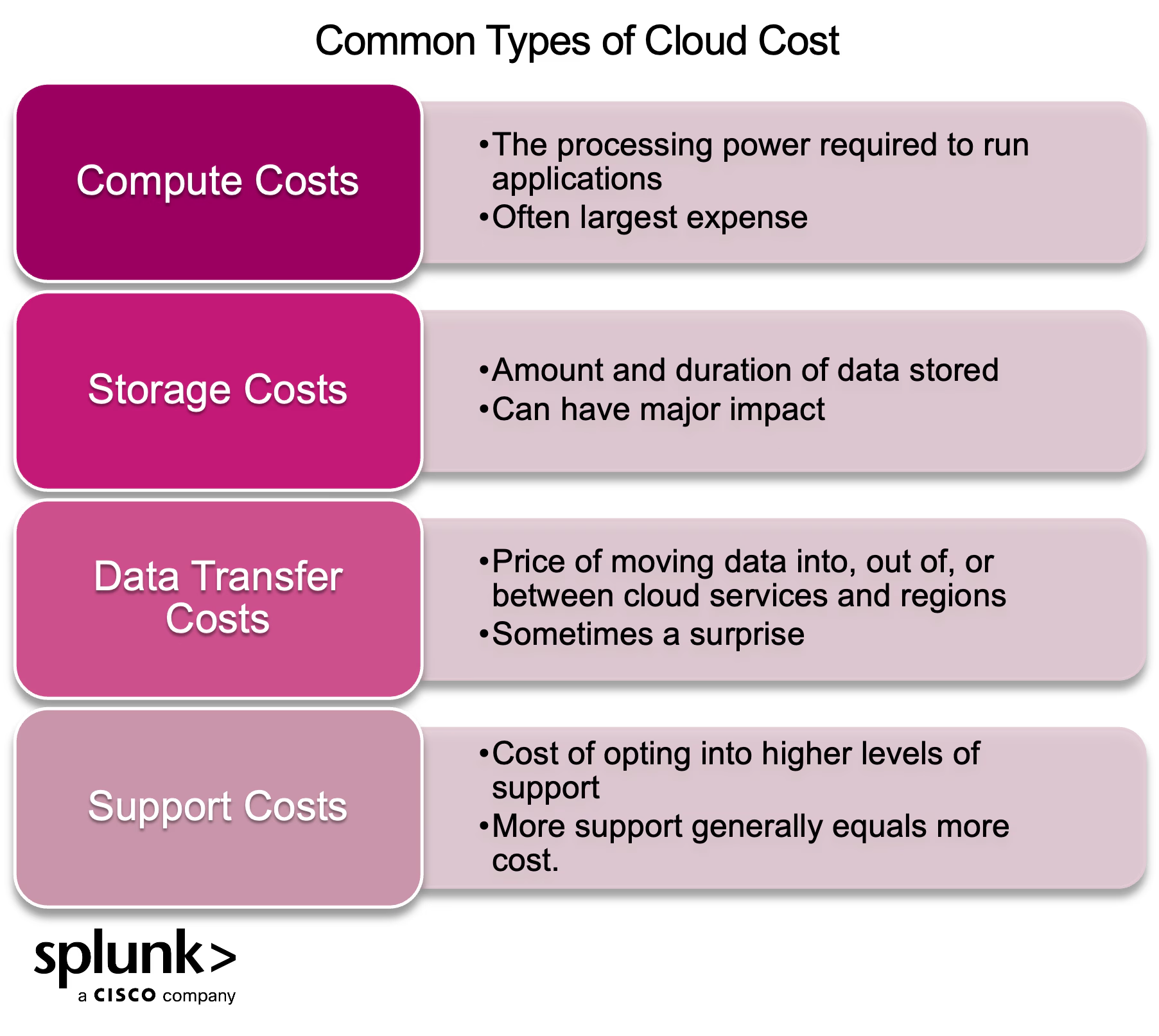
Here are the core cost drivers in cloud computing:
- Compute costs relate to the processing power required to run applications and are often the largest expense, as they depend on the type and number of virtual machines and how long they run.
- Storage costs are dictated by the amount and duration of data stored, and the choices organizations make about storage classes and retention policies can have a major impact on overall spend.
- Data transfer costs reflect the price of moving data into, out of, or between cloud services and regions, often adding up faster than anticipated.
- Support costs is the cost of opting into higher levels of support — more support generally equals more cost.
Recent trends have seen storage costs rise dramatically. Cloud providers have rolled out more options for flexible pricing — but for customers, it means greater scrutiny of cloud usage is now essential.
(Related reading: IT cost management for leaders.)
Cloud cost challenges and trends
As organizations increasingly rely on cloud services, they are confronted with a rapidly shifting landscape of both external market forces and internal operational hurdles that drive up costs and complicate management.
One of the most significant challenges is the rise in cloud service prices. Yes, cloud providers have rolled out more options for flexible pricing — but that may not make things easier. For organizations, these price changes and increases require a more careful approach to resource selection and usage, as storage costs in particular are rising sharply.
Hidden costs
Hidden costs are another major concern, especially egress fees — the charges for moving data out of the cloud. Many businesses underestimate or overlook these expenses, only to be surprised by substantial bills when migrating workloads or accessing data across different environments. These fees not only limit an organization’s flexibility to shift providers but can also leave critical data underutilized or siloed, impacting analytics and innovation.
Hybrid (complexity)
The growing adoption of hybrid cloud strategies adds yet another layer of complexity. While leveraging multiple providers can help organizations optimize for performance and resilience, it also complicates cost tracking and budgeting.
When different teams independently adopt various platforms or regions, “cloud shadows” can emerge — resources and services running without centralized oversight, much like forgotten subscriptions that quietly drain budgets.
Resource management
Internally, organizations often struggle with over-provisioning and underutilization. To avoid performance issues, teams may allocate more resources than necessary, leading to idle or underused capacity that still incurs charges. Conversely, resources that are purchased but not fully leveraged represent wasted investment.
Lack of visibility
A lack of visibility compounds these issues. Without clear, real-time insight into who is using which resources and for what purpose, it becomes nearly impossible to optimize cloud spending. Indeed, only 3 out of 10 organizations have a clear understanding of where their cloud spend is going, leaving the majority at risk for inefficiencies and surprise overages. (Splunk enables end-to-end visibility, no matter how complex the enterprise. Learn more about our solutions.)
These combined trends and challenges make cloud cost management more complex than ever. To remain competitive and maintain financial control, organizations must proactively address both the external forces driving up prices and the internal practices that can lead to waste.
Smart strategies for cloud cost reduction
The good news is that organizations can take practical steps to address these challenges and optimize their cloud investments. A combination of tactical measures and ongoing monitoring can lead to substantial savings and improved efficiency.
Right-sizing
One of the most impactful strategies is right-sizing, which means adjusting computing resources to precisely match workload requirements. By analyzing how applications use resources, organizations can select the most appropriate instance types and sizes, avoiding unnecessary capacity that drives up costs.
Savings plans
Another proven tactic is making use of reserved instances and savings plans. These options allow businesses to commit to a certain level of usage, typically for one or three years, in exchange for lower pricing compared to on-demand rates. This approach works best for predictable workloads and can deliver significant long-term savings.
Regular audits
Regularly auditing your cloud environment to identify and eliminate waste is also essential. This includes:
- Finding idle virtual machines, outdated snapshots, or unnecessary storage.
- Removing them to ensure you’re only paying for what you truly need.
Organizing resources through tagging and effective metadata management enhances visibility and accountability. By consistently tagging resources by department, project, or application, organizations can track usage patterns, allocate costs appropriately, and spot areas for optimization.
(Follow this structured approach to decide which tools are worth keeping.)
Automation
Automation is another powerful lever for cost control. By implementing auto-scaling policies, scheduling shutdowns for non-essential resources, and using cloud management platforms, businesses can ensure that cost-saving measures are applied consistently and efficiently.
Machine learning & advanced technologies for cost management
As cloud environments become more complex, organizations are increasingly turning to advanced technologies like machine learning (ML) to gain greater visibility and control over costs. ML can play a vital role in analyzing usage patterns and identifying anomalies that might otherwise go unnoticed.
For example, ML algorithms can:
- Detect sudden increases in cloud usage that may indicate a problem or inefficiency.
- Analyze historical data to forecast future usage and costs, enabling more accurate budgeting.
- Recommend optimizations such as resizing resources or switching to more cost-effective pricing plans.
- Take automated actions — such as scaling resources up or down in real time — to ensure businesses are only paying for what they actually need.
By leveraging ML, organizations can move from reactive cost management to a more proactive, data-driven approach, reducing waste and enhancing the value of their cloud investments.
Organizational practices for sustained cost management
Beyond tactical fixes, effective cloud cost management depends on embedding cost awareness and best practices throughout the organization.
Center of Excellence
Establishing a Cloud or Observability Center of Excellence (CoE) is a foundational step. A CoE brings together cross-functional teams to set standards, governance, and best practices for cloud adoption, ensuring that every department is aligned with the organization’s strategic goals.
Follow this step-by-step approach on how to establish a center of excellence.
FinOps
FinOps — short for financial operations — is another essential practice. By integrating financial accountability into the operational side of cloud computing, FinOps promotes transparency and collaboration between IT, finance, and business units. This holistic approach helps organizations balance speed, cost, and quality, making more informed decisions about cloud investments.
Continuous monitoring
Continuous monitoring and optimization are also vital. Cloud environments are dynamic, and what’s optimized today may be inefficient tomorrow. Regularly reviewing resource allocations, using monitoring tools, and adjusting configurations help ensure ongoing efficiency and prevent cost overruns.
Best practices & checklist
For ongoing success in cloud cost management, consider these actionable best practices:
- Conduct regular audits of your cloud environment to find and eliminate unused or underutilized resources.
- Negotiate contracts carefully with cloud providers, paying special attention to egress fees and storage pricing structures.
- Implement robust tagging strategies to improve visibility and accountability across teams and projects.
- Foster collaboration between IT, finance, and business stakeholders to create a culture of cost transparency.
- Leverage analytics tools for real-time reporting and to identify trends or anomalies in cloud usage.
- Automate optimization wherever possible to ensure savings are realized consistently.
Become cloud smart
Successfully managing cloud costs requires a comprehensive approach that spans tactical strategies, organizational practices, and continuous awareness of market trends.
By proactively monitoring usage, leveraging technologies like machine learning, and fostering a culture of cost transparency and accountability, organizations can transform cloud investments into strategic assets — fueling innovation and efficiency while maintaining financial control.
Related Articles

How to Use LLMs for Log File Analysis: Examples, Workflows, and Best Practices

Beyond Deepfakes: Why Digital Provenance is Critical Now

The Best IT/Tech Conferences & Events of 2026

The Best Artificial Intelligence Conferences & Events of 2026

The Best Blockchain & Crypto Conferences in 2026

Log Analytics: How To Turn Log Data into Actionable Insights

The Best Security Conferences & Events 2026

Top Ransomware Attack Types in 2026 and How to Defend