Swiss Army LLMs Won’t Protect You. Purpose-Built Cybersecurity AI Will.
CISO Circle Hyrum AndersonCybersecurity is high stakes, and general-purpose large-language models (LLMs) can’t keep up. Security leaders face mounting threats, evolving regulations, and pressure to protect brand trust, which means they need solutions tailored to their challenges.
The inherent inefficiency and lack of specificity in general models create a gap that’s increasingly being filled by specialized, task-specific models tailored for security needs. Explore why the future of AI in cybersecurity lies in the shift from “Swiss Army knife” generalist LLMs to focused, bespoke models designed for precise security tasks.
LLMs offer broad reach, but fall short with cybersecurity
LLMs excel in a variety of domains, such as high-quality information retrieval, image generation, and software engineering. But their efficiency falls short when applied to some high-stakes security tasks. Where cybersecurity teams need specific, high-precision results, accuracy and reliability are paramount.
These numbers illustrate reasonable expectations for critical security tasks:
- Triage alert: 70 – 90% confidence
- Quarantine file: 95 – 99%
- Host isolation: 99.9%
However, today’s LLMs deliver approximately 80% accuracy — general-purpose can impress anecdotally, but when it comes to reliance on LLMs at scale, the generalist models are not quite ready to bear the load of certain security tasks.
Why? Generalist models are not yet security specialists! For security tasks, generalist knowledge and behaviors of those models are in many cases superfluous. When general-purpose models spread their computational power too thin across numerous tasks irrelevant to SecOps, the result is an alarming lack of depth in defense; exposed to myriad vulnerabilities. For security teams, this means higher spend for less relevant output. With a mile-wide net, they struggle to detect, analyze, and respond to the countless incidents and critical threats that swim right through their large but easily penetrated net.
Isolating compromised networks, escalating incidents, or triggering defensive responses must occur with near-perfect accuracy. Yet, generalist models frequently misinterpret vocabulary and elements of the data, or lack a deep understanding of specific threat families, leading to security gaps.
In practical terms, a single misinterpreted false positive can mean the difference between neutralizing a breach in minutes or suffering hours of costly downtime. How costly? Based on survey responses in Splunk’s The Hidden Costs of Downtime, Oxford Economics calculated that downtime costs Global 2000 companies $400 billion annually. That’s
$200 million per company per year, roughly 9% of profits. Every minute of downtime costs an average of $9,000 or $540,000 per hour.
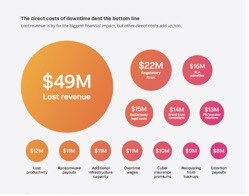
Today’s regulatory and governance landscape demands not just effort, but demonstrable effectiveness; half-measures quickly become points of scrutiny.
Using generalist LLMs for cybersecurity, a costly mismatch
CISOs and CTOs are up against a form-factor mismatch across deployment, compliance, and cost. Deploying generalist models for cybersecurity introduces several challenges. First, sending sensitive security data, such as logs, binaries, or incident reports, to external providers for processing poses privacy and compliance concerns. Many organizations, particularly those in regulated industries, must keep security data within internal networks to comply with laws such as GDPR or HIPAA.
Specialized AI models shine in behavioral anomaly detection, where they can distinguish between legitimate administrative actions and the subtle lateral movement of an attacker by learning the unique baseline of a specific network environment. They are equally critical for automated incident response, capable of autonomously isolating compromised systems or blocking malicious credentials in seconds; a task where general models lack the necessary domain constraints to act safely. Domain-specific AI also excels in predictive vulnerability management, where it prioritizes exploitable flaws based on real-world threat intelligence rather than just generic severity scores. By embedding industry-specific compliance and regulatory standards directly into their architecture, these models also enable autonomous governance for highly regulated sectors like finance and healthcare, ensuring automated defenses remain within legal guardrails.
Self-hosting generalist LLMs often isn’t feasible either. These models are computationally intensive, requiring enormous processing power, which translates into prohibitive operational costs. The latency required for real-time SecOps is another significant bottleneck. General-purpose LLMs are not optimized for the speed needed in security operations centers (SOCs), where incidents must be detected and remediated in seconds.
Purpose-built AI systems for major cybersecurity benefits
Bespoke AI systems tailored specifically for security tasks offer numerous advantages that make them a strong alternative to generalist LLMs.
Domain-specific security models grant predictable precision: One of the most significant benefits of a task-specific model is its ability to offer precise, predictable behavior. Unlike generalist models, which are forced to operate across a broad range of domains, bespoke models can be trained on your security-specific data such as logs, telemetry, and threat intelligence. The result? A narrower focus and tighter distribution of expected behavior, which is crucial for tasks like log triage, alert deduplication, and behavioral anomaly detection. This means security teams spend less time chasing false positives and more time on proactive risk reduction.
On the other hand, generalized models leave teams chasing down false alarms, triaging a barrage of alerts, investigating unclear incidents, and reconfiguring thresholds on
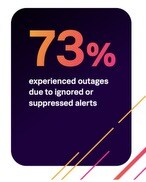
the fly. In fact, 43% of respondents in Splunk's State of Observability 2025 reported spending “more time than they should” responding to alerts. And teams obviously don’t have the luxury of ignoring alerts, as evidenced by the 73% who experienced outages due to ignored or suppressed alerts. It’s not just about consuming too many productivity cycles. Fifty-two percent of respondents said the volume of false alerts has a negative impact on their team morale.
Deterministic pipelines make cybersecurity more manageable: When decisions and actions follow pre-defined rules or patterns, it’s exponentially easier to implement in security contexts. The simpler the security strategy, pipeline, and systems, the easier it is for teams to build, test, and monitor models that behave as expected under real-world adversarial conditions. Like managing professional, on-the-job interns instead of a class of kindergarteners with a substitute teacher.
AI security system controllability is essential: Security teams are up against enough unknown, external adversaries — they shouldn’t need to contend with additional unknowns originating from inside. Security environments must operate with predictable and controllable behavior from AI systems. With smaller, task-specific models, organizations can ensure AI systems perform as expected without hallucinating facts or straying into irrelevant areas. This predictability is critical in high-stakes decision-making environments where human intervention may be limited, and trust in AI-driven automation is essential. Plus, task-specific models facilitate better governance, certification, and testing.
Privacy, compliance, and deployment considerations: Bespoke models are also better suited to meet the unique privacy, compliance, and deployment needs of security teams. These models can be deployed on-premises or within air-gapped environments, keeping sensitive data within the organization's control. Bespoke models align with the operational realities of SOCs, where data must be processed locally or within trusted environments.
Localized deployment also simplifies compliance efforts since models can be tailored to meet specific regulatory requirements of an organization or industry. Model governance, including training data transparency and model explainability, is more manageable with focused models.
Cost and latency of bespoke security models: The cost efficiency of smaller, task-specific models is another key advantage. With their reduced size and scope, these models incur much lower inference costs compared to generalist models. Because specialized models carry out focused operations, less cloud and on-premises capacity is required, thereby reducing infrastructure costs accordingly. Greater model operational efficiency also directly translates to lower energy consumption; excellent for the planet and your bottom line. This enhanced productivity also makes specialized models much more viable for large-scale enterprises that generate vast amounts of security data on a daily basis. These models can be optimized for low-latency performance, ensuring security tasks are executed in real time; a critical capability in fending off fast-moving cyber threats. All these factors combine to improve ROI.
Bespoke security models are designed from the ground up with security as the primary goal. Whether it's threat analysis, log interpretation, or incident response, these models are equipped to handle the intricacies of SecOps. Their architecture is aligned with the principles of defense-in-depth and least privilege, ensuring security is the focus — not an afterthought.
What does targeted security AI look like in the wild?
Let’s take a look at real-world examples of bespoke security AI in action. A prime example is the Cisco Foundation Security Model, an open-source, purpose-built security AI designed specifically for telemetry-rich environments. This model is optimized for use within on-premises deployments, allowing security teams to leverage its capabilities without compromising on privacy or compliance. Early results indicate the model is outperforming generalist LLMs in tasks such as classification and reasoning on security artifacts.
SLMs are designed to assist SOC analysts in quickly identifying and remediating threats. By focusing on security-specific tasks, they streamline workflows and increase the speed and accuracy of incident resolution. SLMs also offer a privacy-first alternative to resource-heavy frontier models. By deploying these compact models within their own private cloud or on-premises infrastructure, organizations can feed highly sensitive telemetry, such as internal system logs, incident tickets, and proprietary playbooks, directly into the AI without the risk of data leakage to third-party providers.
These small, specialized models are often fine-tuned on historical incident data and specific regulatory documents, allowing them to provide precise, context-aware recovery steps faster than general-purpose models while drastically reducing ineffective actions. Furthermore, because SLMs are lightweight enough to run on commodity hardware, they enable real-time, low-latency triage that is both cost-effective and compliant with strict regulations.
The big shift toward AI-powered cybersecurity models
Security leaders — CISOs, CTOs, and CIOs — should prepare for a future where smaller, task-specific models are ubiquitous. These models will be embedded into SOC workflows, delivering targeted, cost-effective solutions that improve both security and operational efficiency. Rather than relying on Swiss Army knife models with broad but shallow capabilities, the industry will shift towards smaller, faster, and more specialized models that do one job — and do it well. In an industry where “good enough” is never enough, purpose-built AI will be the key to staying ahead of evolving threats.
Continue your security and technology learning journey with more content by leaders, for leaders — sign up for the Perspectives by Splunk monthly newsletter.