Fundamentals of Metadata Management
Learn Austin ChiaWith data being used across many applications, having additional information that describes the data — metadata — is also needed to provide more context. This is where you'll need to have proper metadata management to align with data governance principles.
In this article, we'll be exploring further what metadata management is, why it matters, and how you can overcome its related challenges.
Metadata: An overview
When you think about metadata, you may think of it as data about data — and you're not really wrong.
Metadata is information that describes the characteristics of data, such as its structure, format, location, ownership, and usage. It provides context to the raw data, making it more understandable for different users.
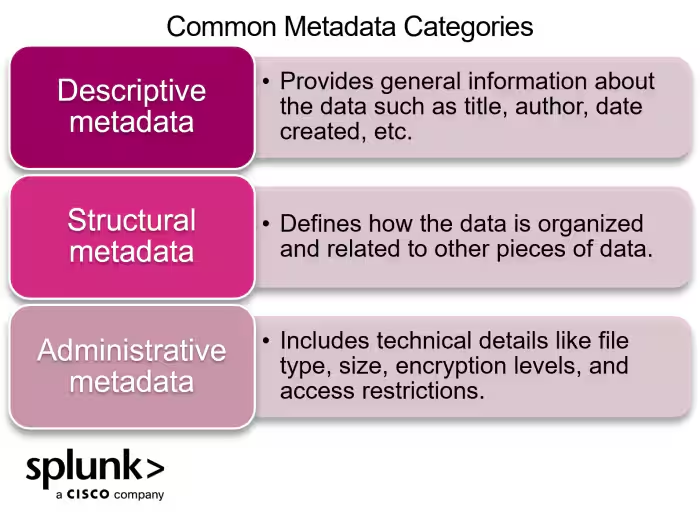
Metadata can be divided into three main categories:
- Descriptive metadata provides general information about the data such as title, author, date created, etc.
- Structural metadata defines how the data is organized and related to other pieces of data.
- Administrative metadata includes technical details like file type, size, encryption levels, and access restrictions.
Simple examples of metadata include file size, format, creation date, and author.
Just like a library's catalog system helps you locate books efficiently, metadata helps in organizing and retrieving data quickly within a database. Effective metadata management involves capturing and utilizing all these types to ensure data is easily accessible and understandable.
(Related reading: metadata complete guide & common data types.)
Basic metadata management framework
A metadata management framework is a set of processes, policies, and technologies that govern how metadata is managed within an organization. It involves five main components:
- Metadata discovery: This involves identifying and extracting metadata from various sources, such as databases, applications, and documents.
- Metadata collection: This step involves storing the discovered metadata in a central repository, which can be either physical or virtual.
- Metadata governance: This is the process of defining and enforcing policies for metadata usage, access, and quality.
- Metadata storage: This is the actual storage of metadata in a structured and organized manner to facilitate its search and retrieval.
- Metadata distribution: This is the process of disseminating metadata to different users and systems based on their needs.
Having a well-defined framework in place helps organizations manage their data more efficiently, ensure regulatory compliance, and facilitate collaboration among different teams.
Why metadata management matters
Having a good strategy to manage your metadata can be beneficial to organizations. Here are some reasons why good metadata management matters:
Enhances data accessibility
One of the primary benefits of metadata management is improved data accessibility. With well-structured metadata, IT teams can quickly locate and retrieve necessary data, reducing downtime and increasing productivity.
This is particularly important in large organizations storing data across multiple systems and data platforms.
For example, a marketing team may need to access customer data from various sources, including CRM systems, social media platforms, and email marketing software. Having proper metadata management in place can make this process easier and more efficient.
(Related reading: data observability.)
Supports data governance
Data governance is critical to maintaining data quality, compliance, and cybersecurity. Metadata management supports data governance by providing detailed records of data origin, usage, and ownership. Data governance policies will be much simpler to draft out through this added benefit as well.
This transparency is essential for regulatory compliance and for ensuring that data is used ethically and responsibly. This also enables data quality control with the ability to track any changes or updates made to the data.
With the added context to the data being circulated through the organization, data engineers will have a better understanding of data and where it should belong.
Streamlines data integration
Integrating data from various sources is common practice in today's interconnected business environment. Metadata acts as a bridge between disparate data systems, enabling seamless data integration.
Proper metadata management helps to support integration efforts for data through the ease of mapping to:
- BI tools
- Data catalogs
- Data governance tools
Possible challenges and how to overcome them
Data by itself is a tough one to manage. Managing metadata can get even more overwhelming very quickly. These are some of the possible challenges you may face when implementing proper management of your metadata.
Inconsistent metadata standards
One of the biggest challenges in metadata management is the lack of consistent metadata standards across different systems and departments. This inconsistency can lead to confusion and inefficiencies.
To combat this, organizations should establish and enforce a unified metadata standard that can be used across all data assets. To start with, you can use these ready-made frameworks:
- Dublin Core Metadata Initiative (DCMI)
- Data Documentation Initiative (DDI)
- Resource Description Framework (RDF)
These standards may vary across applications, so do try to look for one that matches your data most.
Metadata overload
While having detailed metadata is useful, too much metadata can become overwhelming and difficult to manage. It’s important to strike a balance by capturing only the most relevant metadata attributes.
For example, data profiling is a manual process that doesn't scale well with the number of datasets and is inflexible.
Using automated tools can help in filtering, profiling and maintaining the right amount of metadata without overloading the system.
For example, as mentioned by Gartner, tools with inbuilt machine learning algorithms can provide more automated processing of metadata. This can shorten the first discovery process of learning about what the data is about. With this shortened process, the metadata overload will be lessened.
Keeping metadata up-to-date
Metadata must be regularly updated to remain accurate and useful. However, this can be a time-consuming process, especially in dynamic environments where data is constantly changing.
Implementing automated metadata management tools can help in keeping metadata current without requiring extensive manual effort.
For example, you can use Parse.ly to automate your metadata to update your website metadata periodically. This process is better for search engine optimization (SEO) purposes and can even help track updates through an analytics dashboard.
(Related reading: using Splunk for SEO.)
Best practices for effective metadata management
Let’s review some best practices to help management.
Establish clear policies
The first step towards effective metadata governance is creating clear policies and guidelines for metadata management. These policies should cover aspects such as metadata standards, roles and responsibilities, and procedures for creating and maintaining metadata.
For guidance on what policies should reflect, try to align with the available frameworks for metadata management mentioned previously. Here are some examples and when to use them:
- Dublin Core Metadata Initiative (DCMI): Use this standard for generic data assets, such as documents or web pages.
- Data Documentation Initiative (DDI): Use this standard for research and survey data management.
- Resource Description Framework (RDF): Use this standard for linked data and semantic web initiatives. This standard is good for data with relationships.
Use automated metadata tools
As mentioned earlier, using automated tools can help streamline the process of metadata management. These tools not only save time and effort but also ensure consistency.
To prevent metadata overloading your system, it's best to use tools that allow for customization and filtering of metadata attributes. Tools like Apache Atlas, Atlan, and Collibra provide comprehensive metadata management solutions, including automated metadata discovery, lineage tracking, and compliance monitoring.
Promote a metadata-driven culture
Encouraging a metadata-driven culture within your organization can lead to more effective data management practices. Here are some practical steps to take:
- Provide training and resources to help employees understand the importance of metadata and how to use it effectively.
- Foster collaboration between IT teams, database developers, data engineers, BI analysts, and data stewards to ensure that metadata management is a shared responsibility.
Final words and next steps
Metadata management takes a tremendous amount of effort, but with the rise in applications of data in sensitive matters like AI and federated analytics, having proper metadata management is no longer optional.
To get a head-start with metadata management, consider implementing the best practices we’ve discussed in this article. These will help you establish a solid foundation for your organization's metadata management strategy and ensure that your data assets are accurate, consistent, and up-to-date.
FAQs about Metadata Management
Related Articles

Text Mining: Complete Beginner's Guide

Vulnerabilities, Threats & Risk Explained