Data Stewardship Guide for Modern Enterprises
Learn Austin ChiaThe lifeblood of modern businesses, data drives decision-making, fuels innovation, and shapes customer experiences. But with data growing in volume and complexity, along with increasing regulatory scrutiny, the need for data stewardship has never been more critical.
This guide will walk you through what data stewardship is, its core principles, the roles involved, strategies for implementation, and why it matters for businesses of every size.
We’ll also share practical tools and advice on overcoming challenges.
What is data stewardship?
At its core, data stewardship is about managing and overseeing an organization's data to ensure it is accurate, consistent, secure, and used ethically. It touches every part of the business, from protecting data against breaches to ensuring alignment with laws like GDPR or CCPA.
Why is data stewardship important?
- Regulatory compliance: Governments and industries worldwide are introducing stricter regulations on data usage. Companies that fail to comply risk hefty fines and reputational damage.
- Decision-making accuracy: Clean, high-quality data leads to better, faster, and more reliable business decisions.
- Consumer trust: Mishandling data, not least personal data, can lead to significant customer fallout. Data stewardship demonstrates your commitment to privacy and transparency.
Simply put, good data stewardship is the foundation for ethical, efficient, and future-ready businesses.
Core principles of data stewardship
To enable good data stewardship, you'll need to first understand its core principles. Strong data stewardship starts with adhering to these key principles:
1. Accountability
Every piece of data in your organization should have a clear "owner" responsible for its accuracy, accessibility, and compliance. This eliminates ambiguity and ensures accountability across teams.
This is how accountability can be implemented:
- Assigning data ownership to specific individuals or teams.
- Clearly defining roles and responsibilities for managing data.
- Establishing policies and procedures for handling data.
2. Transparency
Organizations should provide visibility into who is accessing and modifying data. This helps prevent misuse and builds trust with both internal stakeholders and external customers.
This promotes collaboration, trust, and consistency.
Here are some ways to ensure transparency:
- Providing visibility into how data is collected, stored, and used.
- Implementing clear communication channels for sharing updates on data management processes and decisions.
- Making all relevant data accessible to those who need it in a secure manner.
3. Data quality
High-quality data is consistent, accurate, and up to date. Implementing rigorous processes for validation and cleansing ensures better outcomes and fewer errors when using data.
Data quality can be improved by:
- Regularly reviewing and updating data collection processes to ensure accuracy.
- Implementing automated validation checks to catch errors early on.
- Cleaning and standardizing data before storing or using it.
- Establishing data quality metrics and regularly monitoring them to identify potential issues.
4. Security and privacy
Data stewardship is incomplete without robust security measures. Organizations must safeguard sensitive information with encryption, access controls, and adherence to privacy laws. Data stewards must work closely with information security teams to implement the necessary measures and ensure compliance.
This can include:
- Identifying sensitive data elements and defining appropriate access levels.
- Regularly auditing data access logs to identify potential breaches or unauthorized access.
- Implementing encryption for data at rest, in transit, and during processing.
- Adhering to privacy regulations such as GDPR, CCPA, HIPAA, etc.
- Conducting regular risk assessments and implementing remediation plans to address any identified vulnerabilities.
Data stewards also play an important role in educating employees on best practices for handling sensitive information. They should establish policies and procedures that outline how data should be handled, used, stored, and disposed of appropriately. These policies should also cover the proper use of any tools or software that handle sensitive data, such as encryption and secure file transfer technology.
5. Ethical use of data
Businesses must ensure that data practices align with ethical guidelines, particularly when using customer or employee information. This means being transparent about what data is being collected, how it will be used, and obtaining informed consent from individuals before using their data. Companies must also ensure that data is not being used in a discriminatory or harmful manner.
In addition to ethical considerations, businesses should also adhere to legal regulations such as the General Data Protection Regulation (GDPR) in Europe and the California Consumer Privacy Act (CCPA) in the United States. These laws outline specific requirements for handling personal information and give individuals certain rights over their own data.
Your organization can also demonstrate ethical use of data by regularly communicating with your customers about their privacy policies and providing options for individuals to control how their data is used.
These principles create a solid foundation for any data stewardship initiative.
Roles and responsibilities in data stewardship
Effective data stewardship relies on assigning specific roles across your organization. Here are three key roles to define:
1. Data owners
These are usually senior-level individuals responsible for specific data domains, such as finance or customer records. Their job is to define access policies, outline compliance goals, and oversee data-related decision-making.
2. Data custodians
Data custodians are typically IT professionals tasked with managing data storage systems, backups, and security measures. They ensure the technical environment supports stewardship objectives.
3. Data stewards
This individual or group acts as the bridge between business and IT. They ensure that data governance policies are implemented daily, addressing issues like data integrity and consistent formatting.
For smaller organizations, these roles may overlap. Larger enterprises should assign separate individuals to ensure clear ownership.
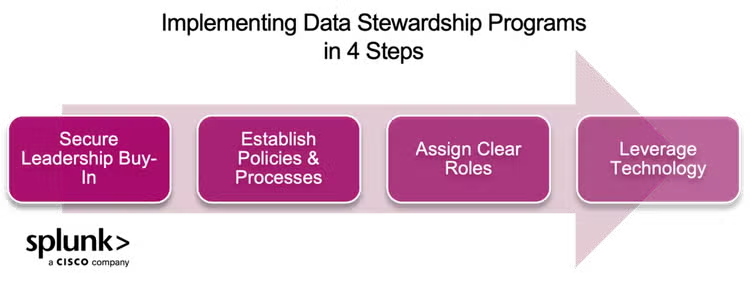
Strategies for implementing data stewardship programs
Step 1: Secure leadership buy-in
To make implementation smoother, you'll have to introduce the value of data stewardship to senior executives by focusing on its benefits, such as regulatory compliance, cost-cutting, and improved decision-making.
Step 2: Establish policies and processes
Your next step would be to set some guidelines for data access, processing, and sharing. Make these policies accessible to all employees and ensure regular training.
Step 3: Assign clear roles
Data stewardship requires a clear definition of roles. In this step, define the data owner, custodian, and steward roles we discussed earlier. Provide them with adequate resources and authority to carry out their responsibilities.
Step 4: Leverage technology
The process of data stewardship can be tedious. Use automation to help with time-consuming tasks (like data cleaning) with tools that enhance governance and stewardship. We’ll recommend specific solutions in the next section.
Benefits of data stewardship
1. Improved data accuracy
Data stewardship minimizes errors by ensuring consistent, high-quality data across the organization. This leads to more reliable business insights.
A higher level of data accuracy can be highly beneficial to applications in AI and machine learning, which rely on accurate data to produce meaningful results.
2. Regulatory compliance
With adherence to data privacy laws and governance policies, stewardship protects your organization from costly lawsuits or fines. This creates a sense of trust and security for both internal employees and external customers.
Data stewardship also assists in risk management by identifying potential risks associated with data usage and implementing measures to mitigate them. This helps organizations avoid reputational damage or financial losses due to non-compliance.
3. Enhanced efficiency
Well-organized data reduces duplication, speeds up processing, and allows applications to run seamlessly, ultimately saving time and reducing costs.
4. Customer trust
Having data in good custody can also boost customer trust. By showing that your organization takes care of its data and respects their privacy, it can establish a positive image and build long-term relationships with customers.
Navigating common challenges of data stewardship
Every initiative has hurdles. Here are some common challenges in data stewardship—and how to address them:
Challenge 1: Lack of awareness
Many employees don’t know why data stewardship matters or how to support it. This lack of awareness is especially true in companies without data-driven cultures.
Solution: Provide regular training programs and clear documentation to educate employees at all levels about the importance of data stewardship and how they can contribute to it. Consider creating training programs or hosting informational sessions to increase awareness and understanding.
Challenge 2: Resistance to change
Teams accustomed to old processes may resist adopting new frameworks. This resistance can come from management, employees, or a combination of both.
Solution: Address resistance to change by involving and engaging employees in the process early on. This can include soliciting feedback, holding open discussions, and addressing concerns transparently. Communicate the benefits and potential positive impact of the new framework to gain buy-in from all levels of the organization.
Additionally, provide support and resources to help ease the transition for those who may struggle with adapting to the changes. Celebrate successes and recognize team members who embrace the new framework as champions of change.
For example, employees can be given a chance to demonstrate the long-term benefits of streamlined data practices through pilot programs and quick wins.
(Related reading: change management).
Challenge 3: Data silos
Data silos can prevent teams from accessing enterprise-wide insights. This can lead to duplicated efforts, conflicting data, and a lack of collaboration among teams.
Solution: To address this challenge, organizations should implement a robust data governance framework that breaks down these silos and promotes cross-functional collaboration.
A data governance framework defines the policies, procedures, and standards for managing an organization's data assets. It also outlines roles and responsibilities for various stakeholders involved in handling data.
Tools and technologies for data stewardship
Integrating the right tools can make or break your data stewardship efforts.
Here are some popular options:
- Alteryx – Ideal for data preparation and analytics.
- Collibra – A comprehensive platform for managing data governance.
- Snowflake – Cloud-based data warehousing for seamless collaboration.
- Tableau – Powerful visualization tools for interpreting data trends.
- IBM DataOps – A solution designed specifically for improving data quality.
Each tool addresses specific stewardship challenges. For instance, Alteryx helps with data preparation and analytics, while Collibra focuses on overall governance. Snowflake is ideal for seamless collaboration between teams working on the same data, while Tableau offers powerful visualization tools for interpreting data trends. IBM DataOps aims to improve data quality, which is crucial for effective stewardship.
Other popular options include:
- Informatica – A comprehensive platform for managing all aspects of enterprise data.
- SAS data management – Offers a wide range of capabilities for data integration, cleansing, and quality control.
Data stewardship is a long-term investment
Data stewardship is becoming increasingly critical as organizations adapt to the rapidly evolving landscape of data management. With the proliferation of data sources and the rise of AI, it is essential to have a well-defined data stewardship strategy in place.
Investing in a robust data stewardship program can lead to significant benefits for an organization, including improved decision-making, increased efficiency and cost savings, and enhanced regulatory compliance. However, data stewardship is not a one-time project but rather a continuous effort that requires ongoing investment and resources.
Organizations should start developing their data stewardship program today to ensure they are equipped to manage their data effectively in the future.
FAQs about Data Stewardship
Related Articles

Network Optimization: How To Optimize Network Performance

What Is DevX/DevEx? Developer Experience, Explained