Transforming Government: State Legislatures Drive Efficiency and Combat Fraud with Splunk
Industries Tina CarkhuffAcross the United States, state governments are intensifying their commitment to enhancing efficiency, eliminating waste, and rigorously combating fraud, waste, and abuse (FWA) within public programs. From coast to coast, state legislatures are establishing new committees, task forces, and dedicated offices, all aimed at streamlining operations and safeguarding precious taxpayer dollars. Central to these critical initiatives is a burgeoning reliance on advanced data analytics, with platforms like Splunk proving indispensable in transforming raw data into actionable insights.
State-Led Initiatives: A Focus on Efficiency
Nearly a dozen states have recently launched or significantly expanded initiatives focused on government efficiency. These comprehensive efforts include:
- Conducting thorough analyses of agency budgets, recommending fiscal reforms, and identifying systemic efficiencies across all levels of state government.
- Streamlining state operations, eliminating inefficiencies, meticulously reviewing expenditures, and developing strategic recommendations to optimize overall government performance.
- Targeting social services to enhance service delivery and eliminate redundancies within critical agencies such as Medicaid and Child Protective Services.
- Reducing regulatory burdens, advising agencies on best practices, and decreasing spending through the strategic adoption of emerging technologies like Artificial Intelligence (AI) and automation.
These initiatives are part of a broader, bipartisan movement to ensure that every taxpayer dollar is spent wisely and that government programs are delivered as efficiently as possible.
The Persistent Threat: Combating Fraud, Waste, and Abuse
Fraud, waste, and abuse (FWA) continue to pose significant and costly challenges for state governments. Recent statistics underscore the alarming scale of this issue: since April 2021, unemployment insurance fraud alone has resulted in estimated losses ranging from $100 billion to $135 billion. Beyond unemployment, vital programs such as Medicaid, SNAP benefits, and state pension funds are consistently targeted by fraudulent schemes.
Traditional, reactive approaches—relying on manual audits, whistleblower tips, and post-incident investigations—are proving insufficient. Fraud is often detected only after substantial financial losses have occurred, severely hindering efforts to recover funds and protect public resources.
Splunk: Transforming Fraud Detection and Government Operations
Splunk's powerful data analytics platform is fundamentally transforming how state governments approach FWA, enabling a crucial shift from reactive responses to proactive detection and prevention. By centralizing and correlating vast datasets from disparate sources, Splunk empowers agencies to identify anomalies and suspicious patterns in real-time—critically, before payments are made or losses escalate.
Key Ways Splunk Drives Efficiency and Security:
- Unified Data Analytics: Splunk consolidates data from diverse systems—including financial transactions, program eligibility records, and case management tools—into a single, searchable platform. This unified view allows investigators to swiftly identify irregularities and take decisive action.
- Advanced Machine Learning and AI: Splunk's integrated machine learning capabilities automatically detect unusual behaviors and flag potential fraud with high precision. Recent enhancements, such as the integration of large language models (LLMs), democratize access to these powerful tools, empowering non-technical users and expanding the reach of fraud detection efforts across staff.
- Real-Time Alerts and Intuitive Dashboards: Splunk delivers dynamic, real-time dashboards that instantly alert investigators to suspicious activity. This immediate notification capability enables rapid response, dramatically reducing investigation times from days or weeks to mere minutes.
- Seamless Case Management Integration: Splunk seamlessly integrates with leading case management systems, facilitating comprehensive tracking of investigations, secure sharing of critical intelligence, and coordinated responses across various departments.
Tangible Results: Real-World Impact
State legislatures are increasingly recognizing the value of advanced analytics in their efficiency and anti-fraud efforts. For example:
- Securing Unemployment Insurance, SNAP, and Medicaid: Splunk's robust analytics are instrumental in detecting fraudulent claims, identity theft, and improper payments across a wide spectrum of state programs. Through automated detection and alerting, agencies can intervene swiftly, preventing significant financial losses.
- Fostering Cross-Agency Collaboration: Functioning as a vital "fusion center," Splunk enables seamless data and intelligence sharing among agencies. This enhances operational streamlining and ensures coordinated, effective responses to intricate fraud schemes.
- Combatting Property Tax Fraud: Splunk empowers local governments to transcend traditional periodic audits and manual reviews. By analyzing payment histories, ownership changes, and other relevant data in real time, this proactive methodology has already secured millions in previously lost revenue.
Paving the Way: The Future of Government Efficiency
As state legislatures continue to champion efficiency and accountability, the indispensable role of advanced data analytics will only expand. Splunk stands as a cornerstone tool for modernizing government operations, significantly reducing waste, and rigorously protecting public resources. By harnessing advanced analytics, machine learning, and real-time monitoring, states can ensure the judicious expenditure of every dollar, proactively detecting and halting fraud, waste, and abuse before they inflict harm.
Looking ahead, the most impactful government efficiency initiatives will be those that cultivate a pervasive culture of data-driven decision-making and seamless collaboration. By dismantling organizational silos and empowering teams with real-time insights, state agencies can achieve more than just loss prevention; they can fundamentally enhance service delivery and cultivate deeper trust with the communities they proudly serve. In this rapidly evolving landscape, technology like Splunk transcends its role as a mere tool—it emerges as a powerful catalyst for building smarter, more accountable, and ultimately, more resilient government.
Related Articles
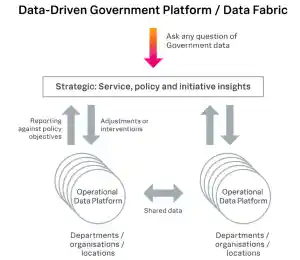
Sharing a Vision for Data-Driven Government - a New Splunk Whitepaper

Navigating the Future: The New Cyber Security Risk Management Construct (CSRMC)