From Data to Delivery: How Splunk Powers Proactive Supply Chain Management
Industries Young ChoIn today’s fast-paced supply chain operations, seamless communication between stakeholders — suppliers, manufacturers, logistics providers, and retailers — is more critical than ever. At the heart of this communication is Electronic Data Interchange (EDI), a tool that automates the flow of business-critical information. By eliminating manual intervention, EDI ensures the speed and accuracy required to keep supply chains efficient.
However, the success of EDI depends significantly on the reliability of supply chain systems, applications, and services. This is why businesses must proactively monitor EDI transmissions and acknowledgments to ensure that critical documents are sent and received without delays or errors. A disruption in these transmissions can lead to costly consequences, including operational slowdowns, stock shortages, or delayed payments. Let's dive into why monitoring these systems is crucial and how doing so can help the smooth functioning of your supply chain. This is where Splunk Enterprise and Splunk Cloud Platform emerges as an innovative and powerful solution for modern supply chain operations.
Supply Chain and EDI Challenges
To illustrate the importance of monitoring EDI transmissions and proper processing of EDI transactions, let’s explore a real-world scenario within a supply chain operation:
Scenario: Shipment Delays and Inventory Shortages
- A major retailer relies on EDI to communicate with its manufacturer for seamless procurement and order fulfillment.
- The retailer sends out EDI purchase orders (a 850 request) to a manufacturer, asking for a large shipment of goods to replenish inventory across multiple warehouses.
- The manufacturer receives the order, processes it, and sends an advance shipment notice (856) back to the retailer, confirming the goods are en route.
- However, due to a technical issue, the retailer’s system fails to send a functional acknowledgement (997) to the manufacturer to confirm receipt of the shipment notice.
- The manufacturer, unsure whether the order and shipment notice were successfully received, holds off on further communication, delaying the delivery.
- Meanwhile, the retailer’s inventory begins to run low, especially on high-demand products.
- Customers place orders online, but the fulfillment system lacks real-time data on incoming shipments. This creates confusion, as the retailer can't provide accurate delivery estimates, leading to stockouts, backorders, and frustrated customers.
Ensuring reliable EDI communication is crucial for smooth supply chain operations. In this case, a retailer's failure to send a functional acknowledgment (EDI 997) to a manufacturer caused delayed shipments, leading to low inventory, stockouts, and customer frustration. This highlights the need for seamless EDI exchanges to avoid disruptions and maintain efficient procurement and order fulfillment.
The primary focus of monitoring EDI transactions and acknowledgments is to maintain the flow of supply chain documents. Key areas to track include:
- Monitor key supply chain operational performance: Track the status and performance of each EDI throughout the entire order-to-cash cycle. From processing purchase orders and product planning to shipments and inventory management, EDI provides visibility into every stage. It not only helps organizations identify physical bottlenecks in processes but also uncovers system-level errors and disruptions, allowing for quicker resolution.
- Transmission Success: Ensure that vital documents such as purchase orders (850), invoices (810), advance shipment notifications (856), and order confirmations (855) are sent and received correctly. These documents keep the supply chain moving, and any failure in their transmission can cause significant operational delays.
- Acknowledgment Receipts: Monitoring acknowledgment documents, particularly the 997 functional acknowledgment, confirms the receiving system has successfully processed the transmitted document. Without timely acknowledgment, potential issues like miscommunication or transmission failures can escalate into major operational bottlenecks.
While monitoring EDI systems is necessary, handling the vast amount of data and unstructured information involved in supply chain operations can be challenging. This is where Splunk data platform offers a transformative advantage.
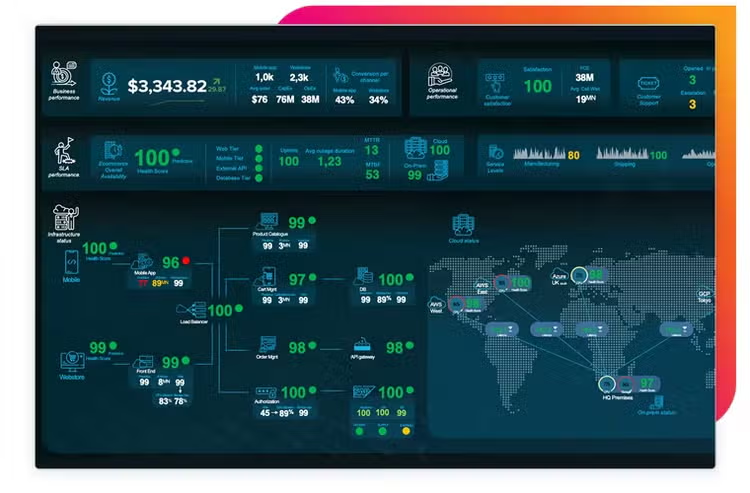
Why Splunk is the Right Solution for EDI Monitoring
Introducing Splunk’s Supply Chain Visibility and Optimization Solutions Accelerator, designed to empower organizations with real-time insights into their supply chain operations. By leveraging advanced analytics, this solution provides end-to-end visibility across key processes, from procurement to delivery, helping to identify potential disruptions, optimize workflows, and ensure timely order fulfillment. With tailored dashboards and guided analysis, businesses can enhance decision-making, improve supplier coordination, and drive operational efficiency throughout their supply chain. Learn more about the "Supply Chain Visibility and Optimization Solutions Accelerator" here.
Splunk’s capabilities make it a game-changer for businesses looking to enhance their EDI monitoring and supply chain processes. Here’s how Splunk stands out as a leading solution for managing and analyzing EDI transmissions:
Unmatched Data Flexibility
Splunk has the ability to process unstructured and dynamic structured log and metric time series data in its original form. Traditional systems often require pre-structuring of data before analysis, which can be time-consuming and complex. Splunk removes this barrier by quickly structuring analytical models directly from raw data, allowing you to conduct in-depth analyses without spending time on tedious data preparation. This agility means that organizations can save valuable time and deliver insights immediately, streamlining decision-making processes in real-time.
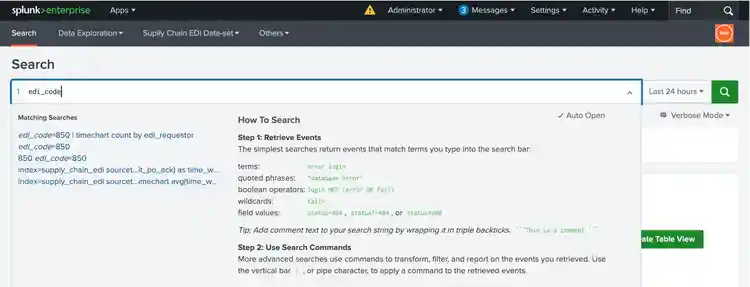
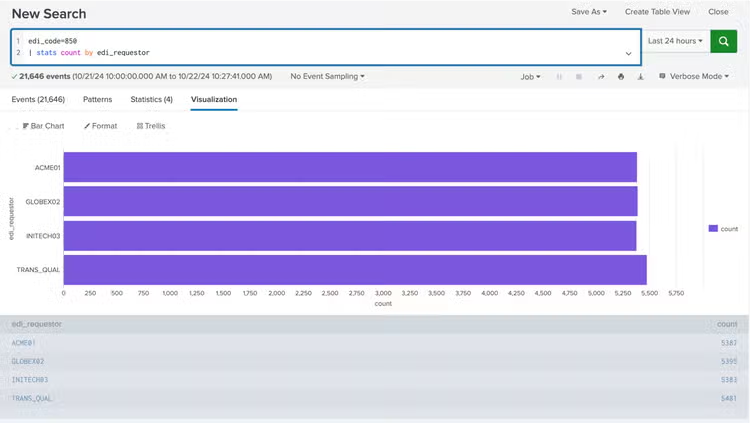
Advanced Event Correlation Without Complexity
Supply chains involve countless moving parts, from inventory management to logistics, and Splunk excels at handling the complicated events that occur within these processes. Splunk can efficiently join and correlate unstructured data across systems, making it possible to derive advanced insights without the need for extensive development or custom code. This ease of use empowers businesses to detect anomalies, identify risks, and respond to potential issues faster—leading to a more resilient supply chain with minimal operational disruptions.
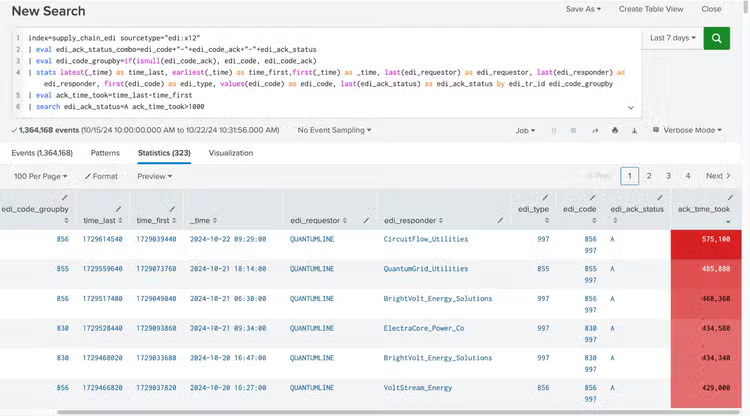
Processing and Massive Data Processing
One of Splunk’s most powerful features is its ability to process massive amounts of data in near real-time—whether from EDI systems, applications, or even physical business processes. This near real-time processing capability allows businesses to gain instant insights into potential supply chain issues, enabling them to act proactively and avoid disruptions before they escalate. With Splunk’s advanced analytics, organizations can continuously monitor the status of EDI transmissions, instantly detect failures or delays, and take immediate action to prevent operational breakdowns.
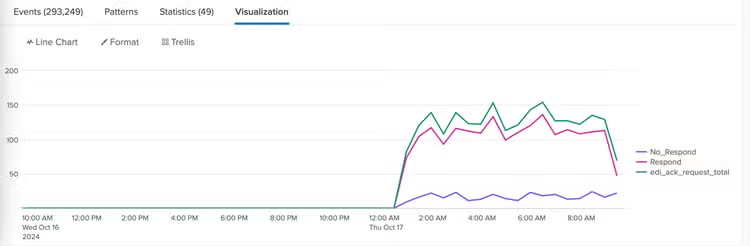
Benefits of Using Splunk for EDI Monitoring
- Ensuring Data Integrity with Ease: Splunk’s flexibility in processing unstructured data ensures that key documents, such as orders, shipping updates, and invoices, are correctly transmitted and validated in near real-time. This reduces the risk of manual errors and ensures that supply chain operations run smoothly.
- Preventing Operational Delays: By correlating events across multiple systems, Splunk quickly identifies potential delays in document transmissions or acknowledgment receipts. Whether it's a delayed purchase order or a missing acknowledgment, Splunk’s insights allow businesses to respond immediately, preventing disruptions in production or logistics.
- Minimizing Financial Risks: Splunk’s ability to monitor EDI documents such as invoices and shipment notifications in near real-time ensures that no delay goes unnoticed. This proactive approach reduces the risk of late payments, missed delivery windows, and inventory imbalances—all of which could have serious financial repercussions.
- Compliance and SLA Adherence: Many industries have strict guidelines for processing and acknowledging EDI documents within specified timeframes. Splunk’s real-time monitoring ensures that businesses stay compliant with these regulations, avoiding costly penalties and maintaining strong business relationships.
Conclusion: Why Splunk is Essential for Supply Chain Success
In the evolving landscape of supply chain management, EDI remains a critical component in ensuring the timely flow of business documents between trading partners. However, the complexities involved in monitoring and managing these transmissions require a solution that offers flexibility, real-time analytics, and advanced data correlation—Splunk delivers all of these and more.
Splunk’s real-time streaming analytics provides businesses with the ability to quickly process, analyze, and act on EDI data, regardless of format or system. This empowers organizations to maintain supply chain continuity, prevent operational disruptions, and respond to issues before they escalate.
For businesses looking to enhance their EDI monitoring processes and secure a competitive edge, Splunk offers the powerful insights and advanced analytics needed to keep supply chains running smoothly and efficiently.
Ready to optimize your EDI transmissions with Splunk’s advanced analytics? Learn more about the "Supply Chain Visibility and Optimization Solutions Accelerator."
Related Articles

Predictions 2023: Data Investments Will Pay Off for the Public Sector

Short Staffed? Try Using SOAR to Augment Your Security Team