The Art of the Possible: Saving Tigers and Elephants with AI
Global Impact Ewald MunzTackling Wildlife Poaching in the Jungles of Southeast Asia
Learn how Artificial Intelligence (AI) can save some of the planet’s most iconic animals
This blog is based on a conversation between WWF and Cisco/Splunk regarding wildlife conservation challenges and how AI can help address those, particularly in Southeast Asia.
The dream team behind the vision:
WWF Singapore
- Rohit Singh, Senior Director Field Conservation and Wildlife Policy
- Natalie Munz, AI Projects Intern
Cisco/Splunk
- Frank Nebgen, Leader Country Plan Execution, CDA & Sustainability
- Lukas Utz, Global Solution Architect AI/ML
- Harini Aravind Raman, Sustainability Working Student
- Ewald Munz, Head of Manufacturing, Automotive and Sustainability EMEA
The Wildlife Crisis and How AI Could Help
Due to widespread poaching and habitat loss, wildlife population is declining globally. According to WWF’s Living Planet Report 2024 the average size of wildlife populations on a global level has decreased by 73% since the 1970s.
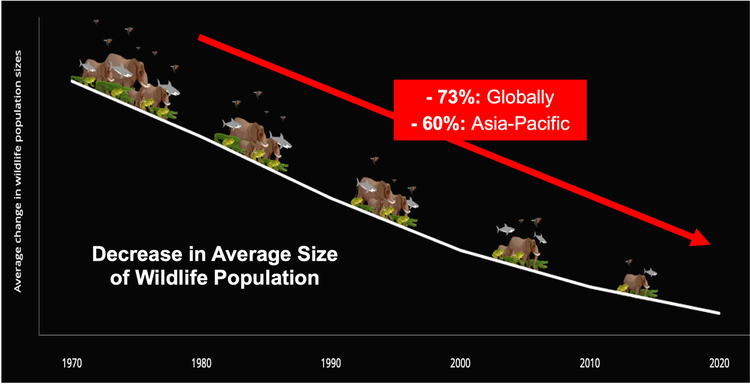
In Asia, home to many biodiversity hotspots, the decline is 60%. Tigers are now considered extinct in Cambodia, Laos, and Vietnam, and species like Asian elephants are under pressure due to poaching and habitat destruction.
Wildlife poaching in Southeast Asia remains at critical levels, driven by high demand for exotic pets, bushmeat, and luxury products. Every part of the tiger, from whiskers to tail, is traded for use in traditional medicine, as status symbols, and as trophies.
A new development is the illegal trade of elephant skin to treat ailments like arthritis, despite zero scientific proof of any medicinal benefit.
Source: National Geographic
However, the most pervasive and invisible threat today is snaring. An estimated 12 million snares currently litter protected areas in Cambodia, Laos, and Vietnam, according to the WWF study Halting Southeast Asia's Snaring Crisis. These "silent killers" are creating the "Empty Forest Syndrome," a devastating state where the trees remain standing but the biodiversity within them has been biologically hollowed out.
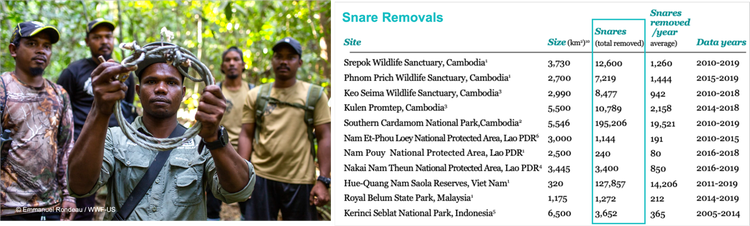
Poachers often use cheap, easy-to-make poaching snares, which can devastate wildlife populations. To address this, patrolling alone is no longer enough. Impactful conservation now depends on turning field data into actionable intelligence. Leveraging AI could empower park authorities, rangers and communities with next-gen tech solutions to improve data-driven decision-making by enhancing monitoring systems, optimizing patrol routes, predicting poaching hotspots and by increasing the efficiency of existing efforts.
Beyond enforcement, AI can mitigate human-wildlife conflict by providing early warnings to local communities. This proactive approach can build vital trust, turning potential conflict into a powerful partnership for conservation.
The Role of World Wide Fund for Nature (WWF)
WWF has been working across the region to address poaching by supporting government agencies in the effective and responsible implementation of law‑enforcement measures, empowering Indigenous Peoples and local communities, and strengthening biodiversity monitoring systems and use of innovative technology.
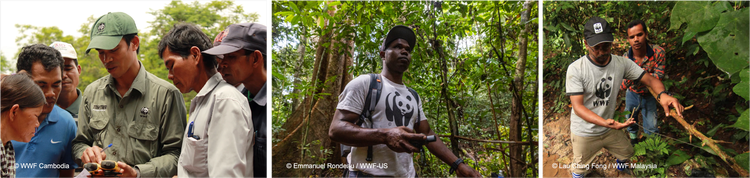
One of the key initiatives which WWF supports is the implementation of the Spatial Monitoring and Reporting Tool (SMART). SMART is an adaptive management platform developed and maintained over the past 11 years by a coalition of eight leading international conservation NGOs. It has become the world’s most widely adopted conservation area management tool, used by tens of thousands of conservation practitioners at more than 1,200 sites globally.
However, limited resources both in terms of capacity and personnel continue to constrain the full effectiveness of SMART. By integrating machine learning (ML) and AI with adequate on‑the‑ground capacity and support, data generated from SMART and other sources can be transformed into powerful insights that help allocate scarce resources to the right places. This has the potential to enhance conservation effectiveness and help strengthen frontline protection efforts.
The Vision: From a SOC (Security Operations Center) to a WOC (Wildlife Protection Operations Center)
Splunk has been named a Leader in the Gartner® Magic Quadrant™ for Security Information and Event Management (SIEM) for 11 consecutive years (2015–2025), confirming its sustained leadership in threat detection, investigation, and incident response.
The Cisco/Splunk best practices from a state-of-the-art SOC (Security Operations Center) could be adapted to a WOC (Wildlife Protection Operations Center) when it comes to threat detection, investigation, and incident response for Southeast Asia’s wildlife.
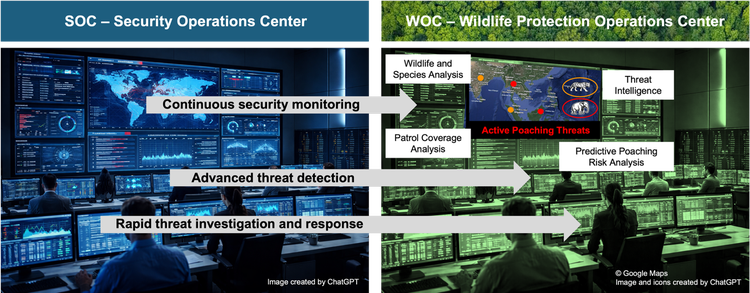
Potential use of ML/AI in a WOC, effectively addressing poaching
- Could provide real-time poaching threat detection, investigation and incident response with intuitive dashboards based on the Splunk data platform and the Splunk AI Toolkit
- Could enhance the existing SMART solution with advanced predictive capabilities based on ML/AI
- Could optimize ranger deployment with data-driven decision making, e.g. to prioritize identified poaching hotspots with intensified patrols
The Art of the Possible
Functional, real-world applications for wildlife protection:
- Endangered Species Intelligence: Dedicated tracking of priority species sightings with historical trends, location patterns, and last-seen timestamps—giving conservation managers visibility into where and when critical species are active
- Coverage Efficiency Scoring: A quantitative metric that identifies patrol gaps by analyzing which zones have threat activity but insufficient ranger presence, helping to target resource allocation
- Automated Patrol Recommendations for Poaching Hotspots: The system identifies zones requiring immediate attention and suggests which ranger station should deploy, prioritized by threat density and endangered species activity
- AI-Generated Executive Briefings: Natural language summaries powered by the Splunk AI Toolkit that synthesize complex patrol data into actionable three-sentence briefings—no data science expertise required
- Human-Wildlife Conflict Mitigation: Predictive modelling of animal movements near human settlements to provide early warnings. This could protect crops and livelihoods, fostering stronger partnerships between park authorities and local communities

(Disclaimer: For illustrative purposes only)
______________
With a platform like Splunk, we can apply the same analytical techniques that protect enterprise networks to protecting endangered wildlife—pattern recognition, predictive modelling, and AI-generated recommendations that turn historical observations into actionable patrol strategies.
— Lukas Utz, Global Solution Architect AI/ML, Cisco/Splunk
______________
Why Tech Alone is Not Enough: The Value of Rangers and Social Media
Technology can provide powerful tools for wildlife protection, but they are not enough on their own. Wildlife protection ultimately depends on people, especially rangers, who serve as the frontline guardians of nature.
However, their scope of work is ever-increasing, ranging from anti-poaching responsibilities to managing human-wildlife conflicts. In addition, many Protected and Conserved Areas (PCAs) across Southeast Asia lack sufficient, well-trained and well-equipped rangers to effectively address biodiversity loss, making it extremely challenging to monitor and protect vast forest landscapes. This shortage of skilled personnel limits the ability to address threats of deforestation, safeguard wildlife, maintain ecosystem integrity, and protect the resources that people depend on.
______________
— Rohit Singh, Senior Director Field Conservation and Wildlife Policy, WWF
______________
As such, amplifying the critical value of rangers is essential. In this context, platforms like Instagram, Facebook, YouTube, TikTok and others host millions of posts every day that shape public sentiment, influence behaviors, and spark real-world conversation about rangers.
Therefore, social media can play a key role by raising awareness, supporting recruitment, providing recognition, building public and government support, and highlighting the human stories behind wildlife protection efforts. By sharing authentic stories, videos, and ranger voices, social media can help build respect, emotional connection, trust, and ultimately support new policies. Check out the story of the Vietnamese ranger and elephant enthusiast Thien Le Quoc.
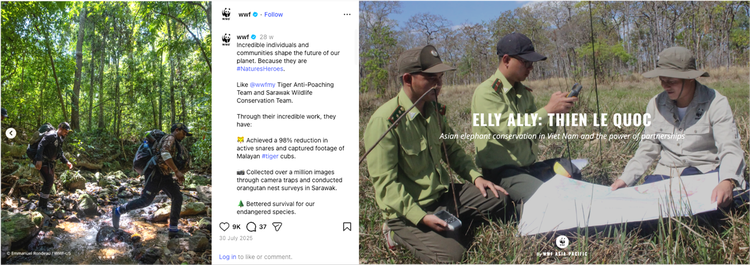
Source: Instagram Source: WWF Asia-Pacific
Beyond awareness, social media can potentially mobilize global communities to support ranger training, wellbeing, and long-term conservation efforts. It can also correct misconceptions about the profession and highlight career pathways.
______________
— Natalie Munz, AI Projects Intern, WWF Singapore
______________
Outlook
There are many levers needed to tackle wildlife poaching in the jungles of Southeast Asia. One of the most effective, albeit most difficult levers is to reduce the demand for wildlife products which derives from deep-rooted beliefs and traditions.
On the other hand, leveraging new technologies such as AI is an easy task in comparison. The availability of critical data, the transformation of best practices from a SOC to a WOC, and ultimately the opportunity to scale such AI-driven solutions could empower rangers in their daily work.
However, tech alone is not enough—conservation needs enough well trained and equipped rangers. In addition, the value of rangers as the guardians of nature needs to be amplified, and social media can be a strategic tool to achieve this goal.
Look out for the upcoming yearly World Ranger Day on July 31, 2026, to commemorate rangers and to celebrate the work rangers do to protect the planet’s natural treasures and cultural heritage.