Building a Trusted Autonomous SOC Beyond Human Scale
Security Abhik MitraKey takeaways
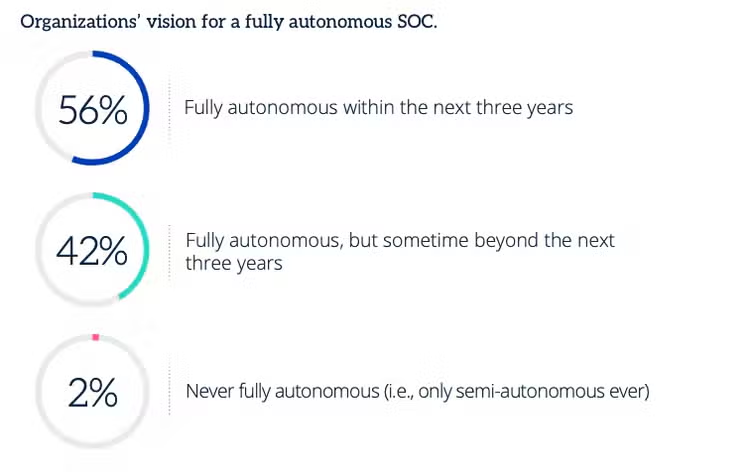
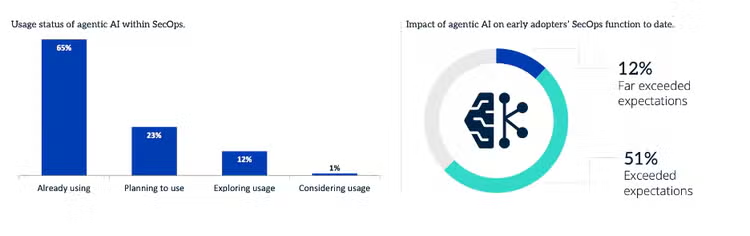
- 56% of organizations believe they can achieve a fully autonomous SOC within three years. 65% are already using agentic AI in security operations.
- The future isn't about replacing analysts. It's about scaling security operations beyond human capacity.
- The Agentic SOC provides the architecture. The Autonomous Workforce provides the operating model. Together, they enable the Trusted Autonomous SOC.
The Autonomous SOC Is Real – And Closer Than You Think
For years, the autonomous SOC felt like a future vision.
Today, it's becoming a reality.
According to new Omdia research, 56% of organizations believe they can achieve a fully autonomous SOC within the next three years, while 65% are already using agentic AI in security operations.
The conversation has shifted from if autonomous security operations are possible to how organizations can make them a reality.
The Challenge Isn't Efficiency. It's Scale.
Security teams are facing a simple problem: the volume, velocity, and complexity of threats are growing faster than teams can keep up.
Organizations can't hire their way out of the challenge.
They need a new approach that allows security operations to scale beyond human capacity.
That's why organizations are turning to AI—not to replace analysts, but to help them analyze more data, investigate more threats, and respond faster than manual processes ever could.
The Agentic SOC Is the Architecture
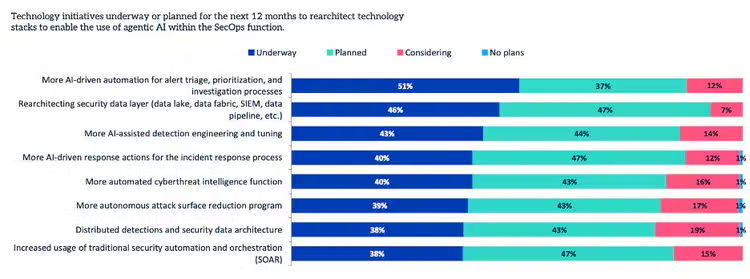
The research shows that organizations aren't just deploying AI. They're modernizing the foundations that make autonomy possible.
That starts with the Agentic SOC.
An Agentic SOC brings together:
- Trusted Data
- Security Analytics
- Unified Operations
- Governed Automation
Together, these capabilities create the foundation for security operations that can move faster, adapt continuously, and operate at machine speed.
The Autonomous Workforce Is the Operating Model
The future of security operations isn't human versus AI.
It's humans and AI working together.
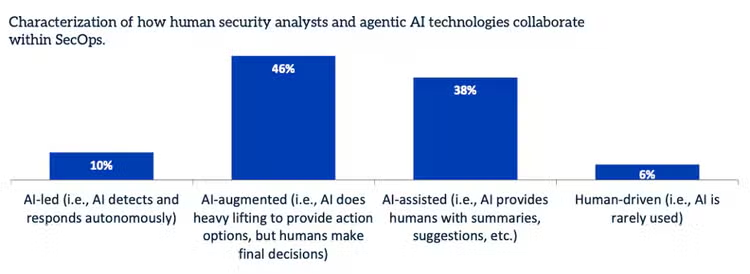
In fact, 84% of organizations describe their approach as AI-assisted or AI-augmented rather than fully autonomous.
This is the Autonomous Workforce: AI agents handling repetitive and time-consuming tasks while human analysts focus on judgment, investigation, and decision-making.
The result is greater scale, consistency, and resilience without requiring organizations to continuously add headcount.
The Destination: A Trusted Autonomous SOC
The research makes one thing clear: organizations want autonomy, but they want it responsibly.
Trust, transparency, explainability, and human oversight remain essential requirements for expanding AI-driven operations.
That's why the destination isn't simply an autonomous SOC.
It's a Trusted Autonomous SOC.
One where trusted data, security analytics, unified operations, and governed automation work together to help security teams operate beyond human scale.
The Agentic SOC provides the architecture.
The Autonomous Workforce provides the operating model.
And together, they make the Trusted Autonomous SOC possible.
The dream is no longer theoretical.
The dream is real.
Related Articles
Cloud SOAR Achieves IRAP Assessment Along With Enterprise Security 8.0, DMX Edge Processor & Federated Search S3

Staff Picks for Splunk Security Reading August 2024