Turn Metric Usage Insights Into MTS Savings
Observability Courtney GannonUsage Analytics estimates where aggregating unused dimensions or removing unused metrics could reduce MTS—and helps you take the next step with rule recommendations.
From Usage Data to a Clearer Opportunity
Knowing how metrics and dimensions contribute to metric time series (MTS) usage is useful. But contribution alone does not always show which changes could reduce usage most effectively, especially for metrics teams still rely on and for individual dimensions.
Metrics Rule Recommendations adds a Potential MTS reduction indicator on every Usage Analytics page, helping teams compare opportunities and decide where to focus their review.
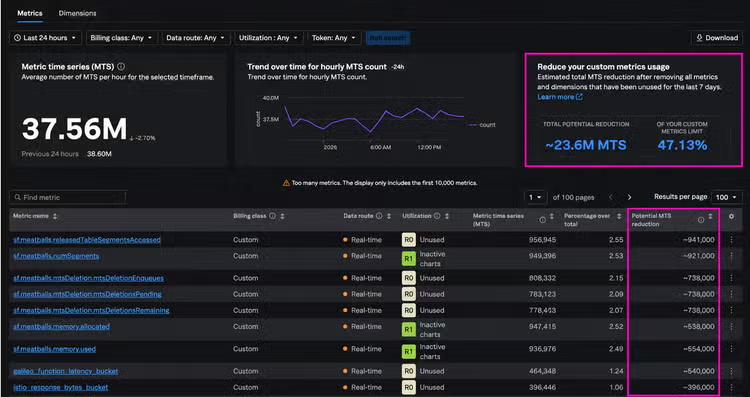
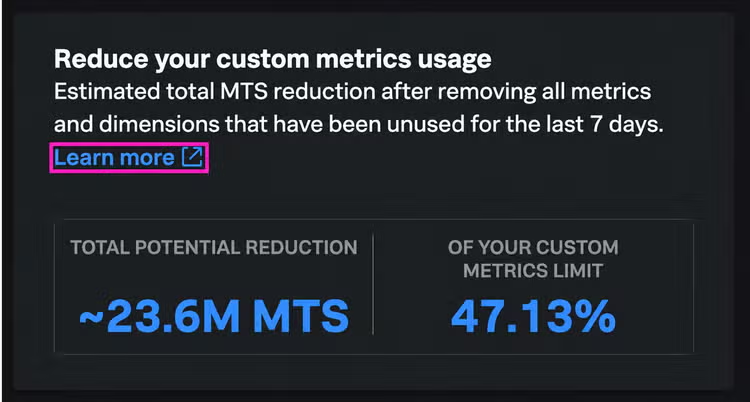
Additionally, the Learn more link on the main Metrics page opens a practical guide that recaps the steps and best practices for optimizing custom metric usage and reducing costs.
Understand the Potential Impact
The estimates show the potential impact of different optimization opportunities:
- For unused metrics: the potential reduction from archiving or dropping them.
- For metrics that remain in use: the potential impact of aggregating their unused dimensions.
- For a specific dimension: the potential reduction from aggregating it within one metric or across multiple metrics.
The summary at the top combines the relevant opportunities into a total potential reduction for the current view.
The estimates are based on MTS counts from the last hour, while the previous seven days determine which metrics and dimensions are considered unused. They are intended to help prioritize a review; actual reductions depend on the telemetry and actions selected.
Review and Confirm Before Creating Rules
When you select Create rules in Usage Analytics, Metrics Pipeline Management opens with the relevant metrics or dimensions already prepopulated.
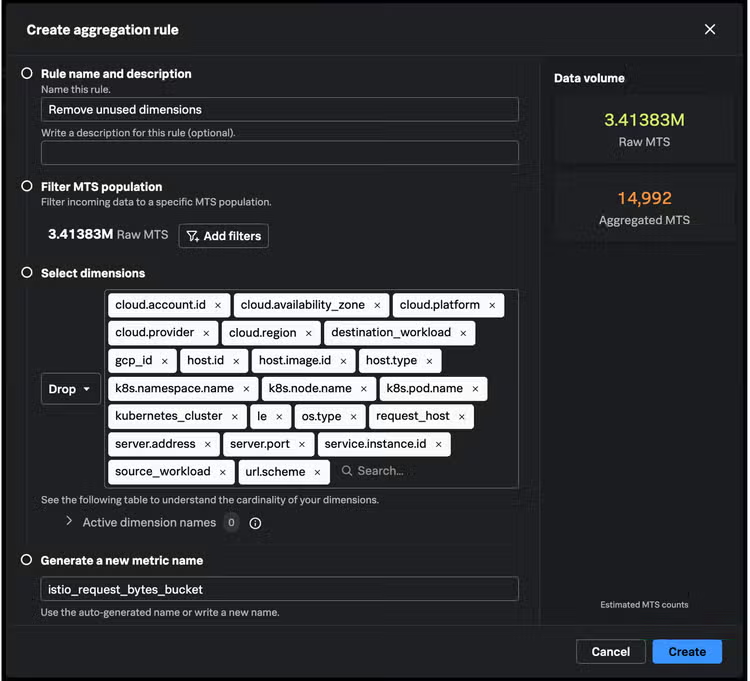
You can review the suggested operations and confirm them before creating a rule. Once the aggregated metric is ready, archive or drop the original metric to realize the reduction. This keeps the analysis close to the action while leaving the final decision with your team.
Make Optimization Easier To Act On
Metrics Rule Recommendations turns usage insights into a more direct cost optimization workflow. Teams can see where aggregation or archival may help, prioritize the opportunities with the greatest estimated impact, and move into rule creation with the relevant data in place.
Not a Splunk Observability Cloud customer? Get your Free Edition of Observability Cloud now. No timed trial. No credit card required. No gated features. Explore all the features of Observability Cloud including Agent Observability and tokenomics.
Related Articles

Active Directory Discovery Detection: Threat Research Release, September 2021

Another Year of RATs and Trojan Stealer: Detection Commonalities and Summary