Accelerate Resolution and Prevent Future Outages with Splunk Observability Cloud
Observability Michael Raich , Vi TranThe digital landscape has transformed dramatically, and with it, the demands on our systems have grown exponentially, requiring tools to move beyond merely knowing "what" is happening to understanding "why" it's happening, and its impact on user experience and business outcomes.
Historically, incident response relied on reactive troubleshooting across multiple entities that generated an overwhelming volume of telemetry data, resulting in teams manually reviewing dashboards, and resource-intensive post-mortems that were not scalable.
This mismatch created a dangerous asymmetry: we could now build and deploy faster than ever, but our ability to understand, debug, and ensure reliability at scale hasn't matched the pace of AI-driven development cycles. This gap directly impacts critical business uptime and slows mean time to resolution (MTTR).
However, agentic AI is redefining what observability looks like and can achieve. No longer will an army of site reliability engineers (SREs) need to spend all their time sifting through all metrics, events, log, and trace (MELT) data to pinpoint root causes and determine an action plan. Teams, regardless of tenure or technical acumen, will streamline incident management by collaborating with AI agents to optimize observability tasks like debugging problems, deploying code rollbacks, or disabling feature flags. Our troubleshooting agents are designed to drastically reduce the mean time to identify (MTTI) issues, which can translate into substantial cost savings from expedited triage, improved revenue streams, and minimized downtime. AI steps in to help alleviate this "toil," delivering more effective conclusions with unprecedented speed and scope.
Let's dig in and learn more about how the AI troubleshooting agent and remediation plan in Splunk Observability Cloud can help you and your teams troubleshoot, identify root cause, and remediate issues faster.
Unlocking Root Cause Analysis With AI Agents
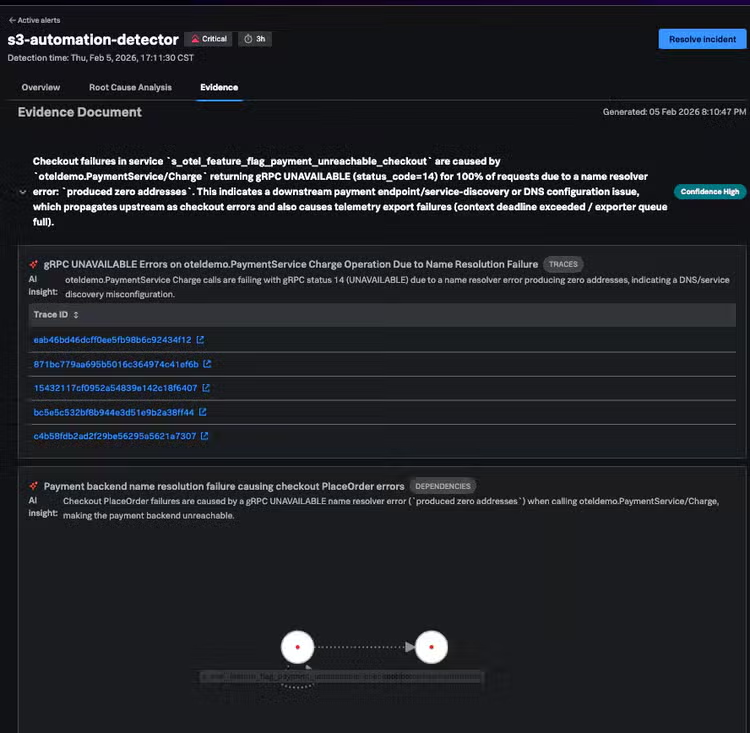
When a user evaluates an alert or incident, the Splunk Observability Cloud AI troubleshooting agent immediately activates. It intelligently collects and evaluates information, correlating related metrics, traces, events, and logs across various entities to quickly identify and present different hypotheses on suspected root causes.
Imagine this scenario: As an SRE, you receive an alert notification that your payment service is receiving errors. You check the other metrics on payment service for latency and overall response time and APM tags to understand the scope of impact, as well as upstream services. This leads to reviewing traces with a spike of errors, then going through spans in the trace to identify stack traces. To gain confidence in this hypothesis, you repeat this several times. Ultimately, you review associated logs by progressively narrowing the scope in case RCA wasn’t clear from the traces. You may also review associated infrastructure (like the services running in a pod) in case this isn’t a code issue. As you can see, this process is time consuming and manual, which can often lead to a lack of correlation with overall business impact.
Now, instead of embarking on this manual deep dive through countless dashboards, logs and traces to find the root cause, the AI Troubleshooting Agent provides you with:
-
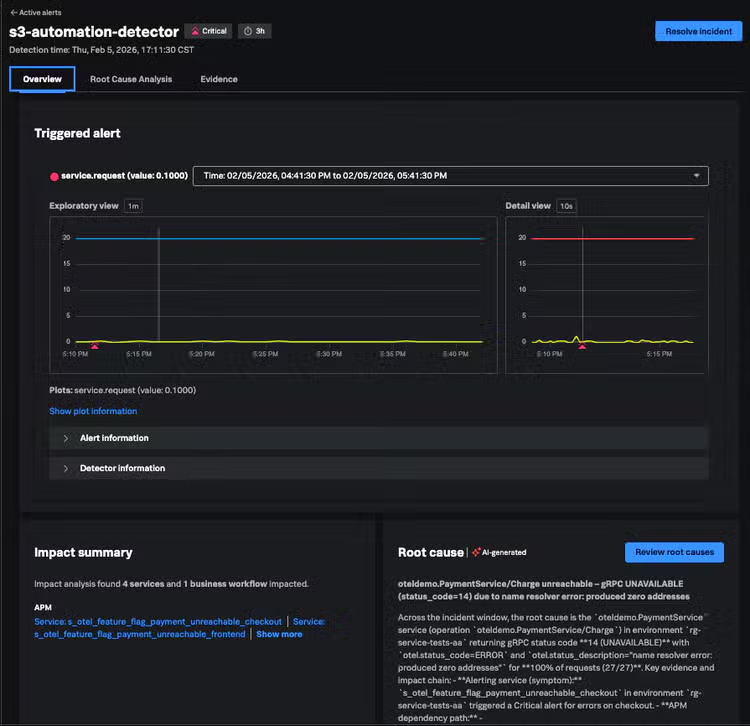
A summary of the alert, including the immediate impact of the incident on affected services and user sessions.
-
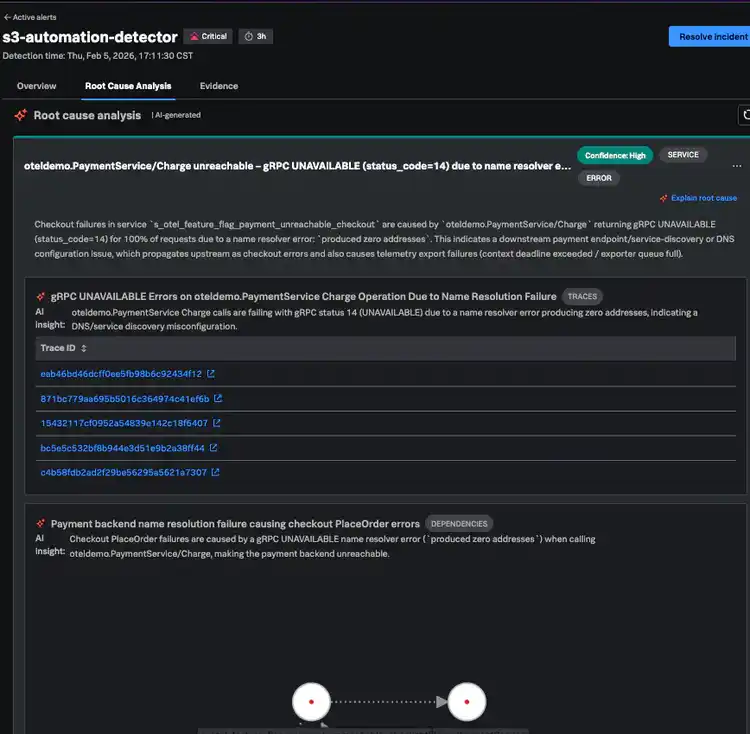
Suspected root cause(s), backed by clear evidence of what was analyzed. The AI troubleshooting agent will reveal key information by browsing across all your log, metrics, and trace data, as well as nodes, clusters, services, and business workflows, so you can better monitor and optimize the performance of your production environment.
-
Crucial insights into how an issue in one part of the system (e.g., infrastructure) impacts another (e.g., services).
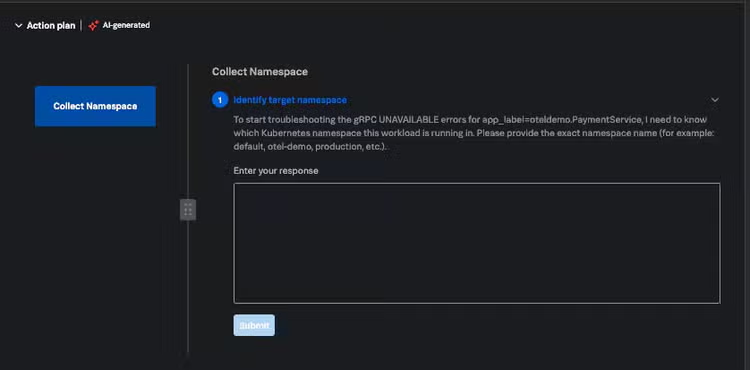
- An action plan based on trusted, evidence-backed summaries to guide prioritization throughout the troubleshooting process towards resolution. Clicking on the action plan button launches an interactive action plan that provides step-by-step instructions towards remediation. You can read a summary of remediation actions taken, review the key outcomes, and consider implementing long-term steps.
This "In Context" approach, seamlessly integrated into your existing alert workflow, dramatically cuts down on manual effort and time. Users can access this AI-powered analysis with a simple action. For more in-depth investigation, they can even interact with the AI Assistant in Splunk Observability Cloud to ask follow-up questions or leverage in-context links to specialized troubleshooting tools like trace analyzers and Kubernetes (K8s) nodes.
Empowering Your Teams: From Support to SREs
AI-generated root cause analysis empowers every key team member involved in the troubleshooting journey:
- System Support (L1 analysts) gain immediate, actionable insights, reducing their effort and facilitating smoother onboarding for novice users.
- Site Reliability Engineers (SREs) can swiftly pinpoint root causes, allowing them to shift focus from reactive triage to proactive resolution and strategic improvements.
- Application Developers/Ops (AppDev, DevOps) receive contextual information that enables them to resolve issues within their applications more efficiently.
- Service Owners/Platform Owners gain a clearer, data-driven understanding of how incidents impact their own components.
Moving Toward Intelligent, Incident Management
Ultimately, the primary business value of AI Agents in Splunk Observability Cloud is to streamline the entire incident management journey. By surfacing key insights and minimizing navigational steps, especially when multiple potential causes exist, we significantly reduce the mean time to identification and resolution. This robust foundation enables more advanced AI/ML capabilities in the future, including proactive conversational insights, zero-config alerts, intelligent incident correlation, and direct remediation actions.
By collaborating with AI agents, engineers will be more productive, upskill with the help of AI, and focus on areas where humans excel—thinking up novel ways to solve problems, innovate, and help their business grow. When AI agents can troubleshoot and solve the basic problems, what remains are the challenging problems that require more business context, more human knowledge, and more powerful observability tools than ever before.
With the AI troubleshooting agent, we are moving towards a future of faster troubleshooting, with a goal of a 1-Click experience that automates your incident management experience for increased efficiency and enhanced resilience.
Interested in trying this yourself? Sign up here.
Related Articles

Tiered Observability: How To Prioritize and Mature Observability Investments
Monitoring with Logs: Metrics from AWS FireLens, Splunk and Logstash